Raised bed season starts hereCompare beds, soil, watering, and plant supports before checkout.
Vegetable gardeningUpdated 2026-05-27

Best Raised Garden Beds for Vegetables

Find the best raised garden beds for vegetables, tomatoes, herbs, greens, and small backyard crops with depth, trellis, and fill-cost guidance.

Product directorySoil calculator
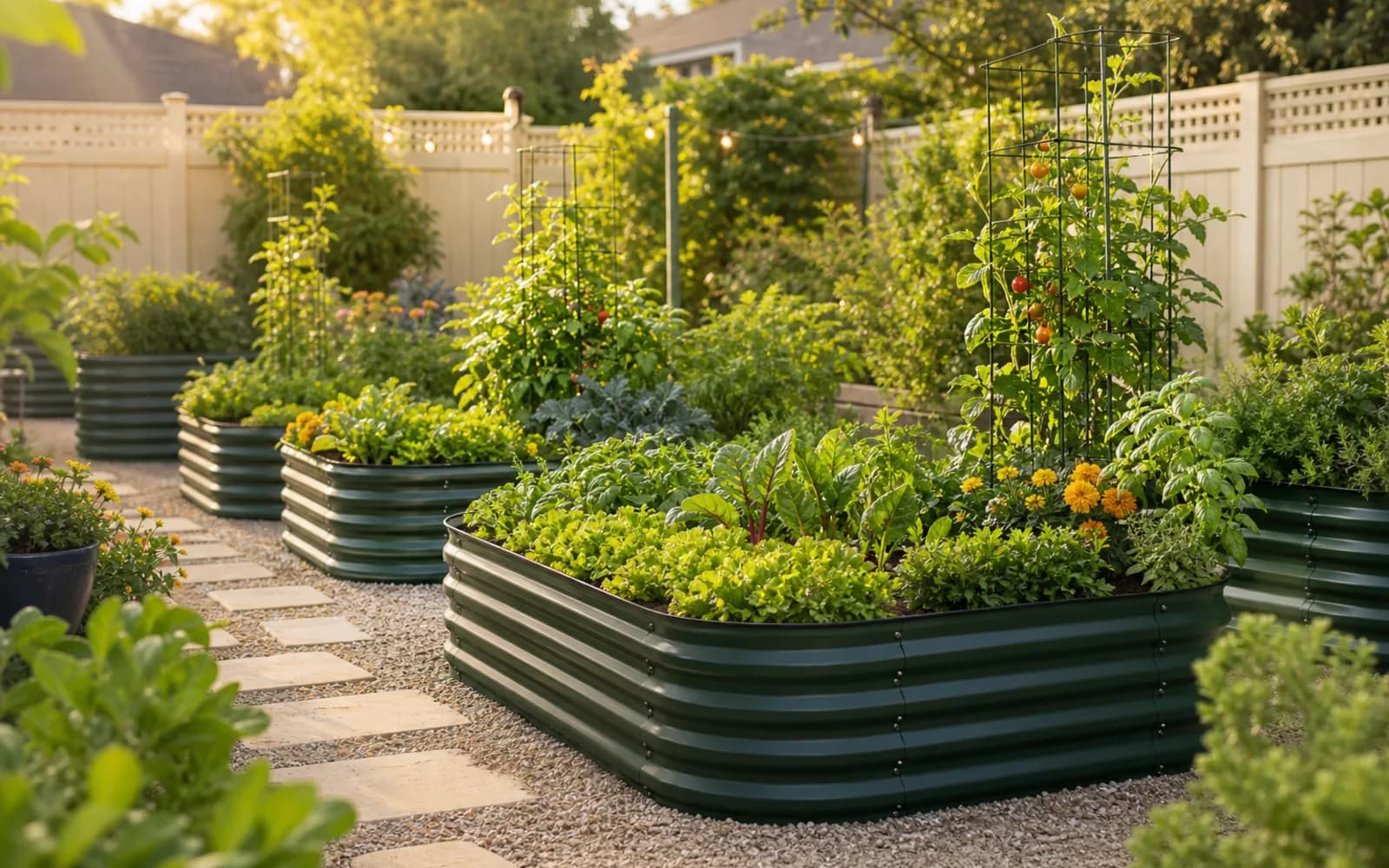
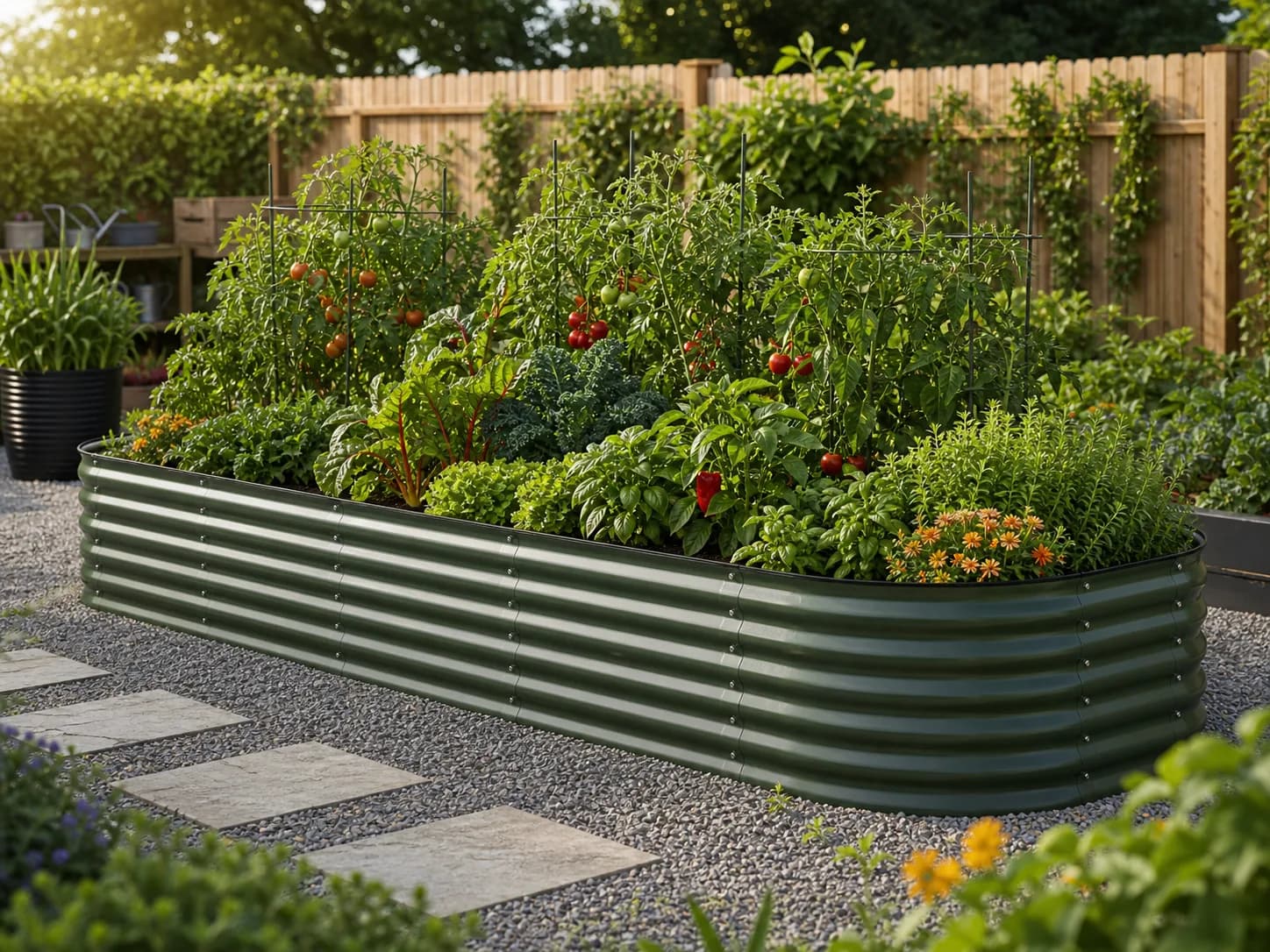
A productive backyard vegetable garden with metal and wood raised beds planted with tomatoes, greens, herbs, and marigolds.
Quick buying decision

Start with the product that matches your constraint.

Use this compact matrix before reading the full guide. It keeps the choice grounded in fit, tradeoff, setup risk, and a current offer path without showing stale Amazon prices or ratings.

Start hereVego Garden

17" Tall 9-in-1 Modular Metal Raised Garden Bed Kit

Choose if
Most backyard vegetable gardens, first serious raised bed buyers, tomato and pepper growers
Skip if
Buyers who only want the lowest upfront price.
Check first
More bolts than one-piece budget beds
17"Medium
View decision notesCheck current price on Amazon
VegetablesKING BIRD

Galvanized Raised Garden Bed with 2 Installation Methods, 101 x 36 x 24 in

Choose if
Budget-conscious vegetable growers who want a taller metal bed and large planting area
Skip if
Very tight patios, narrow walkways, or buyers trying to minimize fill cost.
Check first
Less premium finish than Vego-style beds
24"Medium
View decision notesCheck current price on Amazon
SeniorsSnugNiture

36 in Tall Raised Garden Bed, 8 x 4 x 3 ft Galvanized Metal Planter

Choose if
Gardeners prioritizing less bending, senior-friendly working height, and very deep soil capacity
Skip if
Gardeners who want maximum growing square footage from one kit.
Check first
Huge soil volume requirement
36"Medium
View decision notesCheck current price on Amazon
Featured picks

Start with the product types readers compare most.

These are current product options from the directory. Use them as a shortlist, then read the full guide before buying.

Vego Garden

17" Tall 9-in-1 Modular Metal Raised Garden Bed Kit

Best for: Most backyard vegetable gardens, first serious raised bed buyers, tomato and pepper growers

Key tradeoff: More bolts than one-piece budget beds

View decision notesCheck current price on Amazon
KING BIRD

Galvanized Raised Garden Bed with 2 Installation Methods, 101 x 36 x 24 in

Best for: Budget-conscious vegetable growers who want a taller metal bed and large planting area

Key tradeoff: Less premium finish than Vego-style beds

View decision notesCheck current price on Amazon
SnugNiture

36 in Tall Raised Garden Bed, 8 x 4 x 3 ft Galvanized Metal Planter

Best for: Gardeners prioritizing less bending, senior-friendly working height, and very deep soil capacity

Key tradeoff: Huge soil volume requirement

View decision notesCheck current price on Amazon
Vegetable garden system

Plan the bed, support, water, and soil together.

Vegetable beds fail when the bed is chosen in isolation. Use these paths to build a real backyard growing system.

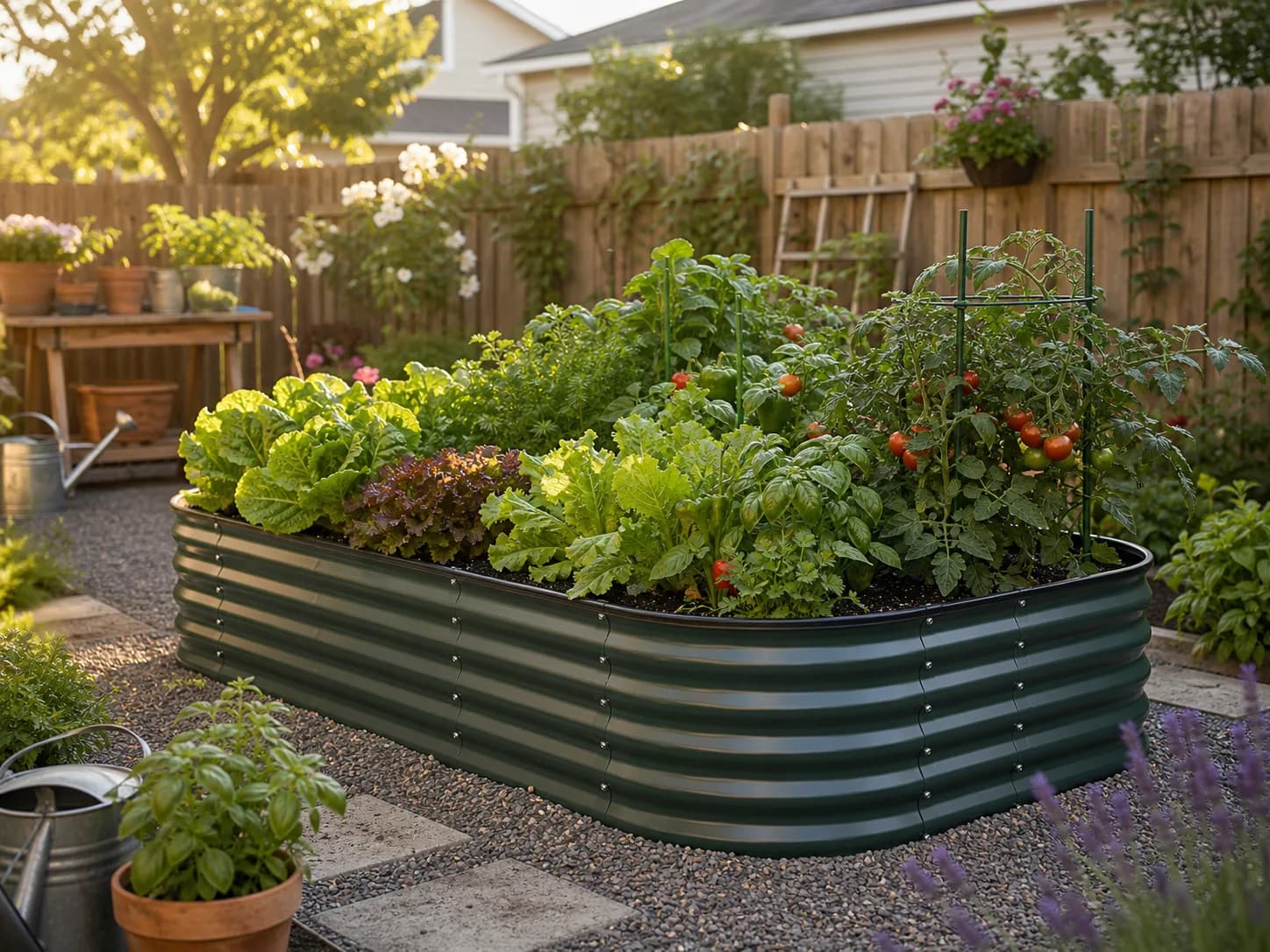
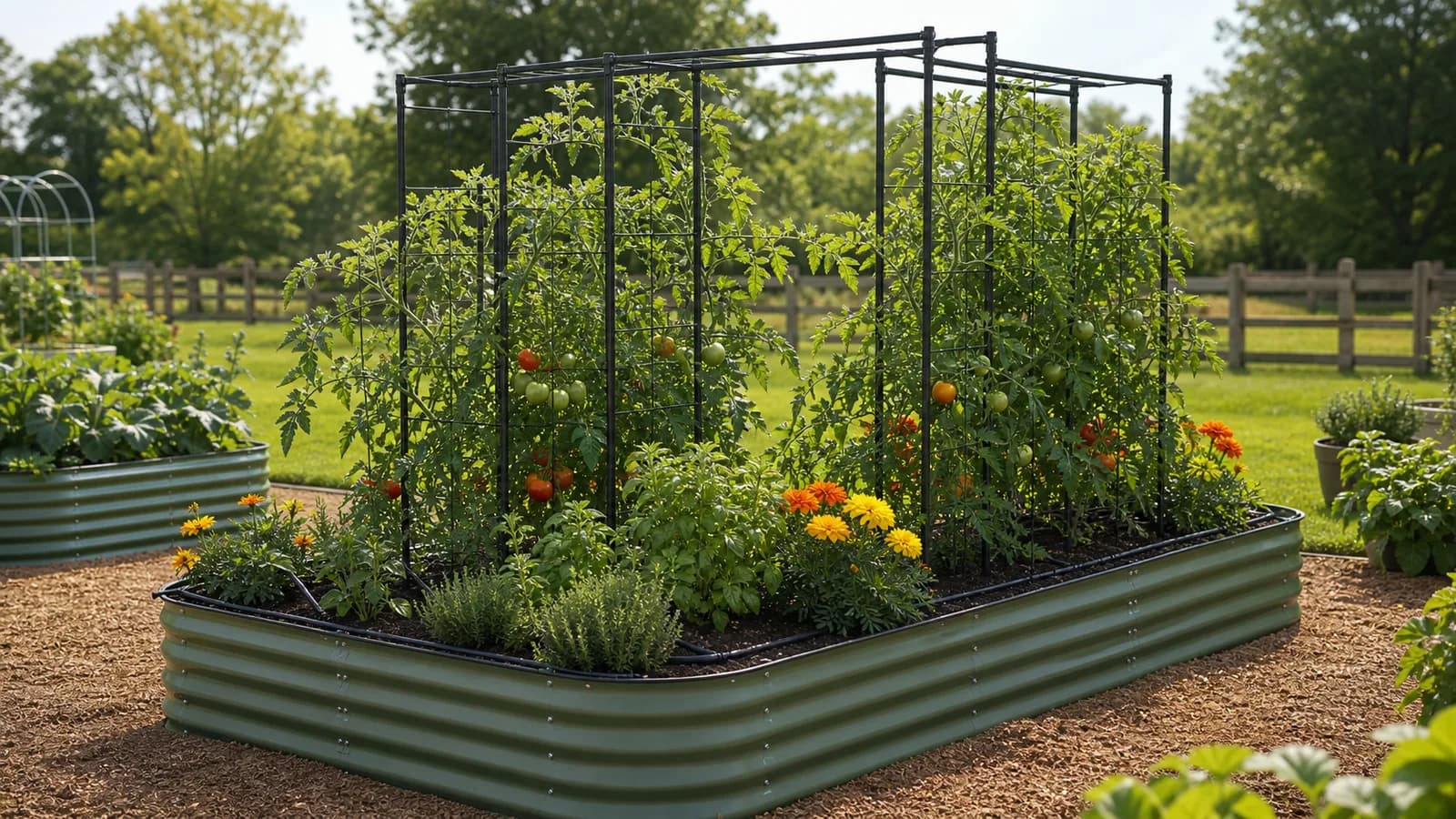
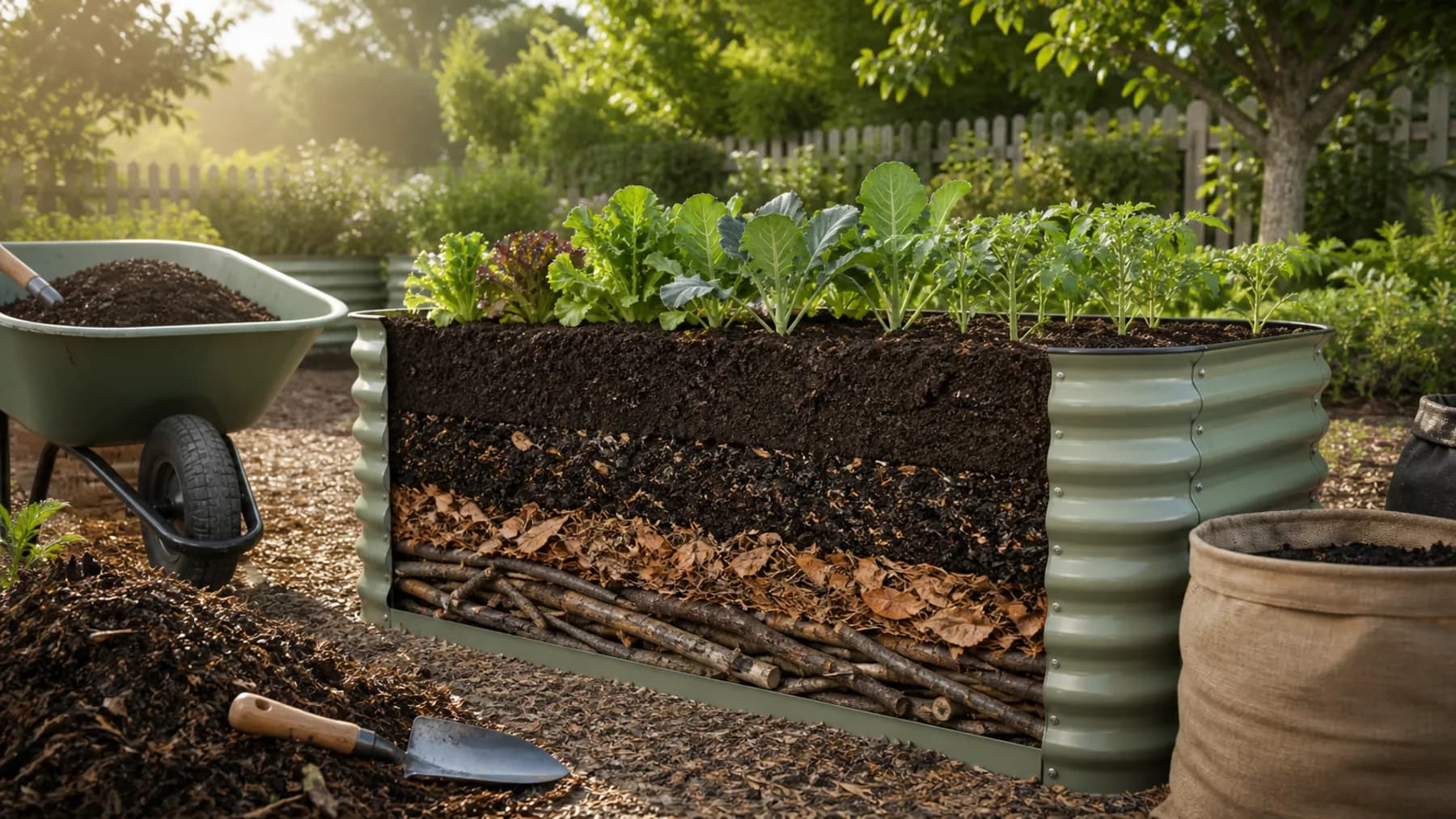
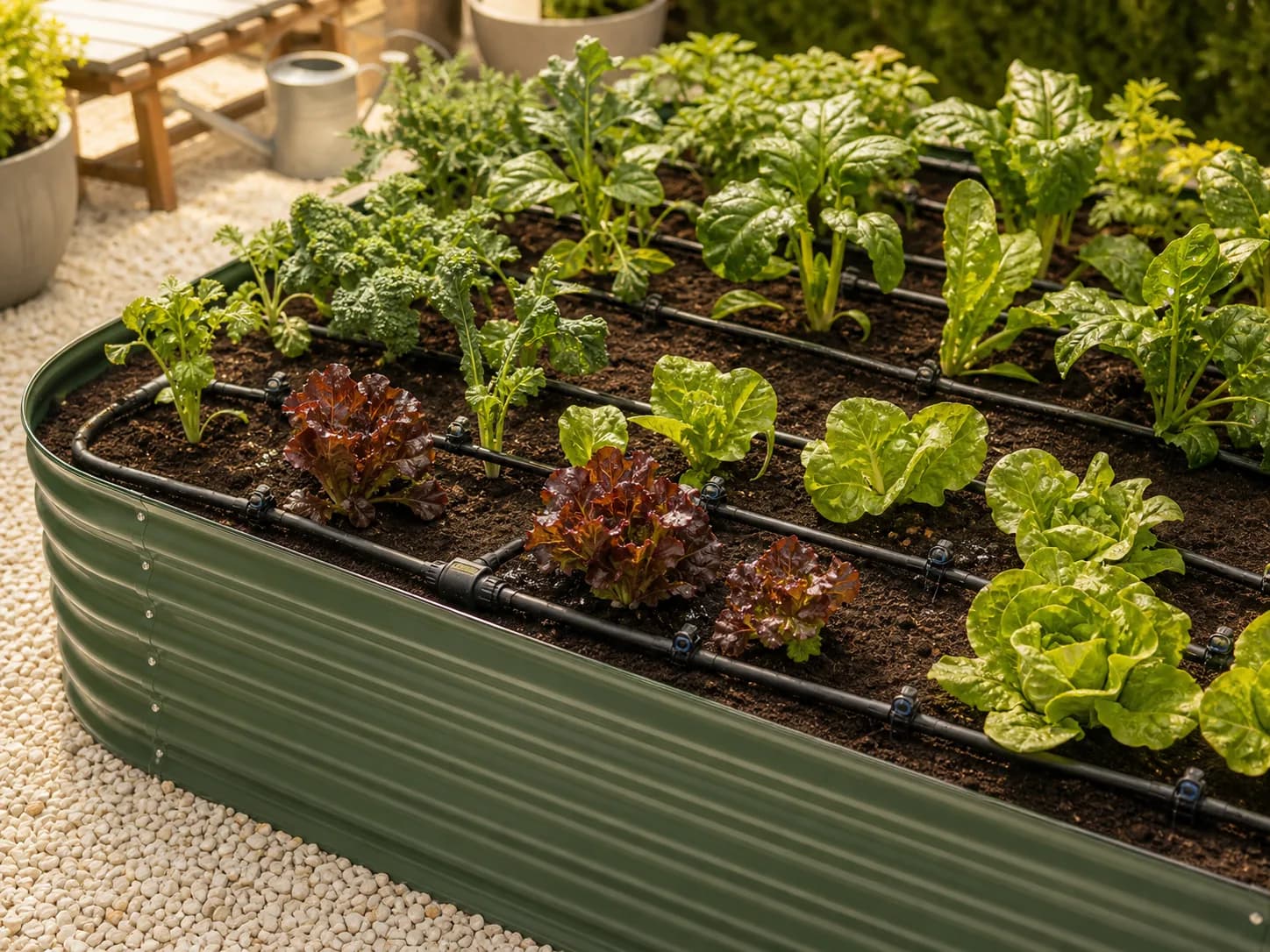
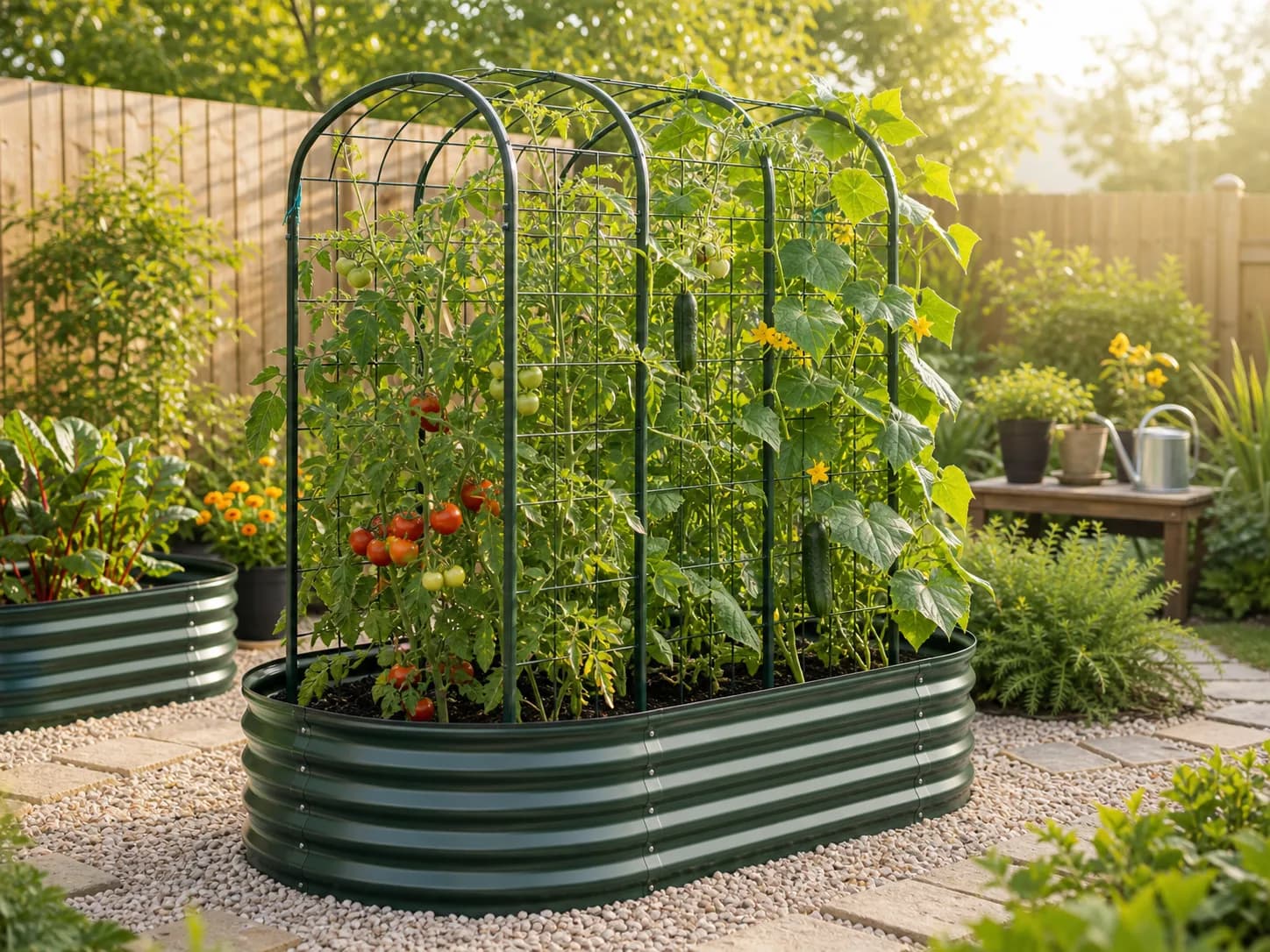
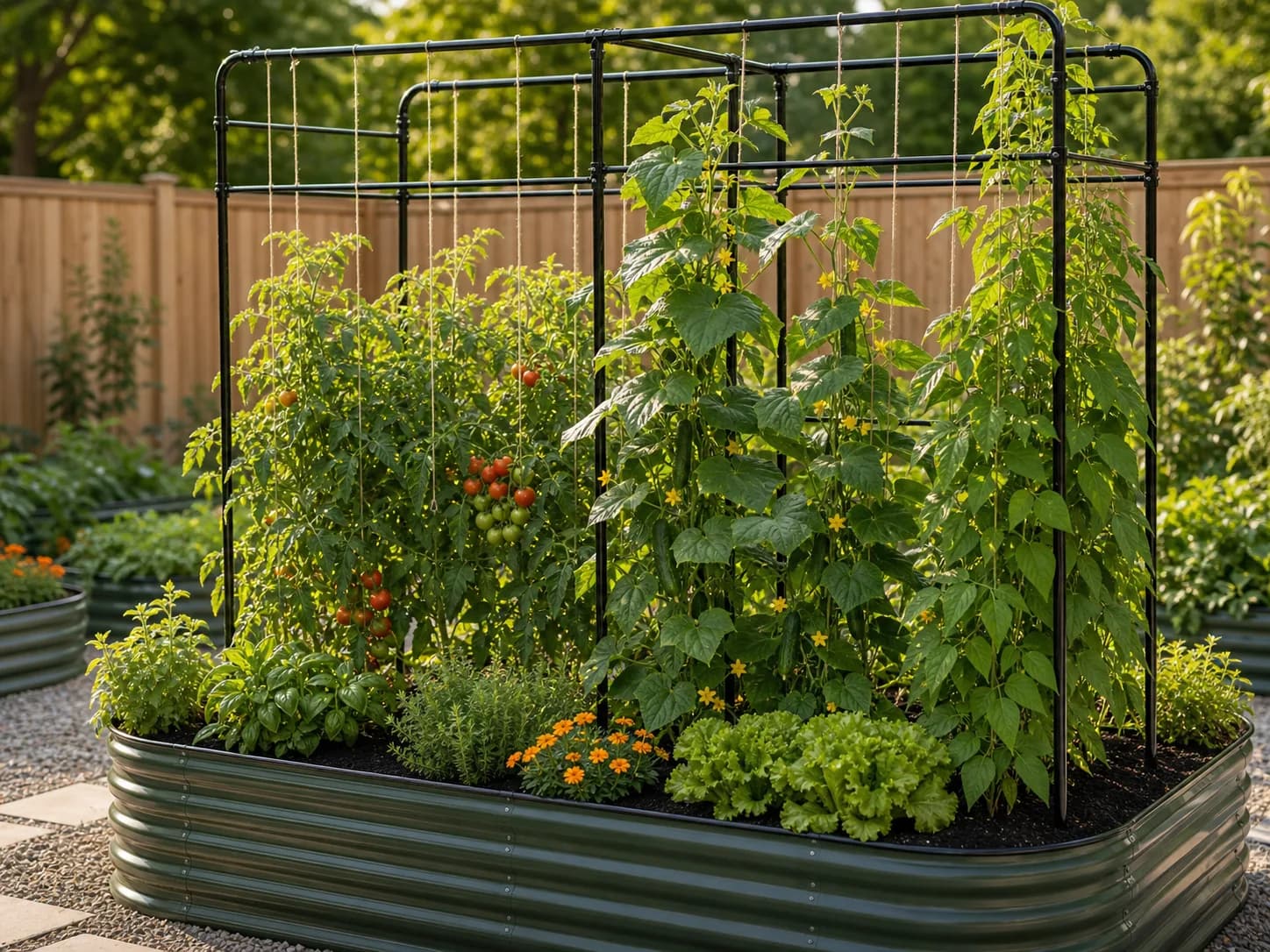
Tomato plants growing on a trellis in a raised garden bed.TomatoesDeep beds with supportTomatoes need enough root depth, stable supports, and room to prune.17+ inchesTrellis fitPruning accessPlan tomato bedsRaised bed soil and compost mix prepared for vegetables.SoilVegetable root zoneMatch bed depth to fill layers, compost, and drainage instead of buying soil blind.DrainageCompostTop layerChoose soilDrip irrigation lines watering vegetables in a raised bed.WaterRaised bed drip linesSteady water matters more once beds are dense with tomatoes, peppers, greens, and herbs.Drip tubingTimersMulti-bed layoutsCompare wateringGarden trellises supporting climbing crops in raised beds.Vertical cropsTrellises and supportsPlan support before cucumbers, beans, peas, and indeterminate tomatoes sprawl.TomatoesCucumbersBeansPick supports

Updated:

A vegetable raised bed has a harder job than a decorative planter. It has to hold enough soil for roots, drain after storms, stay reachable for weeding, support heavy crops by midsummer, and make harvesting easier instead of creating another maintenance problem. A bed that is perfect for herbs can be too shallow for tomatoes. A bed that looks impressive at 36 inches tall can become a soil-budget problem if the buyer has not planned the fill.

This guide ranks raised beds by vegetable-growing use case rather than brand alone. Vego Garden remains the premium default for a polished modular garden system, but large galvanized alternatives from KING BIRD, ANLEOLIFE, SnugNiture, Sunnydaze, and Garvee can make more sense for certain vegetable gardeners. We analyzed product specs, buyer-feedback themes, crop needs, bed depth, and common backyard layouts. We do not claim hands-on testing, and we do not hardcode live Amazon prices, ratings, or availability because those fields can change.

Quick Picks for Vegetable Growers

PickBest vegetable use caseDepth/shapeMain tradeoffAmazon link
Vego Garden 17" 9-in-1Best premium all-around vegetable bed17" modular open-bottomPremium price and more boltsCheck on Amazon
Vego Garden 17" 10-in-1 JumboBest larger premium vegetable layout17" jumbo modularMore space and fill neededCheck on Amazon
A ANLEOLIFE 8 x 4 x 2 ftBest deep value bed for tomatoes24" large rectangleHigh fill cost and delivery checksCheck on Amazon
KING BIRD 101" x 36" x 24"Best budget tall vegetable bed24" long rectangleLess premium finishCheck on Amazon
Sunnydaze 47" x 23" x 24"Best compact deep bed24" compact rectangleLimited planting areaCheck on Amazon
SnugNiture 36" Tall 8 x 4 ftBest low-bend vegetable bed36" large rectangleHuge soil volumeCheck on Amazon
Garvee 2 Pack 8 x 4 x 2 ftBest two-bed vegetable plot starterTwo 24" bedsToo much bed for small yardsCheck on Amazon
Vego 8 ft Tomato Metal Frame TrellisBest add-on for vertical cropsBed-mounted supportBed not includedCheck on Amazon

Vegetable-bed decision

Choose vegetable beds by crop pressure

Vegetable beds should be chosen around root depth, crop weight, reach, and the amount of soil you are willing to buy.

Mixed vegetables and herbs

17-inch open-bottom modular bed

It balances root room, reach, and realistic fill cost.

Watch out: Still plan support for tomatoes and cucumbers.

Tomatoes, peppers, and root crops

24-inch deep metal bed

The extra depth helps when native soil is poor or compacted.

Watch out: Fill cost rises quickly.

Low-bend vegetable gardening

Extra-tall ground bed

Height improves access while preserving more production potential than shallow planters.

Watch out: A huge bed can be hard to fill and reach.

Compact side yard

Smaller deep bed

A compact 24-inch bed gives useful depth without taking over the walkway.

Watch out: Growing area is limited.

What Vegetable Beds Need

For vegetables, depth matters, but it is not the only variable. A 12-inch bed can grow lettuce, herbs, radishes, and flowers. A 17-inch open-bottom bed is a better general-purpose vegetable choice because it gives more loose soil for roots while staying realistic to fill. A 24-inch bed helps with tomatoes, peppers, eggplant, squash, and deeper-rooted crops, but the buyer should plan the soil volume before buying. Extra-tall 32- and 36-inch beds are comfort-first choices: excellent when bending is the main problem, expensive when height is bought only for looks.

The bed also needs a usable shape. Four feet wide can work when you can reach from both sides. Against a fence, two feet wide is usually better. Long rectangles are efficient for rows and crop rotation. Compact rectangles work for small yards. L-shaped beds are better for corners and mixed plantings than for high-yield vegetable rows.

Finally, vegetables need support and water. Tomatoes, cucumbers, peas, pole beans, and small squash should have trellis planning built into the bed decision. Raised beds also dry faster than in-ground beds, especially elevated planters and shallow beds. A vegetable roundup that ignores trellises and irrigation is only half useful.

Best Raised Beds for Vegetables

Vego Garden

Vego Garden 17" Tall 9-in-1 Modular Metal Raised Garden Bed Kit

Best for: Most backyard vegetable gardeners who want a premium bed with practical depth, modular layouts, and a polished finished look.

Why this pick: Premium modular metal bed versus cheaper galvanized beds and Birdies

Height
17"
Size
up to 8 ft x 2 ft configuration; 9 possible layouts
Type
modular metal raised bed

Key tradeoff: More bolts than one-piece budget beds

Not best for: Buyers who only want the lowest upfront price.

Key features

  • 17-inch open-bottom vegetable-friendly depth
  • 9-in-1 modular configurations
  • VZ 2.0 coated metal panels
  • Rounded corners and rubber safety edging

Pros

  • Best premium default for mixed vegetables
  • Good depth without extreme fill cost
  • Strong accessory path for trellis, covers, and irrigation

Cons

  • Higher price than budget beds
  • More assembly time than simple one-shape kits
  • Not waist-high
Vego Garden

Vego Garden 17" Tall 10-in-1 Jumbo Modular Metal Raised Garden Bed Kit

Best for: Vegetable gardeners who want a larger premium layout for crop rotation, tomatoes, peppers, greens, and herbs.

Why this pick: Best Vego pick for buyers who want extra layout flexibility over the 9-in-1

Height
17"
Size
10 possible configurations; jumbo oval/rectangle layouts
Type
jumbo modular metal raised bed

Key tradeoff: Assembly is more involved

Not best for: Very tight patios, narrow walkways, or buyers trying to minimize fill cost.

Key features

  • 10-in-1 jumbo modular layout
  • 17-inch open-bottom profile
  • Premium Vego finish
  • Compatible with Vego accessories

Pros

  • More growing area than the 9-in-1
  • Still avoids extra-tall fill shock
  • Good for a main backyard vegetable bed

Cons

  • Needs more room than compact beds
  • Costs more than basic galvanized rectangles
  • Layout selection can confuse beginners
A ANLEOLIFE

A ANLEOLIFE 8 x 4 x 2 ft Galvanized Raised Garden Bed Kit

Best for: Tomato, pepper, and deep-root vegetable growers who want a large 24-inch bed at a value price.

Why this pick: Large-capacity value alternative to premium 8 ft metal raised beds

Height
24"
Size
8 ft x 4 ft x 2 ft; 478 gallon listed capacity
Type
large deep-root galvanized metal raised bed

Key tradeoff: High fill cost

Not best for: Very tight patios, narrow walkways, or buyers trying to minimize fill cost.

Key features

  • 8 ft x 4 ft footprint
  • 24-inch depth
  • Open-bottom galvanized design
  • Large listed soil capacity

Pros

  • Strong value for a deep vegetable bed
  • Large enough for crop rotation planning
  • Good tomato and deep-root angle

Cons

  • High fill cost
  • Shipment condition needs checking
  • Less premium finish and ecosystem than Vego
KING BIRD

KING BIRD Galvanized Raised Garden Bed, 101" x 36" x 24"

Best for: Budget-conscious vegetable growers who want a tall long bed and care more about production than premium styling.

Why this pick: High-review budget alternative to premium modular metal beds

Height
24"
Size
101 in x 36 in x 24 in
Type
heightened galvanized metal raised bed

Key tradeoff: Less premium finish than Vego-style beds

Not best for: Very tight patios, narrow walkways, or buyers trying to minimize fill cost.

Key features

  • 24-inch tall galvanized bed
  • Long rectangular growing area
  • Two installation methods
  • Open-bottom vegetable layout

Pros

  • Large planting area for the money
  • Useful depth for vegetables
  • Good alternative when Vego or Birdies feel too expensive

Cons

  • Panel quality feedback is more mixed
  • Less modular than premium systems
  • Inspect dents, edges, and hardware before assembly
Sunnydaze

Sunnydaze 47" x 23" x 24" Galvanized Raised Garden Bed

Best for: Small-space vegetable gardeners who want 24-inch depth without an 8 ft footprint.

Why this pick: Compact tall-bed alternative for shoppers who do not need a large modular kit

Height
24"
Size
47 in x 23 in x 24 in
Type
compact tall galvanized metal raised bed

Key tradeoff: Less growing area than long beds

Not best for: Very tight patios, narrow walkways, or buyers trying to minimize fill cost.

Key features

  • 47 x 23 inch compact rectangle
  • 24-inch depth
  • Galvanized steel
  • Open-bottom design

Pros

  • Good depth in a small footprint
  • Fits side yards and patio-adjacent garden spots
  • Lower fill volume than large 24-inch beds

Cons

  • Limited growing area
  • Not ideal for full tomato rows
  • Smaller review base than established picks
SnugNiture

SnugNiture 36" Tall 8 x 4 ft Galvanized Metal Raised Bed

Best for: Vegetable gardeners who need a low-bend working height and are prepared for a major fill project.

Why this pick: Comfort-height alternative to 32 inch premium modular beds with a major fill-cost tradeoff

Height
36"
Size
8 ft x 4 ft x 3 ft
Type
extra tall galvanized metal raised bed

Key tradeoff: Huge soil volume requirement

Not best for: Gardeners who want maximum growing square footage from one kit.

Key features

  • 36-inch tall profile
  • 8 ft x 4 ft footprint
  • Galvanized metal panels
  • Open-bottom deep bed

Pros

  • Very strong senior-friendly vegetable bed angle
  • Large enough for serious crop plans
  • Good when comfort is more important than fill cost

Cons

  • Huge soil volume requirement
  • Too large for many small yards
  • Assembly and edge handling deserve care
Vego Garden

Vego Garden 8 ft Tomato Metal Frame Trellis

Best for: Tomatoes, cucumbers, pole beans, peas, and vining crops in rectangular raised beds.

Why this pick: Integrated premium trellis versus generic cages and DIY string systems

Height
bed-mounted trellis height varies by setup
Size
8 ft long
Type
metal frame string trellis

Key tradeoff: Garden bed not included

Not best for: Buyers who only need a basic bed without vertical crop support.

Key features

  • 8 ft bed-mounted trellis
  • Supports string, weave, or netting methods
  • Made for vertical vegetable growing
  • Pairs naturally with rectangular Vego beds

Pros

  • Solves the support problem for tall crops
  • Cleaner than scattered cages
  • Useful for maximizing small garden space

Cons

  • Garden bed is not included
  • Compatibility must be checked
  • Expensive if a simple DIY support would work

Vegetable Crop Match

Crop planRecommended bed typeWhy
Lettuce, spinach, herbs12- to 17-inch compact bedShallow roots, frequent harvest, easy reach
Tomatoes and peppers17- to 24-inch open-bottom bedMore root space and better trellis planning
Cucumbers and pole beansRectangular bed plus trellisVertical growth saves space and improves airflow
Carrots, beets, radishes17- to 24-inch loose soil bedRoot crops need rock-free soil and consistent moisture
Squash and zucchiniLarge open-bottom bedNeeds room, sun, and airflow
Senior vegetable gardeningElevated bed or 32- to 36-inch ground bedLess bending, but fill and reach matter
Small side yard vegetablesCompact 24-inch bed or Vego 6-in-1Depth without overwhelming the space

How Deep Should a Vegetable Raised Bed Be?

For most vegetable gardeners, 17 inches is the easiest recommendation. It is deep enough for many common vegetables and still realistic to fill. A 24-inch bed can be better for tomatoes, peppers, eggplant, and root crops, especially if native soil is poor, but the buyer should calculate fill before checkout.

Open-bottom beds are more forgiving than sealed planters because roots can move into native soil if conditions are good. Elevated planters and self-watering boxes behave more like containers. They can be excellent for herbs, greens, and patio vegetables, but they usually need more consistent watering and more careful crop selection.

Do not assume a 36-inch bed grows better vegetables simply because it is taller. It may be easier to work in, which is valuable, but the lower fill layers still need to be planned. A tall bed filled entirely with expensive bagged mix is often wasteful. A layered fill plan can make tall beds more practical.

Layout and Spacing Advice

The best vegetable layout is the one you can reach every week. A bed should have paths around it or a width that matches its placement. Four feet wide works only if both sides are accessible. Two feet wide is better against fences, walls, or deck rails.

For mixed crops, consider one large rectangle or two medium beds instead of one awkward oversized bed. Separate beds make rotation easier: tomatoes and peppers in one bed, greens and herbs in another, and cucumbers or beans near trellis support. If you are buying a two-pack like Garvee, make sure the yard has enough sun, path space, and fill budget for both beds.

For tomatoes, choose the bed and trellis together. Tomato cages work, but a bed-mounted frame or string system often uses space better. Cucumbers, pole beans, and peas also benefit from vertical support because it improves airflow and harvest visibility.

Common Mistakes

The first mistake is ignoring fill cost. A large 24-inch or 36-inch bed can look like a bargain until you calculate soil, compost, and amendments. The bed price is only the start of a vegetable garden.

The second mistake is buying for height without thinking about reach. A tall bed can still be frustrating if it is too wide or pressed against a fence.

The third mistake is treating all metal beds as equal. Premium systems usually have better finish, modularity, edge treatment, and accessory support. Budget beds can still grow excellent vegetables, but inspect panels, hardware, and sharp edges before assembly.

The fourth mistake is waiting too long to plan support. Add trellis compatibility, irrigation, and pest covers to the decision before the bed is full and planted.

FAQ

What is the best raised garden bed for vegetables?

For most backyard vegetable gardeners, a 17-inch open-bottom metal bed is the best starting point. It gives useful depth, drains well, and keeps fill cost more manageable than extra-tall beds.

Is 12 inches deep enough for vegetables?

Twelve inches can work for lettuce, herbs, radishes, and some compact crops. For tomatoes, peppers, squash, and deeper-rooted vegetables, 17 to 24 inches or access to native soil is usually better.

What raised bed is best for tomatoes?

Tomatoes usually do best in a 17- to 24-inch open-bottom bed with a strong trellis. The bed should have enough depth, sun, and airflow, and the support system should be planned before planting.

Are galvanized raised beds safe for vegetables?

Coated galvanized steel beds are widely used for vegetable gardening. The practical checks are avoiding very acidic soil, protecting scratched coatings, replacing rusted hardware, and following manufacturer material guidance.

Should vegetable raised beds have a bottom?

Most outdoor vegetable raised beds should be open-bottom unless they are on a patio, deck, or hard surface. Open-bottom beds drain better and let roots use the native soil below when conditions are good.

Final Verdict

The best raised garden bed for vegetables is usually a 17-inch open-bottom metal bed, with Vego Garden's 17" 9-in-1 as the premium default. Choose ANLEOLIFE or KING BIRD if you want more deep vegetable capacity for the money. Choose Sunnydaze for compact deep growing. Choose SnugNiture when less bending is the main reason for buying a raised bed. Add the Vego tomato trellis or another strong support system when the crop plan includes tomatoes, cucumbers, peas, or pole beans.

Vegetable gardeners should buy around crop needs first: depth, reach, fill cost, support, water, and path space. Brand matters, but the bed only works if it fits the vegetables and the person who will maintain them through the hot part of the season.