Raised bed season starts hereCompare beds, soil, watering, and plant supports before checkout.
Elevated bedsUpdated 2026-05-27

Best Elevated Garden Beds

Compare elevated garden beds with legs, rolling planters, and self-watering options for patios, balconies, renters, and easier access.

Product directorySoil calculator
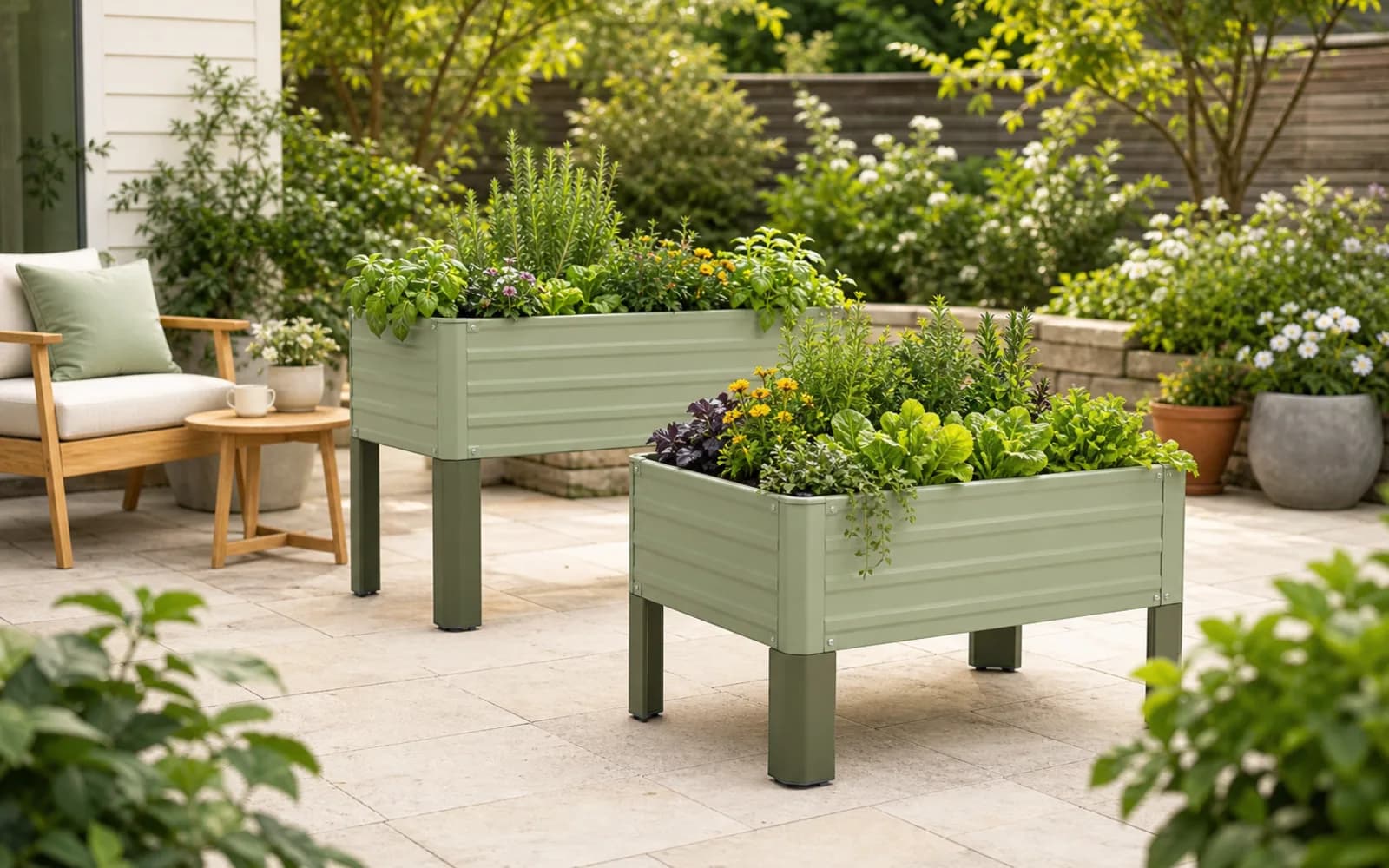
An elevated garden planter set up for patio growing.
Quick buying decision

Start with the product that matches your constraint.

Use this compact matrix before reading the full guide. It keeps the choice grounded in fit, tradeoff, setup risk, and a current offer path without showing stale Amazon prices or ratings.

Start hereVego Garden

Elevated Raised Garden Bed V Series 2 ft x 4 ft

Choose if
Patios, seniors, renters, people who want a waist-friendly bed without filling 32 inches of soil
Skip if
Gardeners who prefer hand watering or have no drip-compatible layout yet.
Check first
Smaller root volume than open-bottom deep beds
about 32" total height; 12" planting depthEasy-medium
View decision notesCheck current price on Amazon
Small spacesVego Garden

Rolling Elevated Raised Garden Bed V Series 2 ft x 6 ft

Choose if
Patios where sun exposure changes, renters, gardeners who need occasional mobility
Skip if
Deep-root vegetable growers who need more soil volume than a planter box can hold.
Check first
Expensive
elevated working heightEasy-medium
View decision notesCheck current price on Amazon
VegetablesVego Garden

Self-Watering Elevated Garden Bed S Series 2 ft x 4 ft

Choose if
Busy patio gardeners, herb growers, balcony vegetables, people who forget watering
Skip if
Gardeners who prefer hand watering or have no drip-compatible layout yet.
Check first
Very low Amazon review count
elevated; hip-height access by listing descriptionEasy-medium
View decision notesCheck current price on Amazon
Elevated shortlist

Patio growers should compare root volume and mobility first.

Elevated beds are easier to reach, but they behave more like large containers than open-bottom garden beds.

Vego Garden

Elevated Raised Garden Bed V Series 2 ft x 4 ft

Best for: Patios, seniors, renters, people who want a waist-friendly bed without filling 32 inches of soil

Key tradeoff: Smaller root volume than open-bottom deep beds

View decision notesCheck current price on Amazon
Vego Garden

Self-Watering Elevated Garden Bed S Series 2 ft x 4 ft

Best for: Busy patio gardeners, herb growers, balcony vegetables, people who forget watering

Key tradeoff: Very low Amazon review count

View decision notesCheck current price on Amazon

Updated:

Elevated garden beds solve a different problem than classic raised beds. They bring the planting surface closer to your hands, work on patios and hard surfaces, and reduce kneeling. The tradeoff is that most elevated beds behave like large containers: less root volume, faster drying, more dependence on the potting mix, and more attention to drainage.

This guide focuses on patio and access-first gardening. If you want maximum tomato production in a backyard, an open-bottom bed from the Best Raised Garden Beds for Vegetables guide may be better. If you want herbs, greens, compact vegetables, flowers, or easier access near the house, elevated beds can be the better category. We do not claim hands-on testing, and we do not hardcode live Amazon prices, ratings, or availability because those fields can change.

Quick Picks

PickBest forMain tradeoffAmazon link
Vego Elevated V Series 2 x 4Best fixed elevated bed for patiosLess root volume than open-bottom bedsCheck on Amazon
Vego Rolling Elevated V Series 2 x 6Best rolling elevated bedHeavy when filledCheck on Amazon
Vego Self-Watering Elevated S Series 2 x 4Best low-watering-effort elevated bedReservoir maintenanceCheck on Amazon
Vego EZCube Self-Watering PlanterBest compact balcony planterSmall crop capacityCheck on Amazon
Vego Rolling Citrus Tree PlanterBest mobile tree or patio tomato planterSpecialty planter, not a full bedCheck on Amazon
Vego EZ Self-Watering Herb PlanterBest countertop herb optionNot an outdoor vegetable bedCheck on Amazon

Elevated Beds vs Open-Bottom Raised Beds

An elevated bed is best when the surface matters: patios, balconies, decks, rental properties, paved side yards, and places where you cannot set an open-bottom bed directly on soil. It is also useful when kneeling or bending is the main barrier to gardening.

An open-bottom raised bed is better when root depth and full vegetable production matter more. A 17-inch, 24-inch, or 32-inch ground bed can hold more soil and let roots move into native soil below. That makes open-bottom beds better for large tomatoes, squash, deep-root crops, and multi-season crop rotation.

The practical rule is simple: use elevated beds for access, convenience, patios, herbs, greens, flowers, compact peppers, strawberries, and small-space gardening. Use open-bottom beds for high-yield vegetable gardens unless hard-surface placement or physical comfort is the deciding factor.

Best Elevated Garden Beds

Vego Garden

Vego Garden Elevated Raised Garden Bed V Series 2 ft x 4 ft

Best for: Patio gardeners, renters, seniors, and beginners who want a sturdy elevated bed without wheels or a reservoir system.

Why this pick: Elevated comfort versus open-bottom deep soil capacity

Height
about 32" total height; 12" planting depth
Size
2 ft x 4 ft
Type
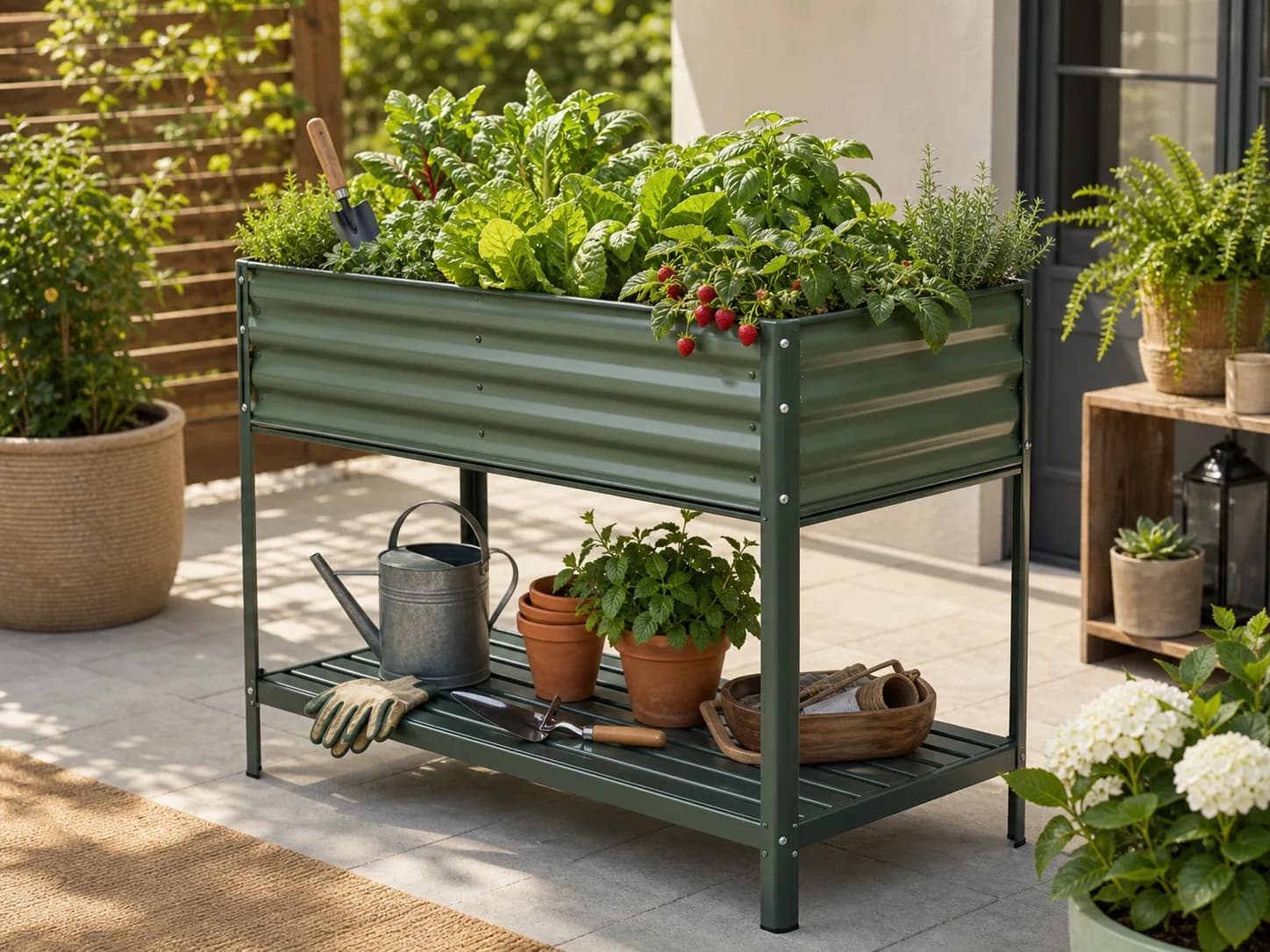
elevated bed with legs and storage rack

Key tradeoff: Smaller root volume than open-bottom deep beds

Not best for: Gardeners who prefer hand watering or have no drip-compatible layout yet.

Key features

  • Elevated working height
  • 2 ft x 4 ft planter box
  • Storage rack
  • Comfort-focused patio design

Pros

  • Best fixed elevated pick in the current product set
  • Comfortable for herbs, greens, flowers, and compact vegetables
  • Uses less soil than extra-tall ground beds

Cons

  • Less root volume than open-bottom beds
  • Needs container-style watering attention
  • Not ideal for large tomato or squash plans
Vego Garden

Vego Garden Rolling Elevated Raised Garden Bed V Series 2 ft x 6 ft

Best for: Smooth patios where a longer elevated bed may need occasional repositioning for sun or access.

Why this pick: Mobility premium versus fixed elevated bed

Height
elevated working height
Size
2 ft x 6 ft
Type
rolling elevated bed with legs and storage rack

Key tradeoff: Expensive

Not best for: Deep-root vegetable growers who need more soil volume than a planter box can hold.

Key features

  • Rolling elevated frame
  • 2 ft x 6 ft planting area
  • Storage rack
  • Longer patio-growing footprint

Pros

  • More growing area than a 2 x 4 elevated bed
  • Useful for changing sun exposure on smooth surfaces
  • Comfortable working height

Cons

  • Heavy when filled
  • Wheels are not useful on lawns, gravel, or uneven patios
  • More expensive than fixed elevated beds
Vego Garden

Vego Garden Self-Watering Elevated Garden Bed S Series 2 ft x 4 ft

Best for: Busy patio gardeners who want fewer watering chores and are comfortable maintaining a reservoir system.

Why this pick: Convenience versus cost and limited Amazon review volume

Height
elevated; hip-height access by listing description
Size
2 ft x 4 ft
Type
self-watering elevated bed with wicking cell system

Key tradeoff: Very low Amazon review count

Not best for: Gardeners who prefer hand watering or have no drip-compatible layout yet.

Key features

  • Self-watering reservoir
  • Elevated 2 ft x 4 ft bed
  • Storage shelf
  • Indoor/outdoor style planter

Pros

  • Can reduce watering frequency
  • Good for herbs, greens, and compact patio vegetables
  • Comfortable access

Cons

  • Reservoir needs monitoring and cleaning
  • Limited root depth compared with ground beds
  • Not necessary if you enjoy daily watering
Vego Garden

Vego Garden EZCube Self-Watering Planter 21 in x 24 in Elevated

Best for: Balconies, rooftops, tiny patios, and beginners growing herbs, greens, or compact plants.

Why this pick: Low-maintenance small-space planter versus full raised garden bed

Height
elevated optional legs / rolling variant
Size
21" x 24"
Type
self-watering elevated planter cube

Key tradeoff: Very low Amazon review volume

Not best for: Gardeners who prefer hand watering or have no drip-compatible layout yet.

Key features

  • Compact 21 x 24 inch footprint
  • Self-watering reservoir concept
  • Optional elevated/rolling style by variant
  • Small-space focused planter

Pros

  • Fits spaces where full beds are too large
  • Beginner-friendly watering concept
  • Good for herbs, greens, and small patio crops

Cons

  • Small crop capacity
  • Limited public feedback compared with larger bed lines
  • More expensive than simple plastic planters
Vego Garden

Vego Garden Rolling Metal Citrus Tree Planter Self-Watering Round Pot

Best for: Dwarf citrus, patio tomatoes, and frost-sensitive plants that may need seasonal movement.

Why this pick: Mobile specialty planter versus open-bottom raised bed

Height
rolling planter height
Size
2 ft x 2 ft rounded planter / 20 gallon class by listing family
Type
rolling self-watering round planter

Key tradeoff: Heavy when filled

Not best for: Gardeners who prefer hand watering or have no drip-compatible layout yet.

Key features

  • Rolling round planter
  • Self-watering wicking concept
  • Metal planter body
  • Lockable wheel style design

Pros

  • Good for specialty patio plants
  • Mobility helps with frost or sun changes
  • Self-watering design supports consistent moisture

Cons

  • Not a replacement for a full vegetable bed
  • Heavy when filled
  • Best for specific plant types rather than broad crop rotation
Vego Garden

Vego Garden EZ Self-Watering Herb Planter with Trellis Gen 2

Best for: Kitchen herbs, countertop growing, and apartment gardeners who want a small self-watering setup.

Why this pick: Indoor herb convenience versus outdoor raised bed production

Height
low-profile planter with trellis support
Size
countertop herb planter
Type
indoor herb planter with trellis

Key tradeoff: Limited crop size

Not best for: Buyers who only need a basic bed without vertical crop support.

Key features

  • Countertop herb planter
  • Self-watering reservoir
  • Water gauge
  • Included trellis support

Pros

  • Good for herbs and small-space beginners
  • Water gauge helps reduce guesswork
  • Trellis support is included

Cons

  • Not a full raised garden bed
  • Limited crop size
  • Indoor/small planter use case only

Elevated bed decision

Choose the elevated style by where it will live

The right elevated bed depends more on surface, watering habits, and crop size than on height alone.

Patio herbs and greens

Fixed 2 x 4 elevated bed

Stable, simple, and roomy enough for small repeat-harvest crops.

Watch out: Drainage still matters on paved surfaces.

Changing sun exposure

Rolling elevated bed

Wheels help when the patio is smooth and the bed is not overloaded.

Watch out: A filled rolling bed is still heavy.

Forgetting to water

Self-watering elevated bed

A reservoir can reduce watering friction for herbs, greens, and compact vegetables.

Watch out: Reservoirs need cleaning and monitoring.

Large tomato garden

Open-bottom ground bed instead

Tomatoes usually benefit from more root volume and stronger trellis options.

Watch out: Elevated planters suit compact tomato varieties better.

What to Grow in Elevated Garden Beds

Elevated beds are best for herbs, lettuce, spinach, arugula, strawberries, compact peppers, flowers, scallions, radishes, and small patio vegetables. These crops do not require the same deep root system or heavy trellis structure as large indeterminate tomatoes or sprawling squash.

You can grow tomatoes in some elevated planters, but choose compact or patio varieties, plan support, and watch watering closely. A full-size indeterminate tomato in a shallow elevated box is often disappointing compared with a deep open-bottom bed.

For seniors, the crop choice should match the reach. Herbs and greens near the kitchen may deliver more actual use than a large bed full of crops that require pruning, staking, or frequent heavy harvests.

What to Check Before Buying

Check planting depth, not just total height. A product can be 32 inches tall overall but have a much shallower planting box. That may be perfect for herbs and greens but not for deep-root vegetables.

Check drainage. Elevated beds need water to escape while the root zone stays moist enough. If a bed has a reservoir, make sure you are willing to monitor and clean it.

Check weight. Soil and water are heavy. For decks, balconies, and rooftops, verify that the surface can handle the load before buying. If in doubt, choose smaller planters and spread weight carefully.

Check wheels honestly. Wheels are valuable on smooth patios. They are far less useful on lawn, gravel, uneven pavers, or surfaces with lips and thresholds.

Common Mistakes

Do not buy an elevated bed expecting the same crop performance as a deep open-bottom ground bed. It is a different category.

Do not ignore watering. Elevated planters dry differently from ground beds, and self-watering systems still need attention.

Do not overbuy mobility. Rolling beds cost more and become heavy after filling.

Do not place a heavy filled planter on a deck or balcony without thinking about load, drainage, and where runoff goes.

FAQ

Are elevated garden beds worth it?

Elevated garden beds are worth it when easier access, patio placement, or reduced bending matters more than maximum root depth. They are not the best choice for every large vegetable garden.

What vegetables grow best in elevated garden beds?

Herbs, lettuce, spinach, arugula, strawberries, radishes, scallions, flowers, and compact peppers are good fits. Large tomatoes and squash usually need more depth and stronger support.

Do elevated garden beds need drainage?

Yes. Elevated beds need drainage so roots do not sit in water. Self-watering models also need monitoring so the reservoir does not become neglected.

Are rolling elevated garden beds easy to move?

Only on smooth hard surfaces. Once filled with wet soil, a rolling planter can be heavy. Wheels are less useful on lawns, gravel, and uneven patios.

Are elevated beds good for seniors?

They can be very good for seniors because they reduce bending and kneeling. The best choice is usually stable, narrow enough to reach, and simple to water.

Final Verdict

The Vego Elevated V Series 2 x 4 is the best first elevated bed in the current product set because it is simpler than a rolling or reservoir model and fits the core patio/senior use case. Choose the rolling 2 x 6 only if smooth-surface mobility matters. Choose the self-watering S Series or EZCube if watering consistency is the main problem. Choose an open-bottom raised bed instead if you want deep tomato production or a larger backyard vegetable plot.

Elevated beds are about access and placement. Buy them for comfort, patios, and small-space crops, not because they are automatically better than ground beds.