Raised bed season starts hereCompare beds, soil, watering, and plant supports before checkout.
Soil and fillUpdated 2026-05-27

Best Soil for Raised Garden Beds

Compare the best soil for raised garden beds by bed depth, vegetable use, compost needs, drainage, bag count, and when local bulk soil is smarter.

Product directoryHow to fill a bed
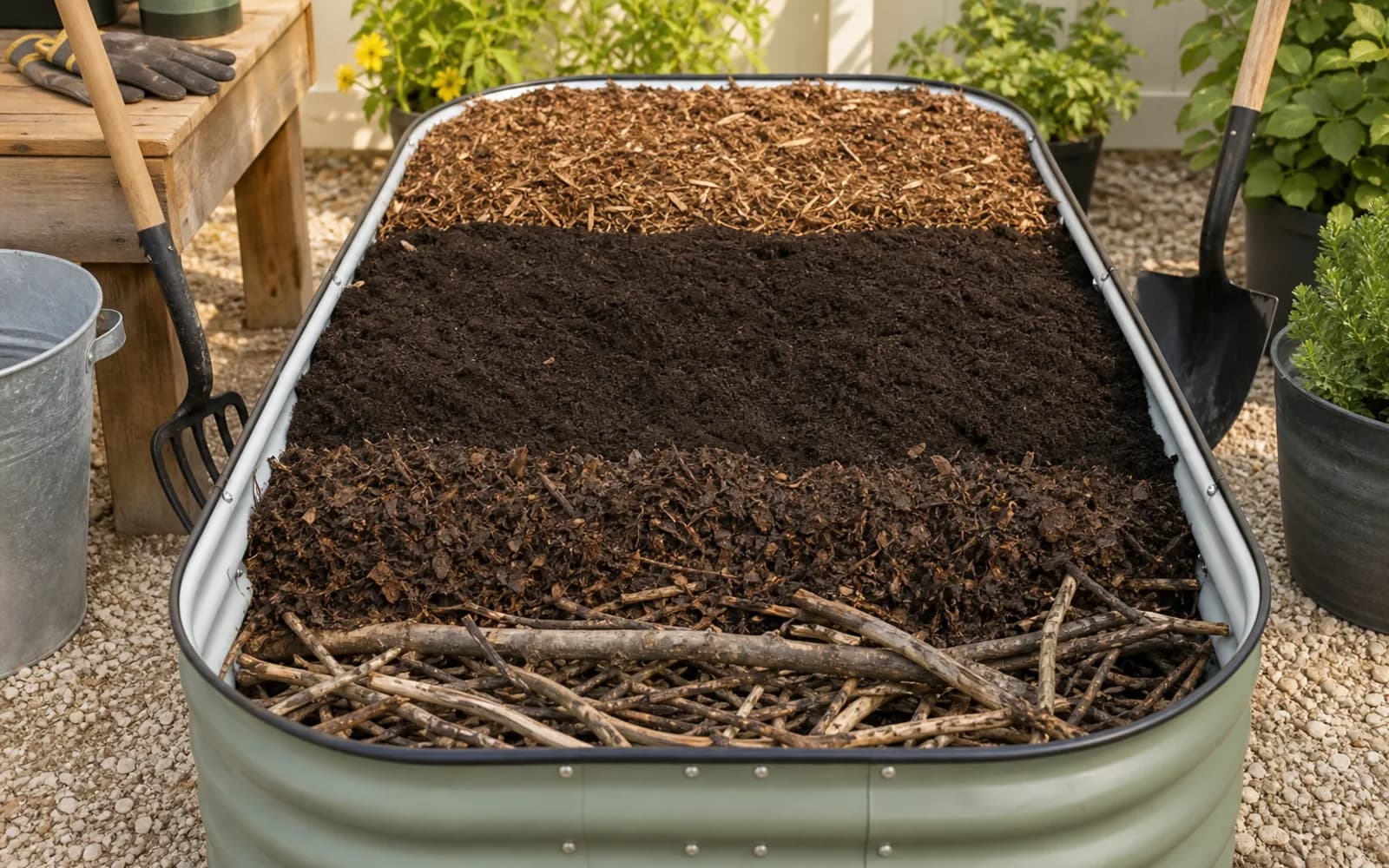
A raised garden bed cutaway showing branches, leaves, compost, dark topsoil, and young vegetable seedlings.
Quick buying decision

Start with the product that matches your constraint.

Use this compact matrix before reading the full guide. It keeps the choice grounded in fit, tradeoff, setup risk, and a current offer path without showing stale Amazon prices or ratings.

Start hereEspoma

Organic Raised Bed Mix, 1.5 cu ft

Choose if
Gardeners who want a bagged organic raised bed mix for small beds, top 10 to 12 inches, or seasonal top-offs
Skip if
Very tight patios, narrow walkways, or buyers trying to minimize fill cost.
Check first
Bagged soil can be expensive for large beds
n/aMedium
View decision notesCheck current price on Amazon
VegetablesCoast of Maine

Organic & Natural Castine Blend Raised Bed Mix, 2 cu ft

Choose if
Gardeners who want a premium bagged mix for the top root zone of vegetable beds and containers
Skip if
Buyers who only want the lowest upfront price.
Check first
Premium bagged soil is costly for filling entire deep beds
n/aEasy-medium
View decision notesCheck current price on Amazon
compost and manure amendmentMichigan Peat

Garden Magic Compost and Manure Blend, 40 lb

Choose if
Gardeners improving a raised bed mix with compost rather than filling the entire bed with potting soil
Skip if
Shoppers who have not measured their space, fill volume, and walking clearance.
Check first
Not a complete raised-bed soil by itself
n/aEasy-medium
View decision notesCheck current price on Amazon
Soil shortlist

Use bagged products for top layers, top-offs, and small beds.

Large beds often need bulk local soil too, but these products cover common Amazon-friendly soil needs.

Espoma

Organic Raised Bed Mix, 1.5 cu ft

Best for: Gardeners who want a bagged organic raised bed mix for small beds, top 10 to 12 inches, or seasonal top-offs

Key tradeoff: Bagged soil can be expensive for large beds

View decision notesCheck current price on Amazon
Coast of Maine

Organic & Natural Castine Blend Raised Bed Mix, 2 cu ft

Best for: Gardeners who want a premium bagged mix for the top root zone of vegetable beds and containers

Key tradeoff: Premium bagged soil is costly for filling entire deep beds

View decision notesCheck current price on Amazon
Michigan Peat

Garden Magic Compost and Manure Blend, 40 lb

Best for: Gardeners improving a raised bed mix with compost rather than filling the entire bed with potting soil

Key tradeoff: Not a complete raised-bed soil by itself

View decision notesCheck current price on Amazon

Updated:

The best soil for a raised garden bed is not always the most expensive bag on Amazon. A small herb bed, a 17-inch vegetable bed, a 24-inch tomato bed, and a 36-inch comfort-height bed need different fill strategies. If you try to fill every inch with premium bagged mix, the soil can cost more than the bed. If you use only cheap filler, the plants suffer in the root zone.

This guide compares raised bed soil products by use case: ready-to-use raised bed mixes, premium top-layer blends, compost amendments, potting mix for elevated planters, and coco coir for moisture management. We analyzed product specs, visible Amazon listing details, buyer-feedback themes, and common raised bed filling problems. We do not claim hands-on testing, and we do not hardcode live Amazon prices, star ratings, review counts, or availability because those details change.

Short Verdict

For most vegetable beds, use your best material in the top 10 to 12 inches. That top root zone should usually include a balanced raised bed mix, compost, and enough structure to hold moisture without turning soggy. In deep beds, lower layers can use cleaner bulk material, compost, native soil, leaves, or aged woody matter, but the top layer still matters most.

The best simple bagged pick in this list is Espoma Organic Raised Bed Mix because it is purpose-built for raised beds and easy to recommend for small beds, top-offs, and root-zone blending. Coast of Maine Castine Blend is the premium top-layer pick when you want a richer ingredient profile. Michigan Peat Compost and Manure Blend is the amendment pick, not a complete soil by itself. Verdana Coco Coir is useful when you need moisture retention and structure, but it must be blended with compost and mineral material.

If you are filling a large 8 ft by 4 ft bed, compare Amazon bagged soil against local bulk delivery before buying. Amazon is convenient for small beds, elevated planters, top layers, and amendments. Local bulk soil is often more realistic for large or extra-tall beds.

Quick Picks

PickBest forUse it asMain tradeoffAmazon link
Espoma Organic Raised Bed MixMost small raised beds and top-offsReady-to-use raised bed mixBagged soil can be costly at large scaleCheck on Amazon
Coast of Maine Castine BlendPremium top root zoneRich raised bed/container blendBetter for top layer than cheap full-bed fillCheck on Amazon
Back to the Roots 60 cu ft Raised Bed SoilOne shipped fill solution for a standard bedBulk raised bed soil palletLow review-count signal and delivery logisticsCheck on Amazon
Michigan Peat Compost and Manure BlendCompost amendmentBlend componentNot a complete raised bed soil aloneCheck on Amazon
Burpee Premium Organic Potting MixElevated planters and small containersLight potting mixToo small for large outdoor bedsCheck on Amazon
Verdana Coco Coir BrickPeat-free moisture amendmentStructure and water-holding componentMust be hydrated and blendedCheck on Amazon

Best Raised Bed Soil Recommendations

Espoma

Espoma Organic Raised Bed Mix, 1.5 cu ft

Best for: Gardeners who want a convenient bagged raised bed mix for small beds, the top root zone, or seasonal top-offs.

Why this pick: Convenient bagged raised-bed mix versus cheaper local bulk soil and compost blends

Size
1.5 cu ft bag
Type
organic raised bed soil mix

Key tradeoff: Bagged soil can be expensive for large beds

Not best for: Very tight patios, narrow walkways, or buyers trying to minimize fill cost.

Key features

  • Ready-to-use raised bed mix
  • Organic ingredient positioning
  • Works for vegetables and herbs
  • Useful for new beds or refreshing existing beds

Pros

  • The most straightforward bagged raised-bed mix pick
  • Good fit for the top 10 to 12 inches of a vegetable bed
  • Manageable bag size for small-space gardeners

Cons

  • Bagged soil can get expensive for large beds
  • Not a cheap lower-layer strategy for deep beds
  • Exact variant and availability should be checked before buying
Coast of Maine

Coast of Maine Organic & Natural Castine Blend Raised Bed Mix, 2 cu ft

Best for: Gardeners who want a premium root-zone mix for vegetables, herbs, flowers, containers, or smaller raised beds.

Why this pick: Premium root-zone mix versus basic bagged soil or local compost blend

Size
2 cu ft bag
Type
premium raised bed soil mix

Key tradeoff: Premium bagged soil is costly for filling entire deep beds

Not best for: Buyers who only want the lowest upfront price.

Key features

  • Premium raised bed mix positioning
  • Includes compost-style and soil-building ingredients by listing
  • 2 cu ft bag format
  • Ready-to-use for raised beds and containers

Pros

  • Best premium top-layer pick in this product set
  • Strong fit for vegetable beds where the root zone matters
  • More useful as a quality layer than as cheap bulk fill

Cons

  • Premium bagged mix is not the cheapest way to fill deep beds
  • Local bulk soil may be more economical for large gardens
  • Exact bag count still needs calculation
Back to the Roots

Back to the Roots 100% Organic Raised Bed Soil, 60 cu ft Pallet

Best for: Gardeners who want one shipped soil solution for a standard 8 ft by 4 ft raised bed.

Why this pick: One-pallet fill solution versus local bulk delivery and many bagged mixes

Size
60 cu ft pallet; listed to fill an 8 ft x 4 ft bed
Type
bulk raised bed soil pallet

Key tradeoff: Low review count

Not best for: Very tight patios, narrow walkways, or buyers trying to minimize fill cost.

Key features

  • Bulk 60 cu ft raised bed soil format
  • Peat-free positioning by listing
  • Designed around a standard 8 ft by 4 ft bed use case
  • More of a full-bed fill solution than a small bag top-off

Pros

  • Solves the volume problem better than buying many tiny bags
  • Useful benchmark against local bulk delivery
  • Good fit for readers filling a whole new bed at once

Cons

  • Low review-count signal compared with older soil products
  • Delivery logistics matter
  • May cost more than local bulk soil depending on location
Michigan Peat

Michigan Peat Garden Magic Compost and Manure Blend, 40 lb

Best for: Gardeners who need compost and organic matter to blend into raised bed soil, not a complete soil replacement.

Why this pick: Compost amendment versus ready-to-use raised bed mix

Size
40 lb bag; approx 0.75 cu ft by listing
Type
compost and manure amendment

Key tradeoff: Not a complete raised-bed soil by itself

Not best for: Shoppers who have not measured their space, fill volume, and walking clearance.

Key features

  • Compost and manure blend
  • Useful amendment for raised beds and planters
  • Organic matter and nutrient angle
  • 40 lb bag format

Pros

  • Good compost/amendment pick
  • Useful for top-offs and blending with mineral soil
  • Helps avoid using only fluffy potting mix in large beds

Cons

  • Not a complete raised bed soil by itself
  • Manure-based products may not suit every gardener
  • Heavy bag handling
Burpee

Burpee Premium Organic Potting Mix, 9 qt

Best for: Small elevated planters, herb boxes, seed starts, and container-style raised beds.

Why this pick: Small-container potting mix versus full raised-bed mix

Size
9 qt bag
Type
organic potting mix

Key tradeoff: Too small and costly for filling large outdoor beds

Not best for: Deep-root vegetable growers who need more soil volume than a planter box can hold.

Key features

  • Organic potting mix positioning
  • Coconut coir moisture-retention angle by listing
  • Small 9 qt bag
  • Best for containers and elevated planters

Pros

  • Good fit for small planters and elevated beds
  • Recognizable garden brand
  • Useful when a lighter container mix is appropriate

Cons

  • Not economical for full-size raised beds
  • Small bag size runs out quickly
  • Potting mix behaves differently from mineral garden soil outdoors
Verdana

Verdana Coco Coir Potting Soil Brick, 10 lb

Best for: Gardeners who want a peat-free amendment for moisture retention and soil structure.

Why this pick: Peat-free structure amendment versus complete raised-bed soil mix

Size
10 lb brick; expands to about 72 qt / 18 gal by listing
Type
coco coir soil amendment

Key tradeoff: Not a complete soil by itself

Not best for: Shoppers who have not measured their space, fill volume, and walking clearance.

Key features

  • Compressed coconut coir brick
  • Expands after hydration
  • Peat moss alternative
  • Blend component for raised beds, pots, and seed starting

Pros

  • Compact to store before use
  • Useful for moisture management
  • Good amendment for gardeners avoiding peat

Cons

  • Not a complete soil by itself
  • Needs hydration before mixing
  • Nutrient value depends on compost and other ingredients

Soil decision

Choose soil by bed depth and drainage

The right soil plan changes when a bed moves from shallow box to deep open-bottom bed to elevated planter.

12-inch shallow bed

Raised-bed mix plus compost

There is not enough depth for bulky filler.

Watch out: Avoid woody lower layers.

17-inch open-bottom bed

Strong top 10 to 12 inches

Most vegetable roots need the best material near the top.

Watch out: Do not skimp on the root zone.

24-inch tomato bed

Clean lower bulk layer plus rich top layer

Tomatoes need moisture consistency and root-zone quality.

Watch out: Calculate soil volume first.

Elevated planter

Potting-style mix with drainage balance

It behaves more like a large container than an open-bottom bed.

Watch out: Heavy garden soil can drain poorly.

The most common mistake is treating every raised bed as a container. Open-bottom beds can interact with the native soil below, so they do not always need the same mix as a patio planter. Elevated beds, on the other hand, have limited root volume and dry faster, so a lighter, container-friendly mix often makes more sense.

When Amazon Soil Makes Sense

Amazon soil products make the most sense when the bed is small, the product is an amendment, you need a top-layer refresh, or you want a manageable delivery instead of hauling bags from a store. A 2 ft by 4 ft elevated planter, herb box, or compact tomato bed can be filled with bagged products without the math becoming absurd.

Amazon also works well for specialty components: coco coir, worm castings, compost blends, small premium mixes, and top-off products. These are easier to compare online than local bulk soil because the bag size and ingredient positioning are clearer.

For large beds, be more careful. A 4 ft by 8 ft by 17-inch bed can need roughly 45 cubic feet before any lower-layer strategy. A 24-inch version can need about 64 cubic feet. A 36-inch bed can need much more. Before buying bags, use the Raised Bed Soil Calculator and compare against local bulk delivery.

When Local Bulk Soil Is Smarter

Local bulk soil can be a better choice when you are filling multiple beds, a very deep bed, or a whole backyard garden. It can reduce packaging waste, lower cost per cubic foot, and let you buy larger volumes at once.

The risk is quality control. Do not buy unknown fill dirt just because it is cheap. Ask what is in the mix, whether it is screened, whether compost is included, and whether it is suitable for vegetable gardens. Avoid questionable construction fill, contaminated soil, or fresh uncomposted material in the root zone.

A good hybrid strategy is often best: buy bulk soil or compost locally for volume, then use higher-quality bagged mix and amendments in the top root zone.

Simple Raised Bed Soil Recipe

For many vegetable beds, a practical starting blend is:

ComponentRoleNotes
Raised bed mix or screened topsoilStructure and mineral baseAvoid pure fluffy potting mix for large outdoor beds
Finished compostOrganic matter and nutrientsDo not use only compost as the full bed
Coco coir or similar amendmentMoisture retention and textureBlend with nutrient-rich material
Optional organic fertilizerSlow nutrient supportMatch to crop and label directions
Mulch on topMoisture stabilityKeep stems clear to reduce rot issues

Do not obsess over a perfect ratio if the bed is small. Focus on the root zone: good structure, mature compost, enough moisture-holding capacity, and no questionable filler near plant roots.

How Many Bags Do You Need?

Calculate cubic feet first. Multiply length by width by depth in feet. A 4 ft by 8 ft bed that is 17 inches deep is about 45 cubic feet. If a bag is 1.5 cubic feet, that is 30 bags before using any lower-layer strategy. That is why deep beds need planning.

If you are filling a shallow 12-inch bed, spend more on good growing material because there is not much lower space. If you are filling a 24-inch or 36-inch bed, reserve the best material for the top 10 to 12 inches and plan the lower layers carefully.

The How to Fill a Raised Garden Bed guide walks through the fill layers in more detail. The What to Put at the Bottom of a Raised Garden Bed guide covers cardboard, hardware cloth, logs, leaves, and materials to avoid.

Mistakes to Avoid

Do not fill a large raised bed entirely with small bags of premium potting mix unless the budget truly makes sense. It is convenient, but the cost can escalate quickly.

Do not use only compost. Compost is valuable, but a bed usually needs structure, drainage, and mineral content around it.

Do not use coco coir as a complete soil. Coir can help moisture retention and texture, but it does not replace compost, minerals, and nutrients.

Do not bury fresh manure, questionable waste, treated wood, or contaminated soil in a vegetable bed. Cheap fill is not a win if it creates plant or safety concerns.

Do not ignore settling. Raised beds often drop after watering and the first season. Plan to top off with compost or fresh mix.

FAQ

What is the best soil for raised garden beds?

For many vegetable beds, the best soil is a balanced raised bed mix with finished compost and enough structure for drainage and moisture retention. Use the highest-quality material in the top 10 to 12 inches where most roots feed.

Can I fill a raised bed with potting mix?

You can, especially in elevated planters and small containers, but it is often expensive for large open-bottom beds. Potting mix can also dry differently outdoors. For large beds, combine raised bed mix, compost, mineral soil, and appropriate amendments.

Is compost enough for a raised bed?

Compost is important, but it should not usually be the entire bed. Straight compost can be too rich, settle heavily, or lack the structure many vegetables need. Blend it with raised bed mix or mineral soil.

Is coco coir good for raised beds?

Coco coir can be a useful peat-free amendment for moisture retention and texture, but it is not complete soil. Blend it with compost and mineral material.

Should I buy soil on Amazon or locally?

Buy on Amazon for small beds, top-offs, elevated planters, and amendments. For large beds or multiple beds, compare local bulk delivery because the cost per cubic foot may be much better.

How much soil do I need for a 4 x 8 raised bed?

It depends on depth. A 4 ft by 8 ft bed that is 12 inches deep needs about 32 cubic feet. At 17 inches, it needs about 45 cubic feet. At 24 inches, it needs about 64 cubic feet before any lower-layer strategy.

Final Verdict

Choose Espoma Organic Raised Bed Mix if you want the simplest bagged raised-bed soil recommendation for small beds, top layers, and seasonal refreshes. Choose Coast of Maine Castine Blend if you want a premium root-zone mix. Choose Michigan Peat Compost and Manure Blend when you need an amendment, not a full replacement soil. Choose Verdana Coco Coir when you want a peat-free structure and moisture component.

For big beds, do the math before buying. The best soil strategy is usually not one magic bag. It is a practical fill plan: economical volume where it makes sense, mature compost, useful amendments, and the best growing material where roots actually live.