Start with the product that matches your constraint.
Use this compact matrix before reading the full guide. It keeps the choice grounded in fit, tradeoff, setup risk, and a current offer path without showing stale Amazon prices or ratings.
Start hereVego Garden
17" Tall 9-in-1 Modular Metal Raised Garden Bed Kit
Choose if
Most backyard vegetable gardens, first serious raised bed buyers, tomato and pepper growers
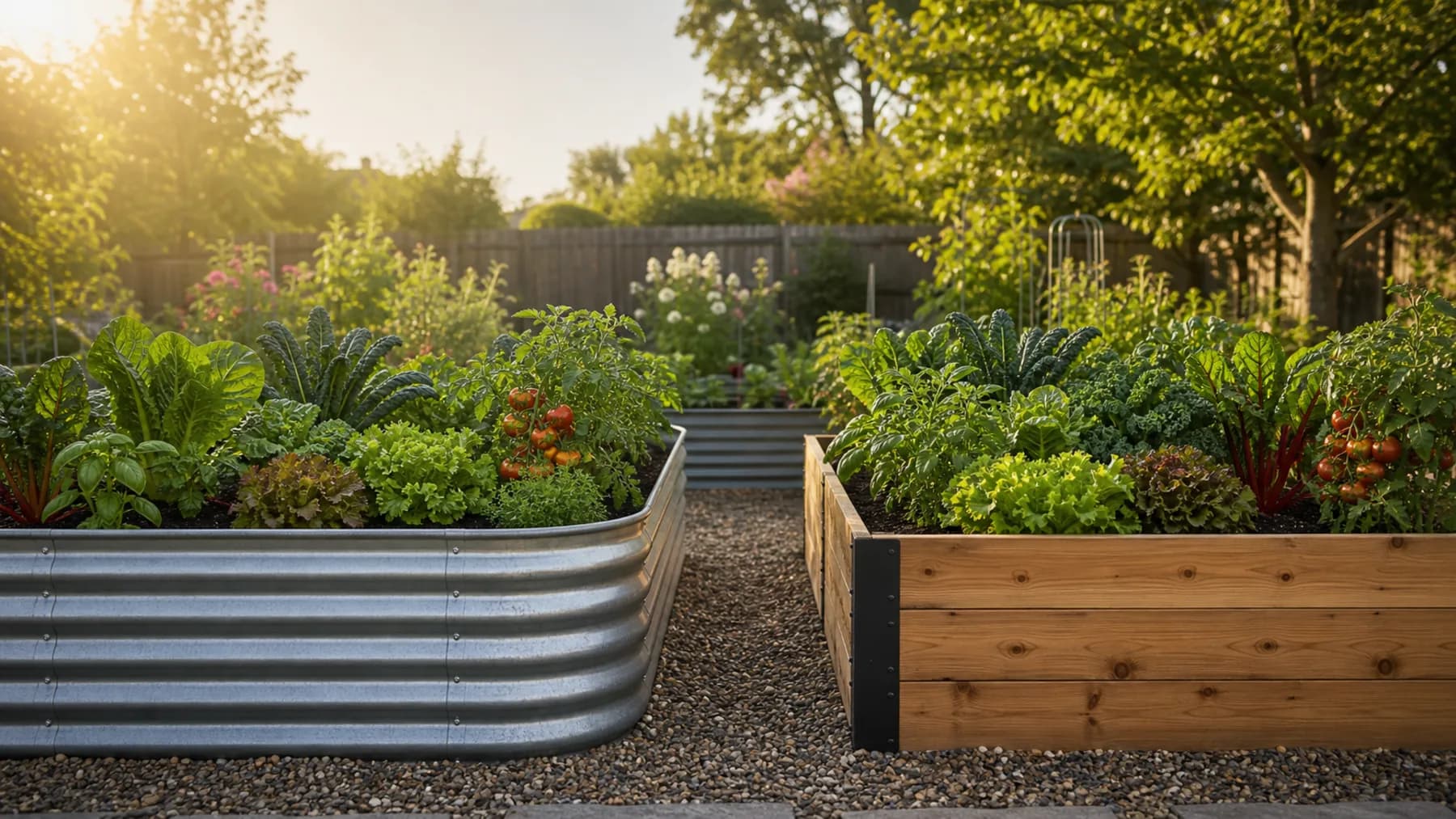
Metal vs wood raised garden beds is not just a style question. It is a lifespan, maintenance, budget, and soil-volume question. A cedar bed can look beautiful. A coated metal bed can last longer with less rot risk and often gives you more height options without carpentry. The best choice depends on your climate, timeline, fill budget, and whether you prefer a polished kit or a DIY build.
If you want the simplest answer for most backyard vegetable gardeners, choose a quality metal raised bed when you want lower maintenance, modular shapes, taller sides, and a cleaner path to trellises or covers. Choose wood when you want a natural look, custom dimensions, easier DIY repairs, or a bed that blends into an existing landscape. Neither material is automatically better for every garden.
We analyzed raised bed specs, buyer-feedback themes, extension-style gardening guidance, and common backyard use cases. We do not claim hands-on testing, and we do not hardcode live Amazon prices, ratings, review counts, or availability because those fields change.
Short Verdict
Metal raised beds are the better default if you want a kit that resists rot, ships in panels, offers 17-, 24-, 32-, or 36-inch height options, and is easy to compare across brands. This is why metal beds dominate many Amazon raised-bed searches: they are easy to ship, easy to standardize, and easier for a beginner to buy without measuring lumber, choosing fasteners, or cutting boards.
Wood raised beds are still excellent when the buyer values appearance, local lumber access, and custom sizing. A simple cedar or untreated hardwood bed can be easier to modify, repair, or integrate into an existing yard. Wood also feels less sharp and less industrial, which matters in visible front-yard or ornamental edible gardens.
The biggest mistake is choosing only by the material name. A thin budget metal bed can disappoint if panels arrive bent or feel flimsy. A cheap wood bed can rot quickly if it sits in wet soil or uses boards that are too thin. Compare the actual height, panel thickness or board thickness, edge safety, fill cost, drainage, and replacement path.
Quick Comparison
Decision factor
Metal raised beds
Wood raised beds
Better default
Rot resistance
Stronger, especially with coated panels
Depends heavily on wood species and moisture
Metal
Natural appearance
Clean and modern, but less organic
Warm, classic, landscape-friendly
Wood
DIY customization
Limited to kit configurations
Very strong if you can cut lumber
Wood
Height options
Many 17, 24, 32, and 36 inch kits
Possible, but tall wood beds need stronger construction
Metal
Assembly
Many bolts, but no cutting
Simple if pre-cut; more work if building from boards
Tie
Maintenance
Inspect coating, edges, fasteners
Check rot, warping, fasteners, board contact
Metal
Budget predictability
Kit price is clear; fill cost can surprise
Lumber price varies by region
Tie
Best use case
Long-term vegetable beds and modular layouts
Custom garden style and local DIY builds
Depends
Best Metal Bed Picks if You Choose Metal
Vego Garden
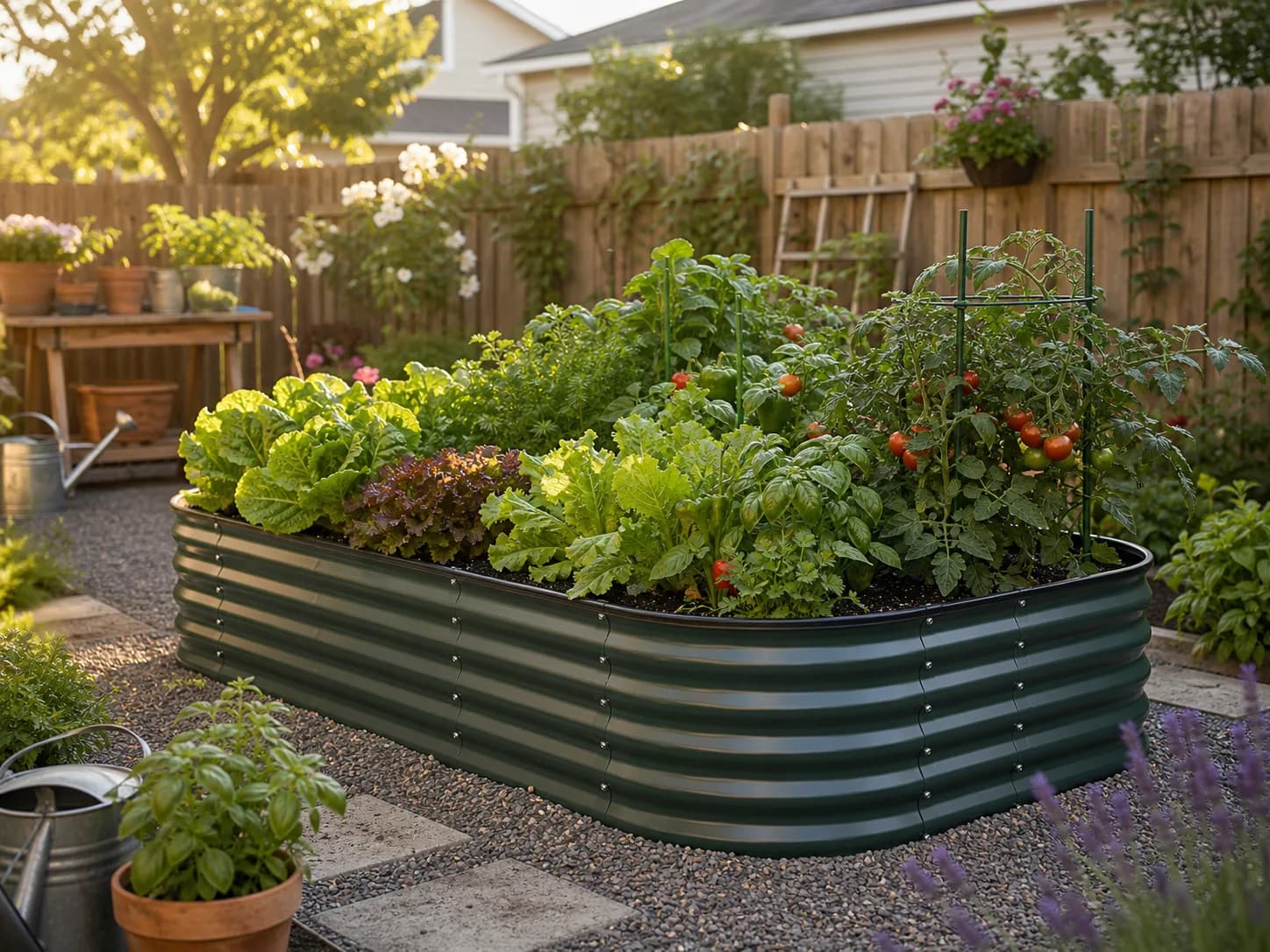
Vego Garden 17 Inch 9-in-1 Modular Metal Raised Garden Bed
Best for: Most backyard vegetable gardeners who want a polished, modular metal bed with strong depth and a premium look.
Why this pick: Premium modular metal bed versus cheaper galvanized beds and Birdies
Height
17"
Size
up to 8 ft x 2 ft configuration; 9 possible layouts
Type
modular metal raised bed
Key tradeoff: More bolts than one-piece budget beds
Not best for: Buyers who only want the lowest upfront price.
Key features
17 inch vegetable-friendly depth
Multiple layout configurations
Rounded and finished design language
Strong accessory path for trellises, covers, and watering upgrades
Pros
Better long-term system choice than a one-off budget bed
Flexible enough for many backyard layouts
Good fit for tomatoes, peppers, herbs, and mixed vegetables
Choose metal when you want a low-maintenance vegetable bed and do not want to rebuild boards every few seasons. Metal beds are especially appealing in wet climates, termite-prone areas, or gardens where the bed will stay in place for years. Rot is the main reason many gardeners move from wood to metal.
Metal also makes sense when height matters. A 17 inch bed gives more useful root depth than many shallow wood kits without forcing the buyer into a full waist-height box. A 24 inch bed can support deeper roots and easier access. A 32 or 36 inch bed can reduce bending, but it also raises fill cost.
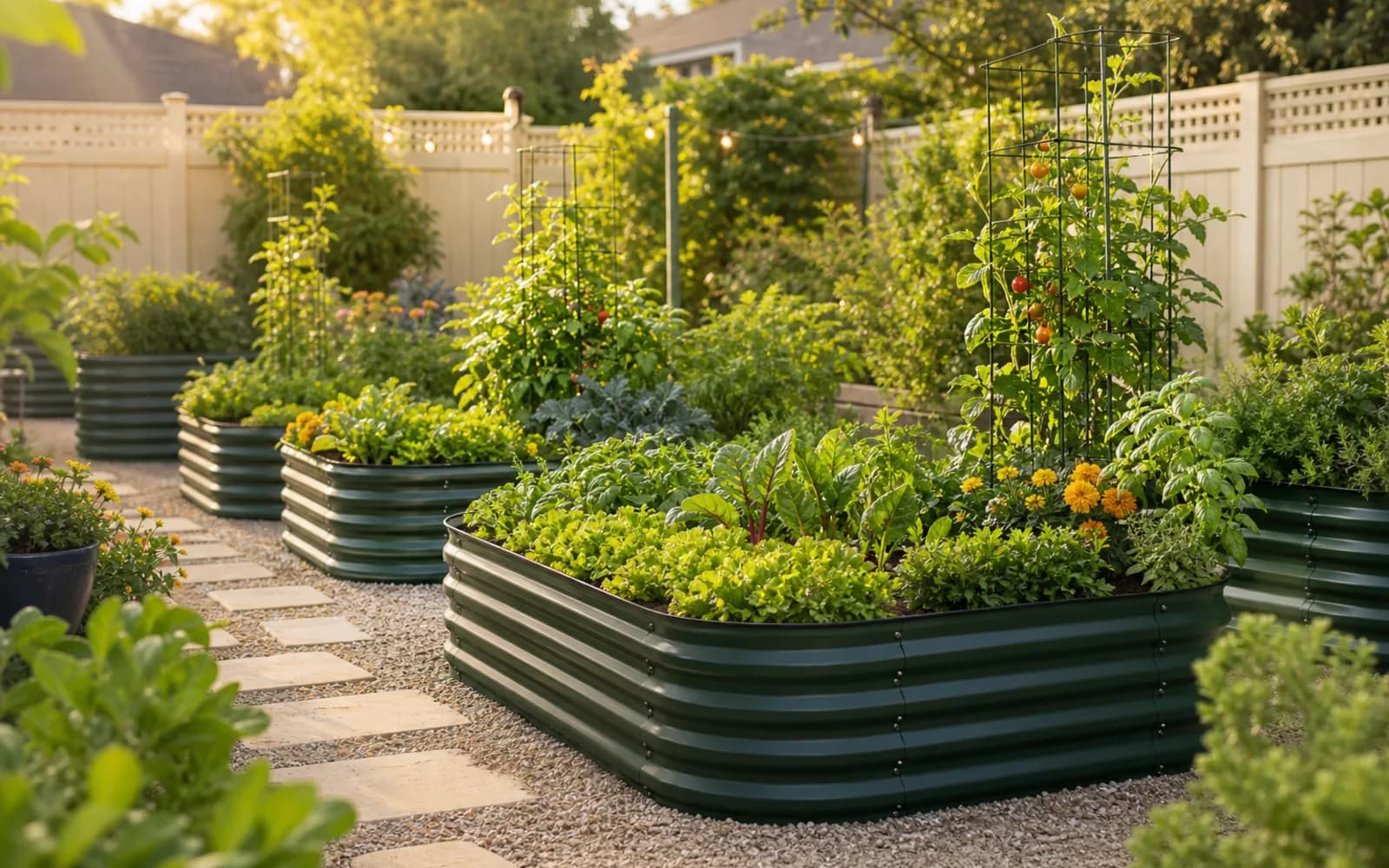
Metal wins when the buyer wants repeatable shapes. If you are building a tidy backyard vegetable area with several beds, metal kits make it easier to repeat the same height, color, and footprint. They also pair more naturally with matching trellises, covers, irrigation kits, and future expansions.
Metal is not perfect. Cheap metal beds can have thin panels, sharp edges, dented shipments, confusing hardware, and coatings that need care. The right question is not "is metal good?" The right question is whether the specific kit has a safe edge, enough panel strength for the fill height, a clear assembly path, and a shape that fits your garden.
When Wood Raised Beds Make More Sense
Choose wood when the garden design matters as much as the product. Wood feels warmer around patios, cottage gardens, front-yard edible landscapes, and yards with fences, decks, or natural materials. It is also easier to stain, repair, reinforce, or rebuild with local materials.
Wood is better for unusual dimensions. If your side yard needs a 21 inch wide bed, a stepped corner bed, a narrow herb run, or a custom U-shape, lumber gives you more freedom than a kit. A confident DIY gardener can build around irrigation lines, posts, slopes, or existing paths.
Wood can also be easier to work with if you dislike metal edges. You can sand a rough board, replace one side, or add a cap rail for sitting and leaning. A metal bed can also have safe edging, but repair is more dependent on the exact kit.
The tradeoff is moisture. Wood touches wet soil, mulch, irrigation overspray, and seasonal weather. Thicker boards, durable species, good drainage, and smart placement help, but wood is still an organic material. If the main goal is long life with less maintenance, wood usually needs more attention than metal.
Safety and Material Notes
For wood, the safest practical advice is to understand what the wood was treated with before using it for vegetables. University extension resources commonly advise gardeners to be careful with old treated lumber, salvaged wood, railroad ties, and unknown coatings. If you cannot verify the wood source, use it for non-food landscaping instead of vegetable beds.
For metal, avoid overclaiming. Galvanized and coated steel beds are widely used in vegetable gardening, but buyers should still follow the manufacturer's material guidance, avoid extremely acidic soil mixes, protect damaged coatings, and replace rusted or unsafe hardware. The risk question is usually less about a normal coated bed and more about unknown metal, scratched coatings, sharp edges, and long-term exposure.
The practical buyer checklist is simple:
Check before buying
Why it matters
Material source
Avoid unknown treated wood, salvaged industrial wood, or mystery coatings
Edge safety
Important for kids, pets, seniors, and assembly
Soil pH and drainage
Extreme conditions can shorten material life
Fill volume
Tall beds can cost much more after soil and compost
Repair path
Wood is easier to replace locally; metal depends on kit parts
Accessory fit
Trellis, cover, and irrigation compatibility can change the real value
Heat, Soil, and Plant Performance
Some shoppers worry that metal beds will overheat the soil. In real backyard use, the answer depends on color, sun exposure, bed size, soil volume, mulch, irrigation, and climate. A dark metal bed in full sun can feel hot at the surface. A deep bed with mulch and consistent watering behaves differently from a small shallow planter baking on concrete.
Wood can buffer surface heat better, but it can also dry at the edges if the bed is shallow or exposed to wind. The material is only one part of the moisture equation. Soil mix, mulch, plant density, bed height, and irrigation usually matter more to vegetables than the material alone.
For hot climates, choose lighter colors, mulch the soil surface, avoid placing beds against reflective walls, and consider drip irrigation. Microclimate beats material marketing.
Cost: The Bed Is Only Part of the Purchase
Metal beds often look expensive on the product page, but wood costs can climb once you add lumber, corner brackets, fasteners, delivery, or tools. Wood may still be cheaper if you have local lumber access and can build it yourself. Metal may be cheaper in time if you want a shipped kit with predictable parts.
The hidden cost for both materials is fill. A 36 inch tall bed can cost more to fill than to buy if you use only bagged soil. A deep bed needs a plan: lower bulk fill, compost, mineral soil, topsoil quality checks, and a good top root zone. This is why material comparisons should link to a soil calculator instead of pretending the purchase ends at checkout.
If the buyer is on a tight budget, a 17 or 24 inch metal bed may be a better compromise than a huge 36 inch bed. If the buyer is handy, a modest wood bed can be a better first project than a premium kit.
Material decision
Choose metal or wood by the maintenance tradeoff
Metal usually wins for kit convenience and rot resistance; wood wins when custom dimensions matter most.
First vegetable garden
Metal kit
It gives clear parts, known dimensions, and less rot risk for a first build.
Watch out: Fill cost can still surprise you.
Custom landscape fit
Wood bed
Cut lumber makes exact dimensions, cap rails, and built-in posts easier.
Watch out: Choose safe, durable lumber.
Senior-friendly height
Tall metal kit or custom wood
Metal offers ready 24- to 36-inch options; wood works if you can build sturdy.
Watch out: Height increases fill volume.
Long-term low maintenance
Coated metal bed
Less rot and fewer board replacements make it easier to maintain.
Watch out: Inspect coating, edges, and hardware.
Common Mistakes to Avoid
Do not compare a premium coated metal kit with the cheapest thin wood kit and call it a fair material test. Cheap versions of both materials have failure points.
Do not ignore bed height. A 17 inch metal bed and an 8 inch wood bed are not serving the same root-depth problem. Compare height and soil volume before comparing material.
Do not buy a tall bed without calculating fill. Extra height can be wonderful for comfort, but a tall empty box is not a complete garden.
Do not use unknown salvaged wood for vegetables. If you cannot verify treatment or contamination history, choose a safer material for edible crops.
Do not assume every galvanized bed is the same. Panel thickness, coating, hardware, edge trim, and assembly quality can matter more than the word galvanized.
FAQ
Are metal raised garden beds better than wood?
Metal is usually better for low-maintenance, rot-resistant, kit-based vegetable beds. Wood is better for natural appearance, custom dimensions, and DIY repair. The better choice depends on climate, budget, height, and how long you want the bed to last.
Do metal raised beds get too hot for vegetables?
They can get hot at the surface in full sun, especially darker colors, but soil performance depends on bed size, mulch, watering, climate, and soil volume. In many gardens, consistent moisture and mulch matter more than the bed material alone.
What kind of wood is best for raised garden beds?
Durable untreated wood such as cedar is a common choice because it resists decay better than many softwoods. Locally available rot-resistant lumber can also work. Avoid unknown treated wood, railroad ties, or salvaged wood with uncertain chemical history for vegetable beds.
Are galvanized metal raised beds safe for vegetables?
Galvanized and coated steel beds are widely used for vegetables. Use normal garden soil, avoid extreme acidity, follow manufacturer guidance, protect damaged coatings, and replace unsafe rusted hardware. Do not make safety assumptions about unknown metal or mystery coatings.
Which lasts longer, metal or wood raised beds?
A quality coated metal bed usually lasts longer with less maintenance than many wood beds. A well-built cedar or hardwood bed can still last years, but wood lifespan depends heavily on moisture, board thickness, species, and contact with soil.
Choose metal if you want a cleaner kit purchase, better rot resistance, more height choices, and a lower-maintenance path for vegetables. Choose wood if you want a natural look, custom sizing, local DIY control, and easier repairs.
For most raised-bed buyers who want a ready-made kit, the safer starting point is a quality metal bed at the height that matches the garden: 17 inches for balanced vegetables and fill cost, 24 inches for deeper roots and easier access, or 32 to 36 inches when comfort matters more than fill economy. If you choose wood, buy known material, avoid questionable treated or salvaged sources for edible beds, and design the bed so boards can be replaced later.