Start hereVego Garden
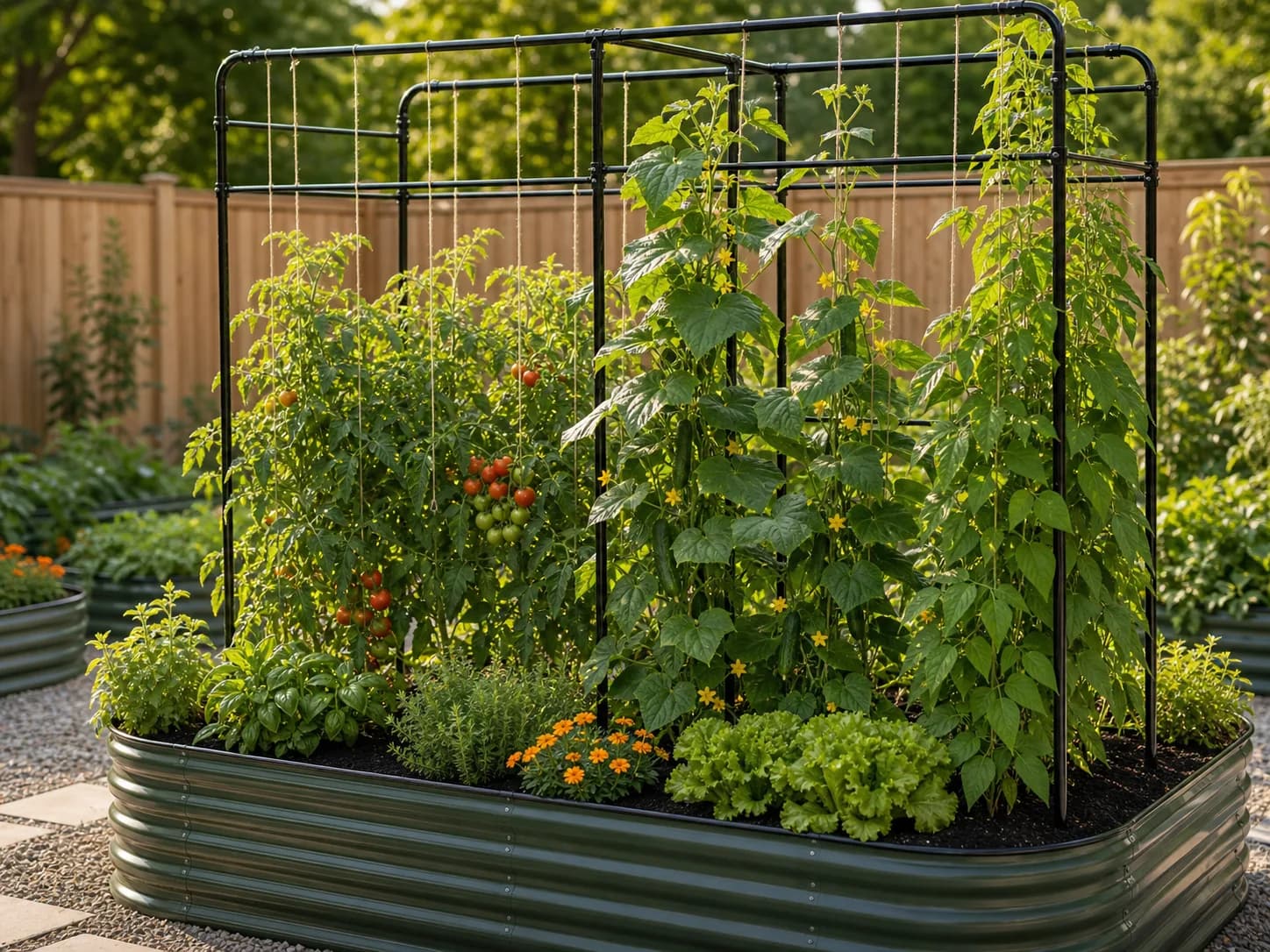
8 ft Tomato Metal Frame Trellis
- Choose if
- Tomatoes, cucumbers, beans, vining crops in rectangular raised beds
- Skip if
- Buyers who only need a basic bed without vertical crop support.
- Check first
- Garden bed not included
Compare raised bed trellis options for tomatoes, cucumbers, beans, peas, small-space beds, and Vego-compatible garden layouts.
Use this compact matrix before reading the full guide. It keeps the choice grounded in fit, tradeoff, setup risk, and a current offer path without showing stale Amazon prices or ratings.
Tomatoes, cucumbers, beans, and peas need different support patterns and bed compatibility checks.
Best for: Tomatoes, cucumbers, beans, vining crops in rectangular raised beds
Key tradeoff: Garden bed not included
View decision notesCheck current price on AmazonBest for: Cucumbers, beans, small vining crops, container gardens
Key tradeoff: Low review count
View decision notesCheck current price on AmazonBest for: Cucumbers, pole beans, squash training, visual garden entrances
Key tradeoff: Compatibility and size selection are critical
View decision notesCheck current price on AmazonUpdated:
A good trellis turns a raised bed from a flat planting box into a more productive vertical garden. It can keep tomatoes off the ground, make cucumbers easier to harvest, improve airflow, and help small beds grow more food without taking over the path. A bad trellis does the opposite: it leans, blocks access, fails under crop weight, or only fits one bed size you may not own.
This guide focuses on trellis buying decisions for raised beds: tomato frames, A-frame cucumber supports, arched trellises, wall trellis systems, and small herb-planter supports. We analyzed product specs, buyer feedback themes, compatibility notes, and common backyard gardening use cases. We do not claim hands-on testing, and we do not hardcode live Amazon prices, ratings, review counts, or availability because those details can change.
| Pick | Best for | Works best when | Main tradeoff | Amazon link |
|---|---|---|---|---|
| Vego 8 ft Tomato Metal Frame Trellis | Tomatoes, cucumbers, beans, and string training | You have a compatible rectangular raised bed | The bed is not included | Check on Amazon |
| Vego A-Frame Trellis Cucumber Cage 2 Pack | Cucumbers, peas, beans, compact vines | You want reusable support not tied to one bed | Not the strongest choice for heavy tomato walls | Check on Amazon |
| Vego Modular Arched Trellis System | Cucumbers, beans, decorative walk-through layouts | You want vertical space and a garden feature | Exact size compatibility matters | Check on Amazon |
| Vego Modular Wall Trellis System 8 ft | Edge-row tomatoes, peas, cucumbers | You already own or plan a compatible Vego bed | Less useful as a universal trellis | Check on Amazon |
| Vego EZ Self-Watering Herb Planter with Trellis | Countertop herbs and tiny-space growing | You want a small indoor setup | Not a raised-bed trellis | Check on Amazon |
Tomatoes need strength and airflow. Indeterminate tomatoes keep growing, get top-heavy, and need pruning or training. A string frame or wall trellis is usually better than a decorative arch for serious tomato rows because it gives you a clear vertical plane and makes pruning easier.
Cucumbers and pole beans are different. They climb quickly, hang fruit naturally, and work well on A-frames or arches. If you harvest from both sides of a bed, an A-frame can be easier than a wall because the crop is not pressed into one edge.
Peas need lighter support. A compact A-frame, netting, or wall trellis usually works. They do not need the same heavy-duty system as tomatoes.
Small squash and melons need caution. Some can be trained vertically, but fruit weight and vine spread matter. A strong arch can work for small varieties, but it is not a magic fix for every sprawling plant.
Herbs usually do not need a raised-bed trellis unless you are growing climbing herbs or using a small indoor planter with a built-in support. For basil, parsley, cilantro, thyme, and chives, spend the budget on light, watering consistency, and potting mix first.
Best for: Tomato growers, cucumber rows, beans, and gardeners who want a clean string-training setup on a compatible rectangular raised bed.
Why this pick: Integrated premium trellis versus generic cages and DIY string systems
Key tradeoff: Garden bed not included
Not best for: Buyers who only need a basic bed without vertical crop support.
Best for: Cucumbers, peas, beans, compact vining crops, container gardens, and raised beds where a removable support is easier than a fixed wall.
Why this pick: Freestanding support versus bed-mounted trellis
Key tradeoff: Low review count
Not best for: Buyers who only need a basic bed without vertical crop support.
Best for: Cucumbers, pole beans, small squash training, and gardeners who want a vertical feature between or beside raised beds.
Why this pick: Decorative vertical growing versus utilitarian tomato frame
Key tradeoff: Compatibility and size selection are critical
Not best for: Buyers who only need a basic bed without vertical crop support.
Best for: Raised bed owners who want an edge-mounted support for tomatoes, peas, cucumbers, or narrow row training.
Why this pick: Matching add-on ecosystem versus universal trellis products
Key tradeoff: Expensive
Not best for: Buyers who only need a basic bed without vertical crop support.
Best for: Apartment gardeners, kitchen herbs, tiny spaces, and beginners who want a small planter with built-in support.
Why this pick: Indoor herb convenience versus outdoor raised bed production
Key tradeoff: Limited crop size
Not best for: Buyers who only need a basic bed without vertical crop support.
Trellis decision
A trellis should solve the crop's weight, airflow, and harvest problem, not just look good in the bed.
A strong vertical plane makes pruning, tying, and airflow easier.
Watch out: Decorative arches are rarely the best tomato support.
Fruit hangs cleaner and vertical growth saves bed space.
Watch out: Confirm width and mounting before buying.
It keeps the crop reachable from the open side of the bed.
Watch out: Do not block the only harvest path.
A full raised-bed trellis is usually unnecessary for light crops.
Watch out: Avoid overbuying a tall structure for tiny plants.
Start with bed compatibility. A trellis that looks perfect in a product photo can become a return problem if it needs a specific bed width, panel shape, or mounting point. Measure the bed length, bed width, panel height, corner style, and whether the trellis attaches to the bed wall or stands independently.
Then check the crop weight. Tomatoes, cucumbers, peas, pole beans, and squash do not put the same stress on a support. A trellis that is fine for peas may lean under a wall of tomatoes. A decorative arch may be beautiful for beans but awkward for pruning tomatoes.
Check reach and walking space. A trellis should not turn the bed into a wall you cannot harvest from. If a bed is against a fence, avoid support systems that require access from both sides. If the bed is in the middle of a yard, leave enough path width for watering, pruning, and carrying harvest baskets.
Check wind exposure. Tall metal frames and arches can catch wind, especially before vines grow in. Secure the trellis according to the manufacturer instructions, keep the bed level, and avoid placing a tall trellis where it can fall into a walkway.
Finally, think about the whole season. The trellis that is easy in May may be frustrating in August if it blocks watering, makes pruning difficult, or creates a tangled crop wall. Buy for maintenance, not just setup.
Vego trellises make the most sense when you already use compatible Vego raised beds or want a matching garden system. The benefit is fit, finish, and a cleaner look. The downside is that ecosystem accessories can cost more and may not fit non-Vego beds.
Generic supports make sense when price, flexibility, or temporary use matters more. Stakes, cattle panels, netting, bamboo tripods, and simple cages can all work. The tradeoff is that the finished garden may look less polished and require more DIY judgment.
The honest buying advice is this: use Vego accessories when compatibility and a finished system matter. Use generic trellis materials when you are comfortable measuring, anchoring, and adapting the support yourself.
Do not buy a trellis before deciding what you will grow. Tomato support, cucumber support, and pea support are different problems.
Do not assume every Vego trellis fits every Vego bed. Match the exact product family, bed size, and mounting method before checkout.
Do not use a light A-frame as the only support for a heavy tomato wall. If tomatoes are the main crop, choose a stronger frame, wall trellis, or dedicated tomato system.
Do not put a tall arch where it blocks your path. Raised beds need working space around them, especially when the vines are full.
Do not forget watering. A dense trellis can make it harder to reach the soil surface, check mulch, or inspect drip lines. If you plan drip irrigation, install or map it before the vines take over.
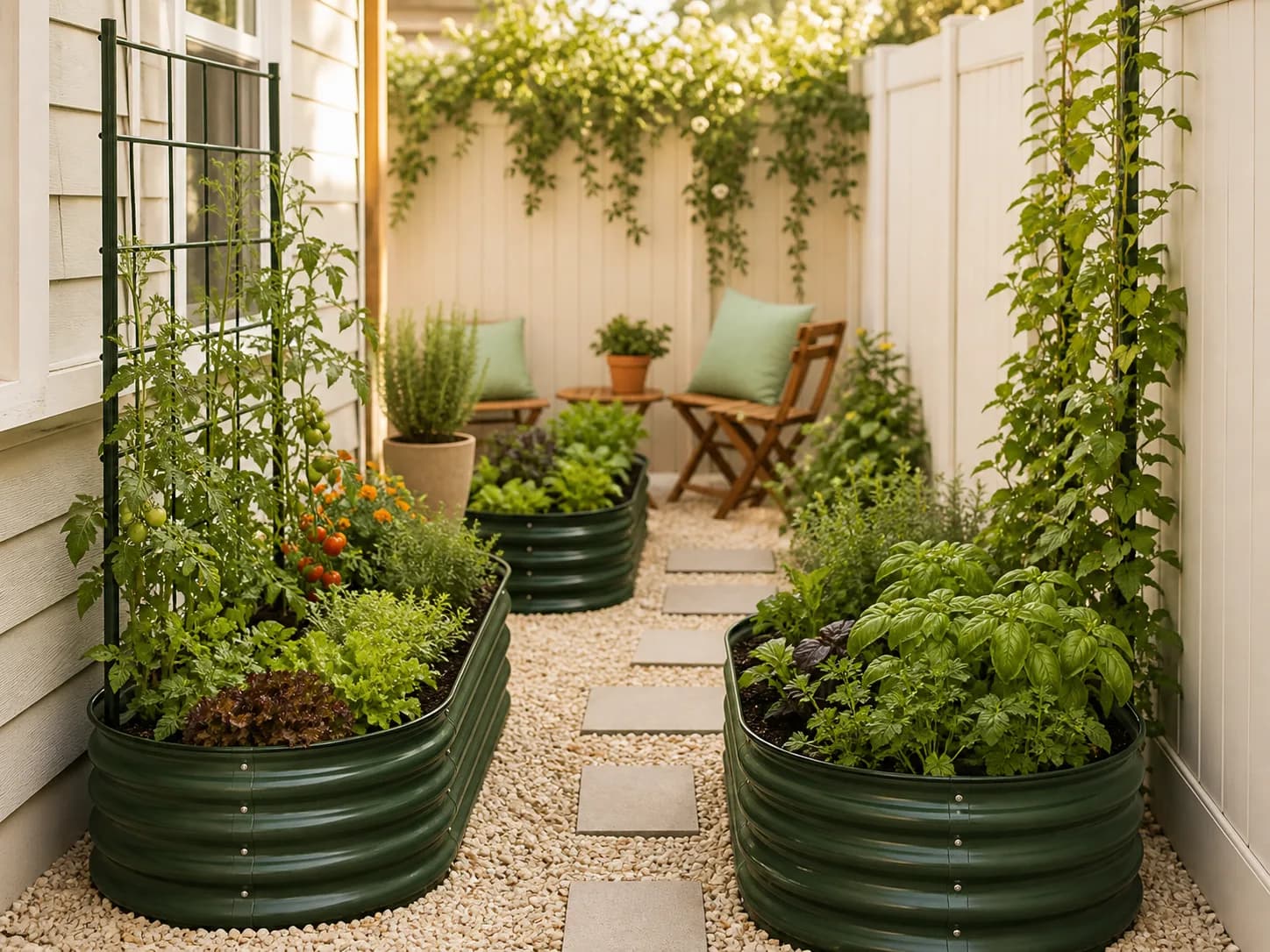
For a 2 ft wide raised bed, a wall trellis or narrow tomato frame is usually easiest. You can keep the trellis along the back edge and harvest from the front.
For a 4 ft wide raised bed with access on both sides, an A-frame can be very practical for cucumbers and beans. You can harvest from either path without reaching through a dense wall.
For an 8 ft long bed, longer frame systems and wall trellises become more attractive because they support a full row. This is where an 8 ft tomato trellis can be more useful than several small cages.
For elevated beds, keep the support lighter and crop choice more realistic. Elevated planters usually have less root volume and can dry faster, so compact patio tomatoes, herbs, peas, and lighter vines are better than giant sprawling crops.
For a decorative kitchen garden, arches can be worth the premium because they create a visual entrance and use vertical space. Just make sure the arch is still practical to harvest from.
For indeterminate tomatoes, use a strong tomato frame, wall trellis, Florida-weave setup, or string-training system. The support should be tall, stable, and easy to prune around.
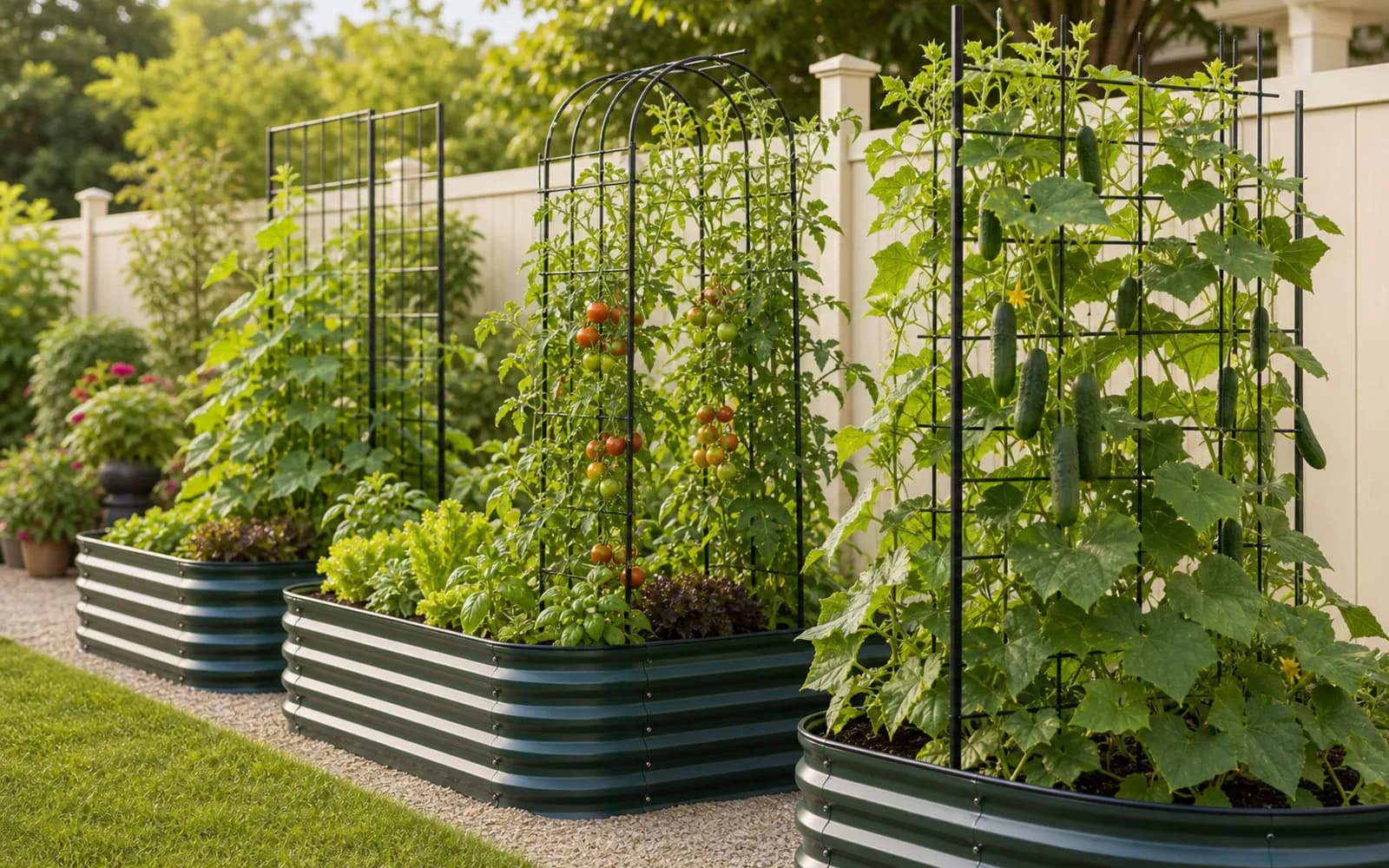
Yes. Cucumbers are one of the best crops for arched trellises because the vines climb readily and the fruit can hang down where it is easier to spot and harvest.
Usually yes, but it is easier to plan the trellis before planting. Once the bed is full of soil and plants, mounting points, access, and root disturbance become harder to manage.
Some supports may work in other setups, but you should not assume universal compatibility. Check the exact dimensions, attachment method, and bed shape before buying.
Tomato cages can work for compact or determinate tomatoes, but many indeterminate tomatoes outgrow basic cages. For taller tomato varieties, a stronger trellis or string-training system is usually easier to manage.
The best raised bed trellis depends on the crop before it depends on the brand. Choose the Vego 8 ft Tomato Metal Frame Trellis if tomatoes or a full row of climbing vegetables are the main plan and your bed is compatible. Choose the A-Frame Trellis Cucumber Cage for cucumbers, peas, beans, and removable support. Choose the Modular Arched Trellis System when you want both vertical growing and a garden feature. Choose the Modular Wall Trellis System if you already own a compatible Vego bed and want a clean edge-mounted setup.
For most gardeners, the smartest purchase is the trellis that keeps August maintenance easy. It should be strong enough for the crop, narrow enough to harvest around, compatible with the bed, and simple enough that you will keep pruning, tying, and watering all season.