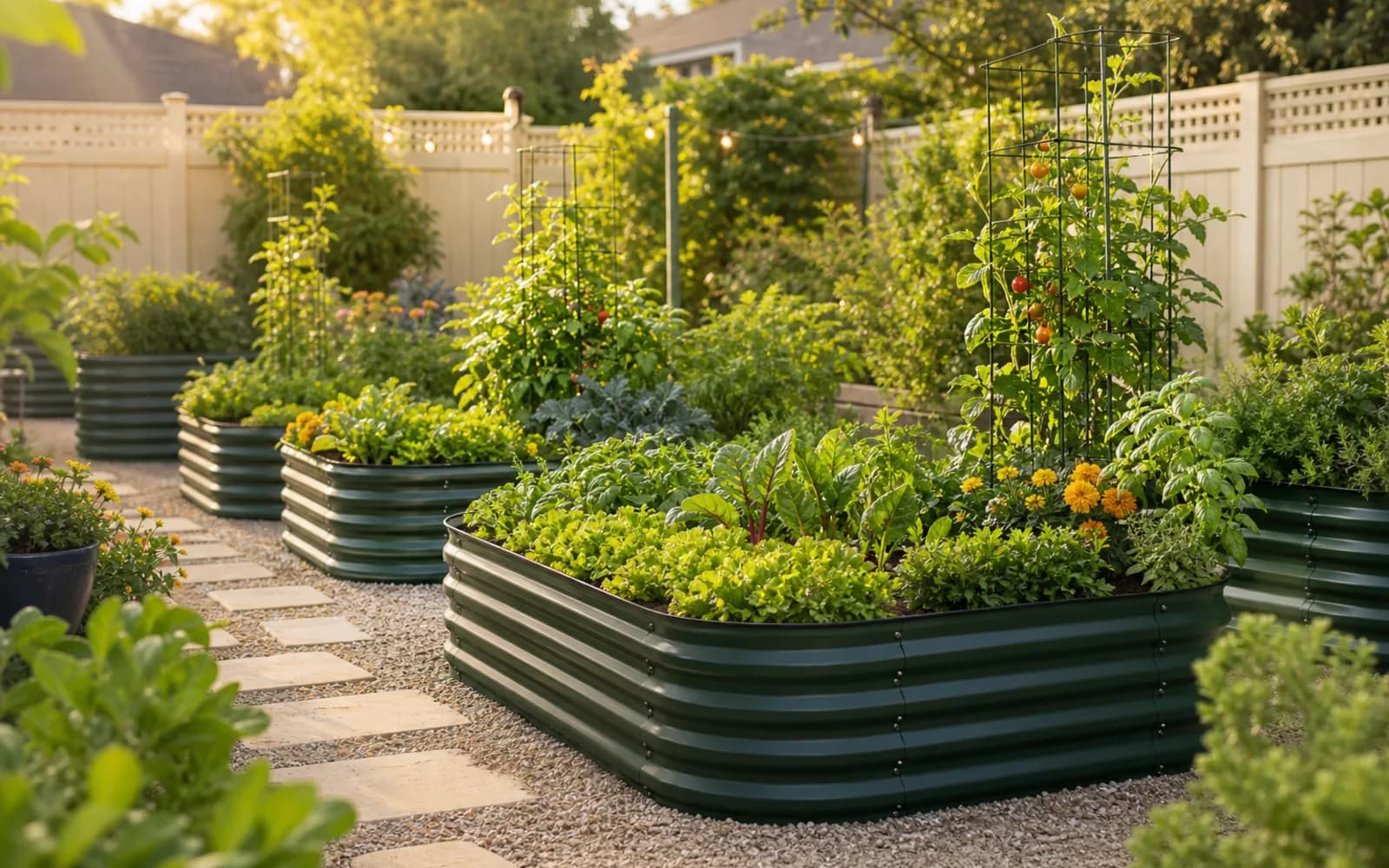
Start with the product that matches your constraint.
Use this compact matrix before reading the full guide. It keeps the choice grounded in fit, tradeoff, setup risk, and a current offer path without showing stale Amazon prices or ratings.
Start hereVego Garden
17" Tall 9-in-1 Modular Metal Raised Garden Bed Kit
Choose if
Most backyard vegetable gardens, first serious raised bed buyers, tomato and pepper growers
Tomatoes are one of the best reasons to build a raised garden bed, but they are also one of the easiest crops to plan poorly. A tomato bed needs more than a nice metal box. It needs enough root depth, a footprint that still leaves room to prune, a support system that will not collapse in August, and watering access that can keep the soil evenly moist through hot weeks.
This guide focuses on raised beds for tomato growers rather than generic "vegetable beds." We analyzed product specs, buyer feedback themes, available Amazon offer coverage, and common backyard gardening use cases. We do not claim hands-on testing, and we do not hardcode live Amazon prices, ratings, review counts, or availability because those details can change. Use the Amazon buttons to check current offer details before buying.
Short Verdict
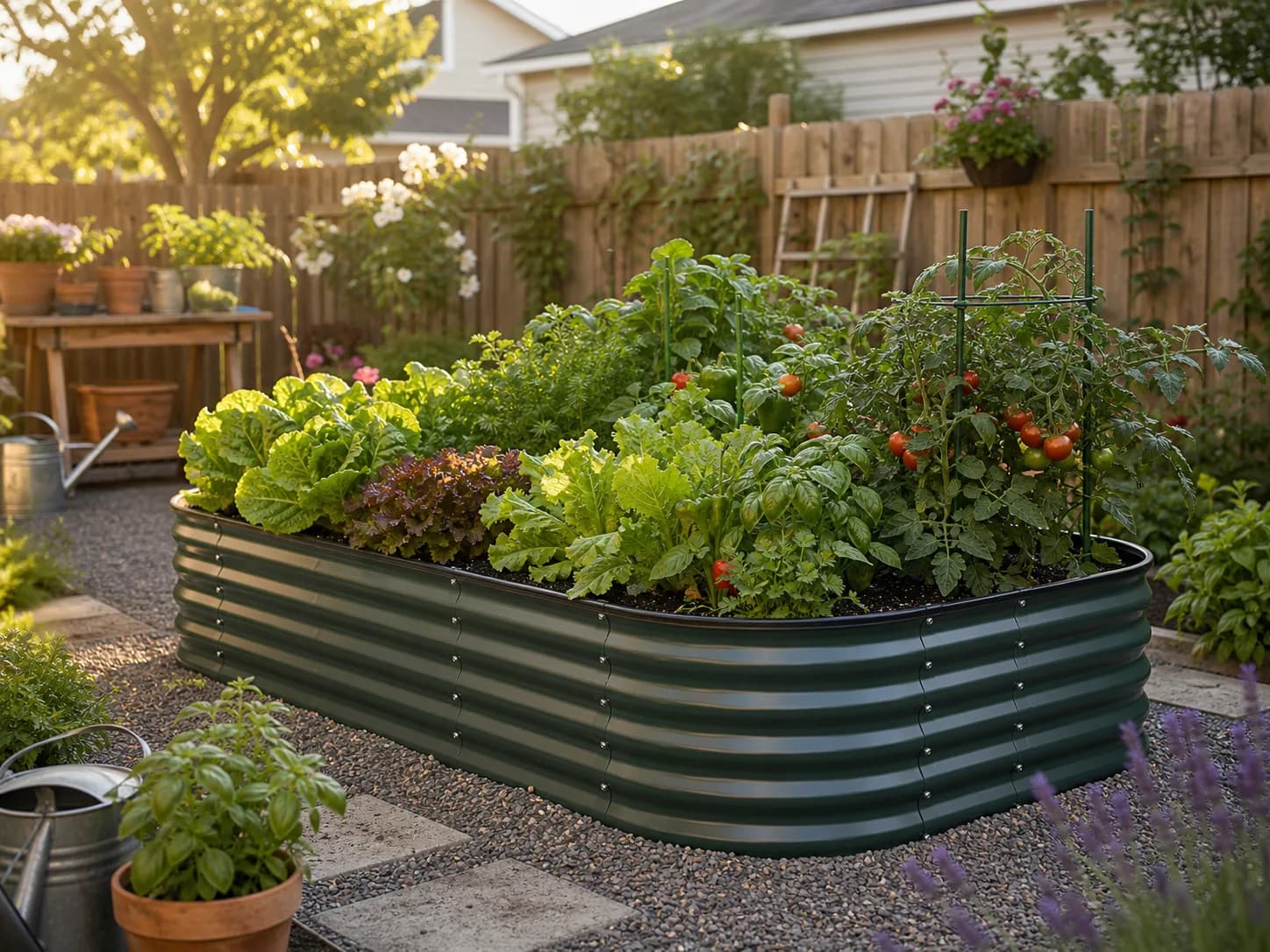
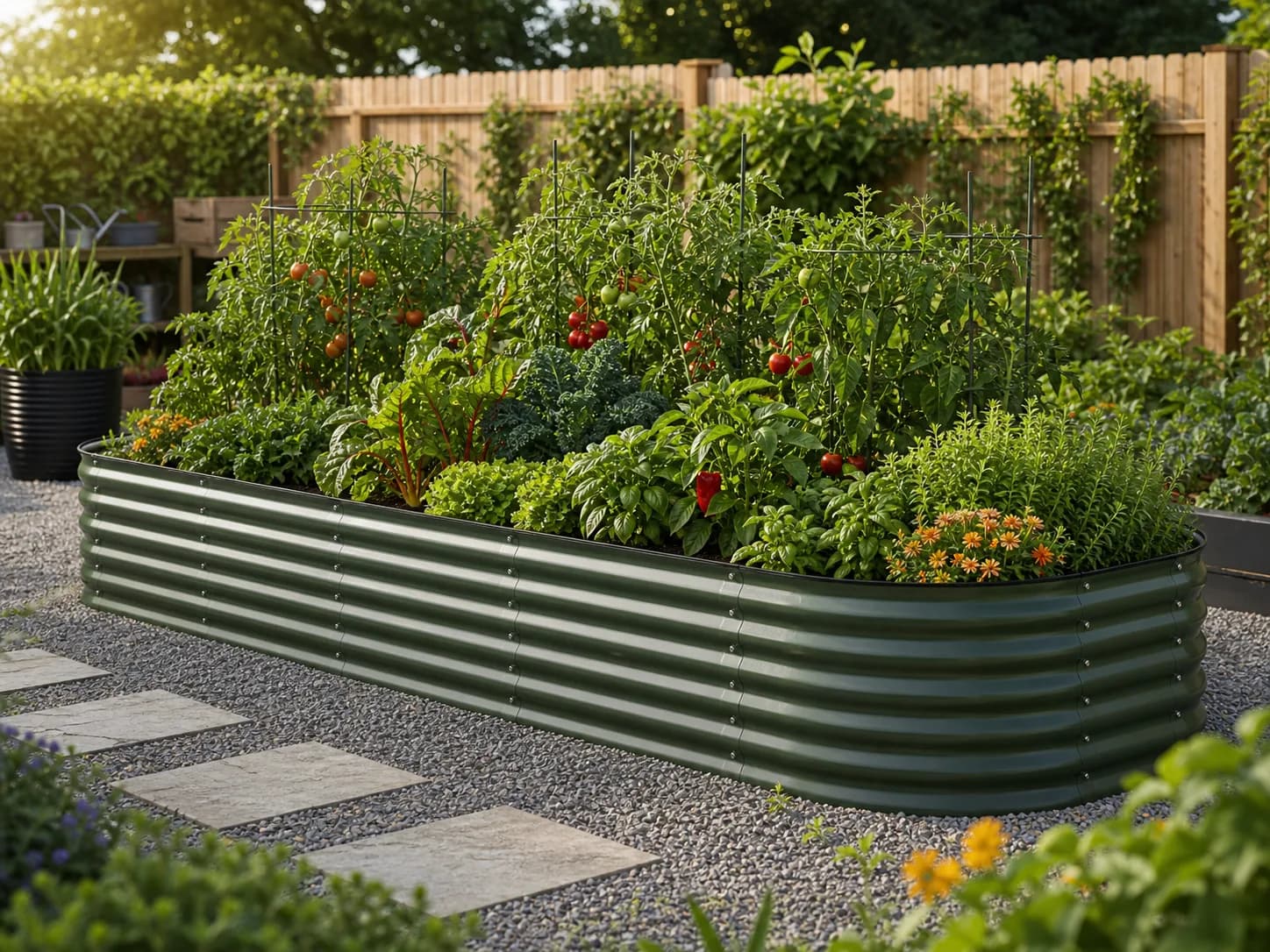
The best all-around starting point for most backyard tomato growers is a 17-inch open-bottom metal bed paired with a real trellis plan. The Vego Garden 17" 9-in-1 bed is the cleanest premium pick if you want a polished modular system and a natural path into Vego trellis accessories. The Vego 17" 10-in-1 Jumbo makes more sense if you want a larger tomato row and have enough yard space.
If you care more about depth and growing volume than premium finish, a 24-inch bed from A ANLEOLIFE or KING BIRD can be a better value for indeterminate tomatoes, peppers, and deep-root vegetable plans. If your space is compact, the Sunnydaze 47" x 23" x 24" bed gives useful depth in a smaller footprint, but it will not hold as many tomato plants.
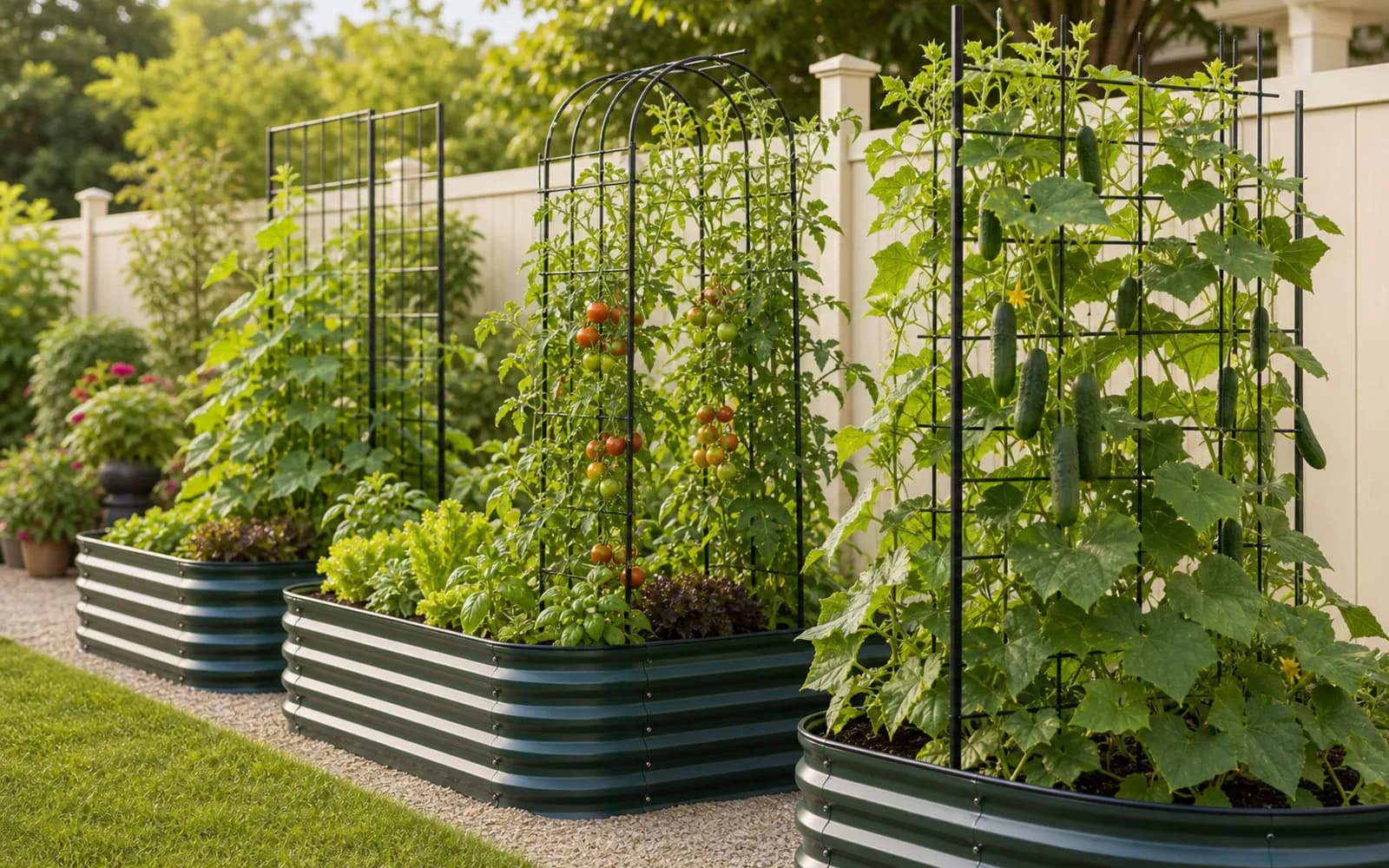
For support, do not rely on the bed walls alone. Pair the bed with a strong tomato frame, wall trellis, A-frame support, or cage system before planting. The Vego 8 ft Tomato Metal Frame Trellis is the most tomato-specific accessory in the current product set, but compatibility matters. Check bed dimensions before buying.
Quick Picks for Tomato Growers
Pick
Best for
Why it works for tomatoes
Main tradeoff
Amazon link
Vego Garden 17" 9-in-1 Metal Raised Bed
Most backyard tomato growers
Good root depth, modular shape, premium finish, accessory ecosystem
Tomatoes are heavy feeders with a long season, deep roots, and a habit of turning into a wall of leaves if support is an afterthought. A raised bed that works perfectly for lettuce can become frustrating for tomatoes if it is too shallow, too narrow to reach into, or too crowded for airflow.
Depth is the first decision. Many tomato growers can succeed in a 17-inch open-bottom bed when it sits over workable ground because roots can continue into the soil below. A 24-inch bed gives more contained root-zone volume and can be easier to manage when the native soil is compacted, poor, or covered by landscape fabric. A 12-inch bed can grow tomatoes, but it gives you less margin for heat, drought stress, and big indeterminate plants.
Width is the second decision. A 4 ft wide bed is common, but you still need to reach the center without stepping into the soil. If tomato plants are trained along one side with basil, marigolds, peppers, or low herbs on the other, access stays easier. If you plant tall tomatoes in the middle of a wide bed and then install cages later, pruning and harvest can become awkward.
Support is the third decision. Determinate tomatoes can often work with sturdy cages. Indeterminate tomatoes usually need taller support, regular tying, pruning, or a trellis plane. A raised bed with a strong support system will usually outperform a deeper bed with weak support because tomatoes fail upward before they fail downward.
Watering is the fourth decision. Raised beds drain well, which is helpful, but tomatoes dislike inconsistent moisture. Uneven watering can lead to splitting, blossom-end stress, and lower fruit quality. If you are building more than one tomato bed, plan drip irrigation or at least hose access before the beds are filled.
Best Raised Bed Recommendations for Tomatoes
Vego Garden
Vego Garden 17" 9-in-1 Metal Raised Garden Bed
Best for: Backyard tomato growers who want a polished modular bed with good depth and a premium accessory path.
Why this pick: Premium modular metal bed versus cheaper galvanized beds and Birdies
Height
17"
Size
up to 8 ft x 2 ft configuration; 9 possible layouts
Type
modular metal raised bed
Key tradeoff: More bolts than one-piece budget beds
Not best for: Buyers who only want the lowest upfront price.
Key features
17-inch open-bottom metal bed
9-in-1 modular layout options
Good fit for tomatoes, peppers, herbs, and mixed vegetables
Compatible planning path with Vego trellis and irrigation accessories
Pros
Best premium all-around choice for a first tomato-focused raised bed
17-inch height gives better root-zone margin than shallow kits
Modular shapes make it easier to adapt to backyard layouts
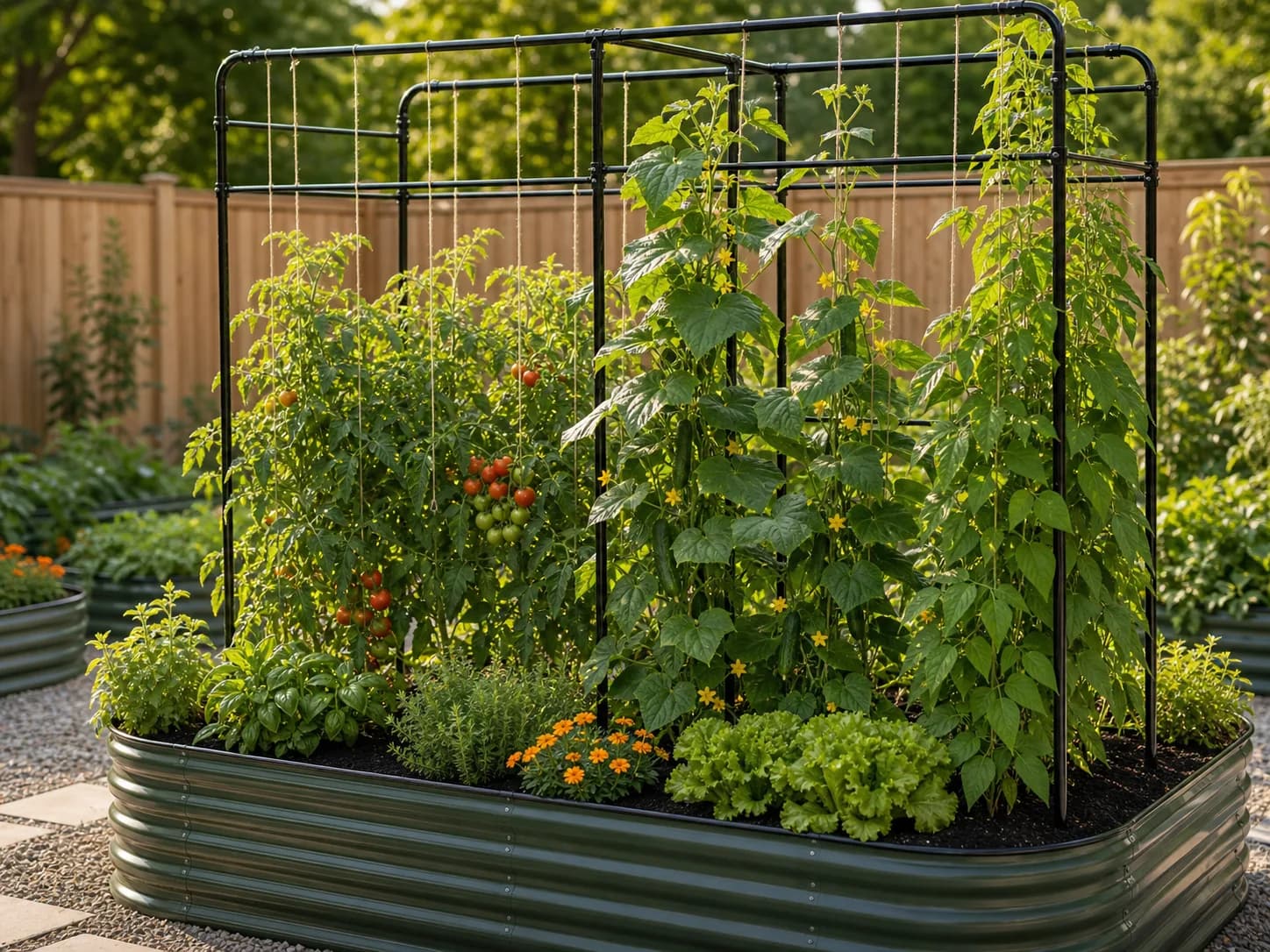
For serious tomato rows, choose support before you plant. A trellis is easiest to install when the bed is empty or newly planted. Waiting until plants are sprawling forces you to work around brittle stems, roots, cages, and irrigation lines.
How to Choose a Raised Bed for Tomatoes
Start with tomato type. Determinate tomatoes tend to stay more compact and can work in smaller beds with sturdy cages. Indeterminate tomatoes keep growing through the season and usually need taller support, more pruning, and better airflow.
Next, choose depth. A 17-inch open-bottom bed is a good practical minimum for many backyard tomato growers, especially when the bed sits over healthy soil. A 24-inch bed gives more contained growing volume and more margin during heat and inconsistent watering. A 12-inch bed is better for herbs, greens, flowers, and compact vegetables than for a main tomato bed.
Then choose footprint. A long rectangle is easier for tomatoes than a deep square because you can create a row, run a drip line, and reach plants from the path. A bed around 3 to 4 ft wide is manageable if you can reach from both sides. If only one side is accessible, keep the bed narrower or plant tall crops along the back edge.
After that, choose support. If you want cages, make sure the bed is wide enough for the cage diameter and your hands. If you want string training, plan a frame or overhead support. If you want a wall trellis, confirm the trellis fits the bed length and attachment points.
Finally, choose the watering plan. Tomatoes prefer deep, consistent moisture. A raised bed placed in full sun can dry faster than expected, especially at the edges. Mulch, drip irrigation, and a repeatable watering routine matter more than buying the fanciest bed.
Tomato-bed decision
Choose the tomato bed by support and root pressure
Tomatoes need depth, airflow, and support before the first seedling goes in.
First backyard tomato bed
17-inch open-bottom metal bed
It balances root depth, fill cost, and room for cages or a frame trellis.
Watch out: Do not crowd too many plants.
Large harvest goal
24-inch large rectangular bed
More root-zone volume helps deep feeders and long-season tomato rows.
Watch out: Soil cost and watering volume rise.
Small sunny corner
Compact 24-inch bed
Depth matters more than bed count when space is tight.
Watch out: One strong support beats overplanting.
Patio or renter setup
Elevated planter or container-style bed
It works where you cannot install an open-bottom bed.
Watch out: Choose compact tomato varieties.
Common Mistakes to Avoid
Do not buy a shallow bed for large indeterminate tomatoes unless you already have excellent native soil below it and a clear watering plan. Shallow beds can work, but they give beginners less forgiveness during heat and dry spells.
Do not plant tomatoes too close together. A raised bed can make every square foot feel valuable, but crowded tomato plants are harder to prune, water, and harvest. They also reduce airflow, which can increase disease pressure.
Do not install support late. Tomato roots and stems spread quickly. Install cages, stakes, or trellis frames early so the plant can be trained instead of rescued.
Do not ignore path width. Tomatoes need access from the side. If the bed is against a fence, plant the tomatoes toward the reachable side or choose a narrower bed.
Do not forget the fill cost. Deep beds are helpful, but they can surprise beginners. Use the Raised Bed Soil Calculator before buying a large 24-inch bed.
A 17-inch open-bottom bed is a practical starting point for many backyard tomato growers, especially over workable soil. A 24-inch bed gives more contained root-zone volume and more margin in hot weather. A 12-inch bed can grow tomatoes, but it is less forgiving for large indeterminate plants.
Are metal raised beds good for tomatoes?
Yes, metal raised beds can be good for tomatoes when the bed has enough depth, safe edging, a clear watering plan, and strong support. The bed material is only one part of the decision. Depth, spacing, support, and soil quality matter more.
How many tomato plants fit in a 4 x 8 raised bed?
It depends on the tomato type and support method, but many gardeners should think in terms of spacing and access rather than maximum plant count. Fewer well-supported plants are usually easier to manage than a crowded bed full of cages.
Do tomatoes need a trellis in a raised bed?
Tomatoes need support in a raised bed. Determinate varieties may work with sturdy cages. Indeterminate varieties usually benefit from a stronger trellis, stake system, or string-training setup because they keep growing and get heavy.
Is a 24-inch raised bed too deep for tomatoes?
No, 24 inches is not too deep for tomatoes. It can be helpful, especially over poor native soil. The main downside is not plant health; it is soil volume and fill cost.
Final Verdict
For most tomato growers, start with a 17-inch or 24-inch open-bottom raised bed and choose the support system at the same time. The Vego Garden 17" 9-in-1 bed is the best premium all-around pick in the current set because it balances depth, modularity, finish, and accessory planning. The Vego 10-in-1 Jumbo is better for larger tomato rows. A ANLEOLIFE and KING BIRD are stronger value plays when depth and growing space matter more than premium ecosystem polish.
The bigger lesson is simple: tomatoes need a system, not just a box. Buy enough depth, leave enough access, install support early, and plan watering before the bed is full.