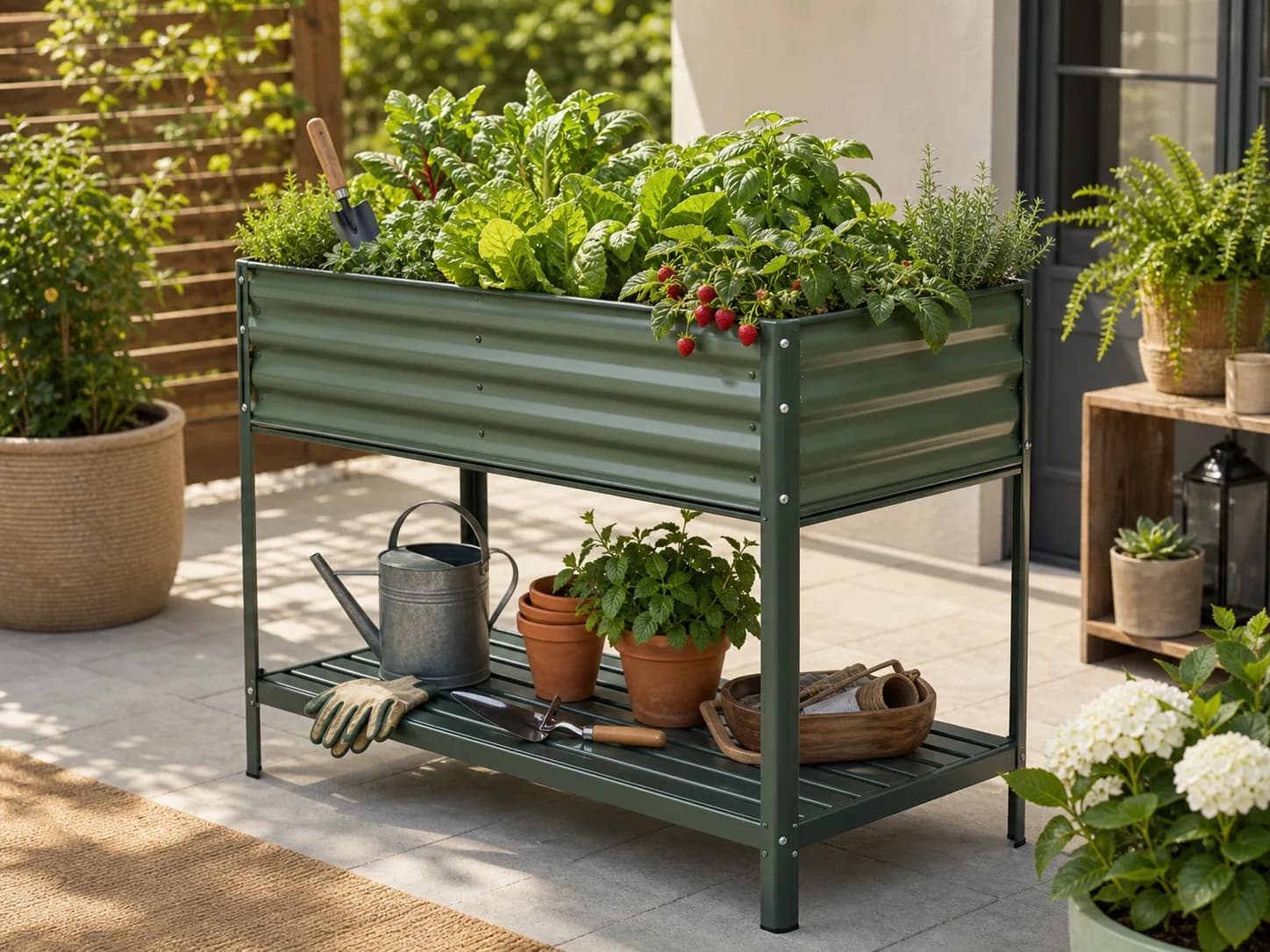
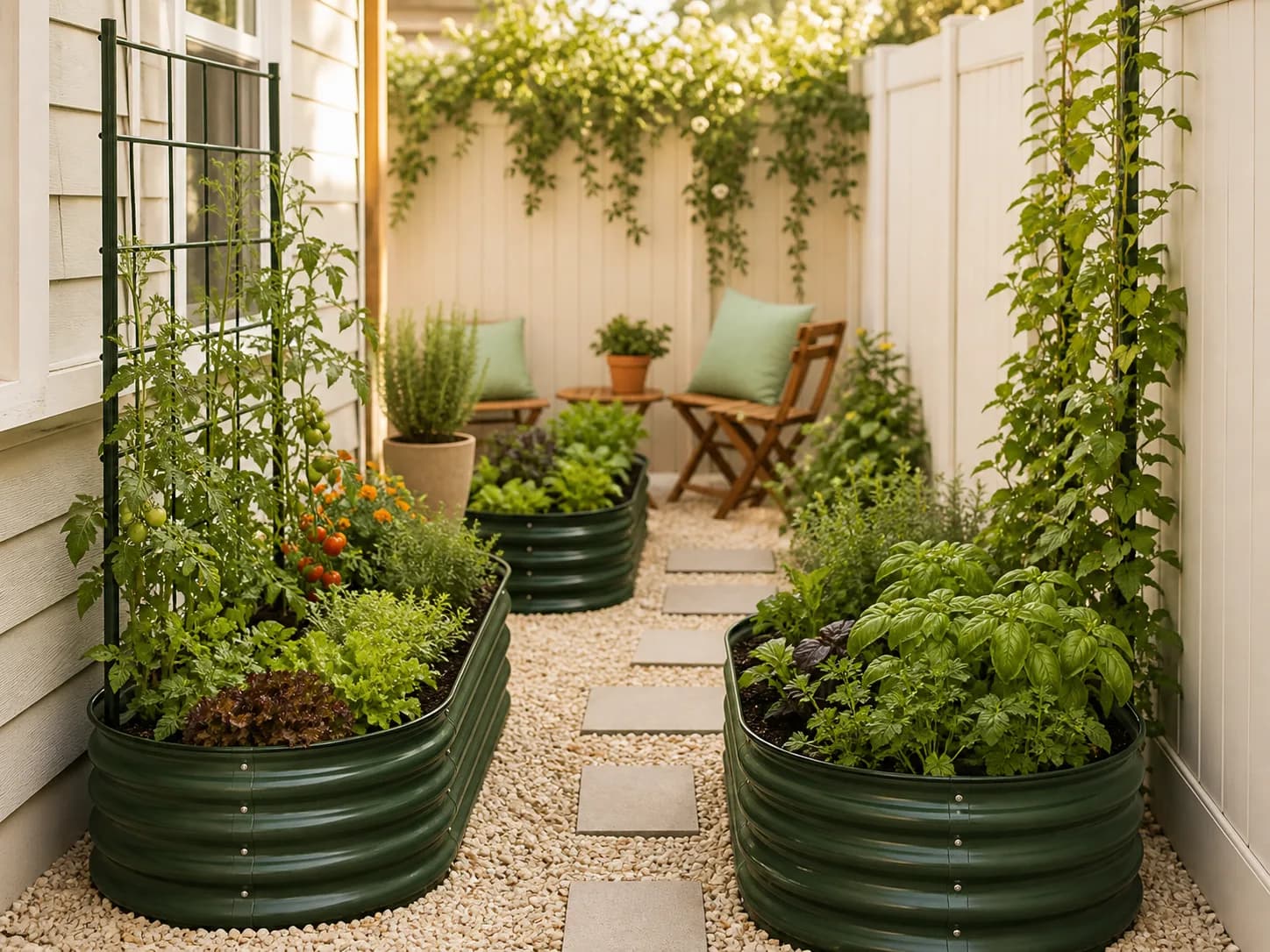
Start with the product that matches your constraint.
Use this compact matrix before reading the full guide. It keeps the choice grounded in fit, tradeoff, setup risk, and a current offer path without showing stale Amazon prices or ratings.
Start hereVego Garden
17" Tall 9-in-1 Modular Metal Raised Garden Bed Kit
Choose if
Most backyard vegetable gardens, first serious raised bed buyers, tomato and pepper growers
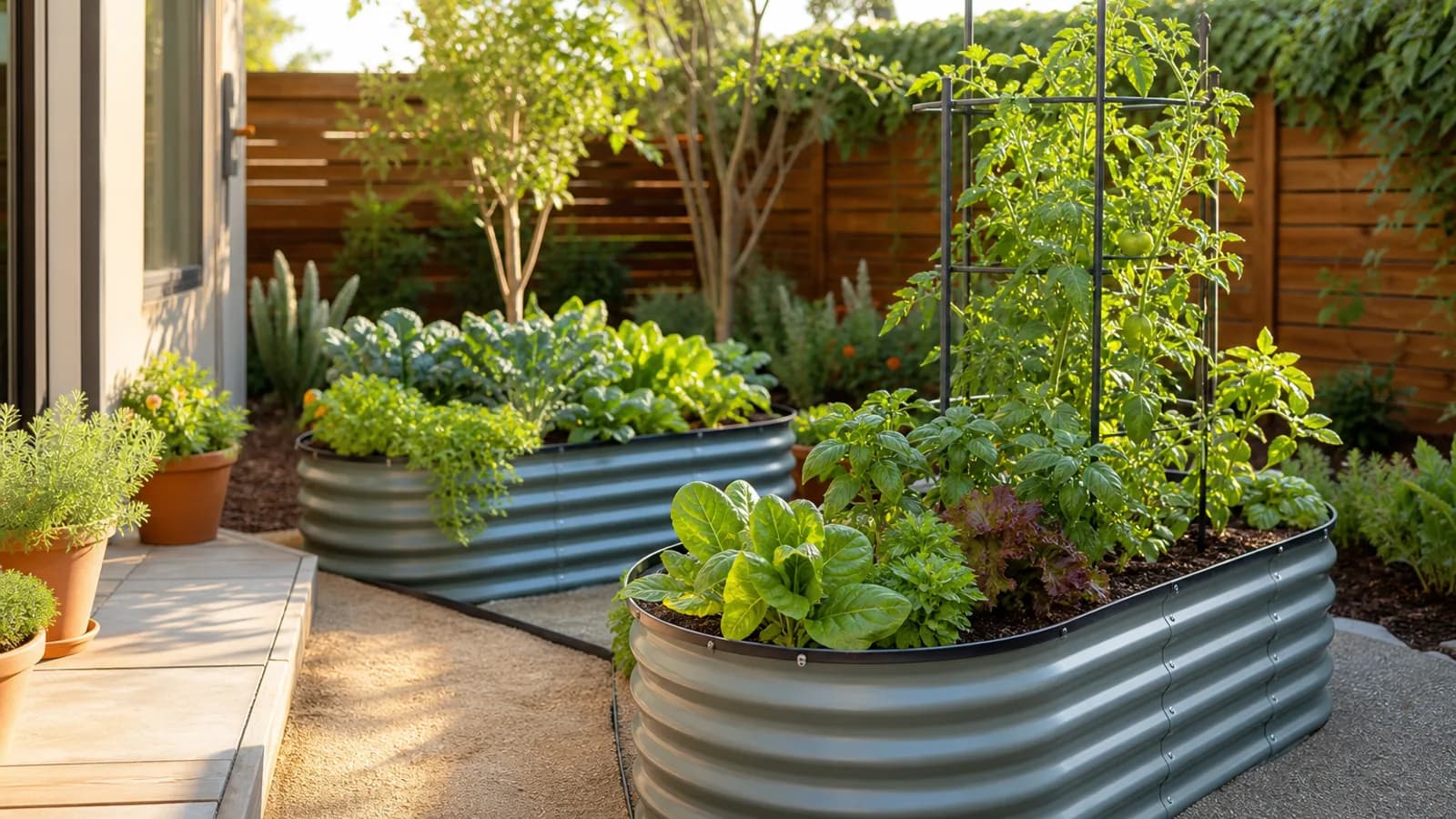
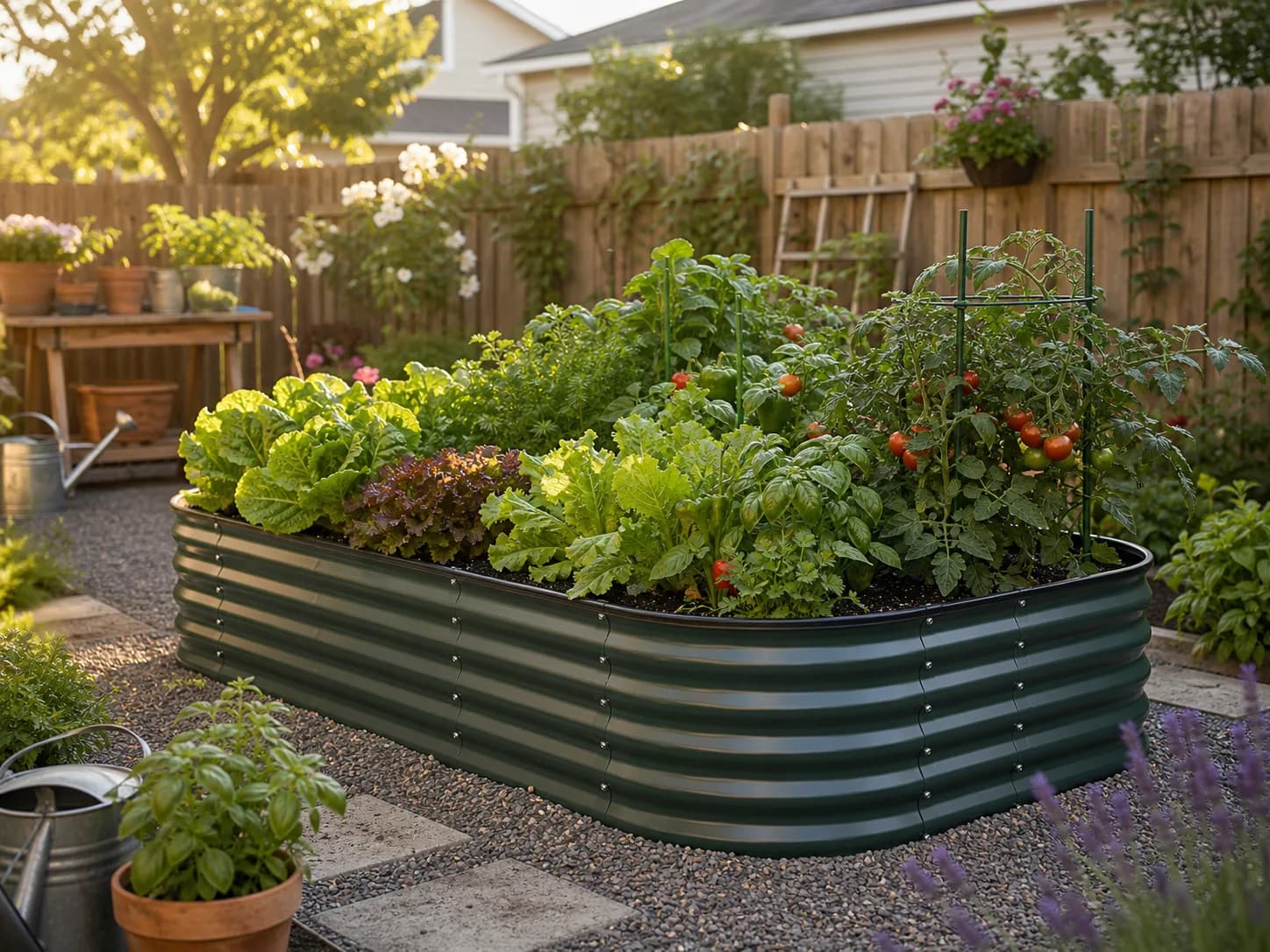
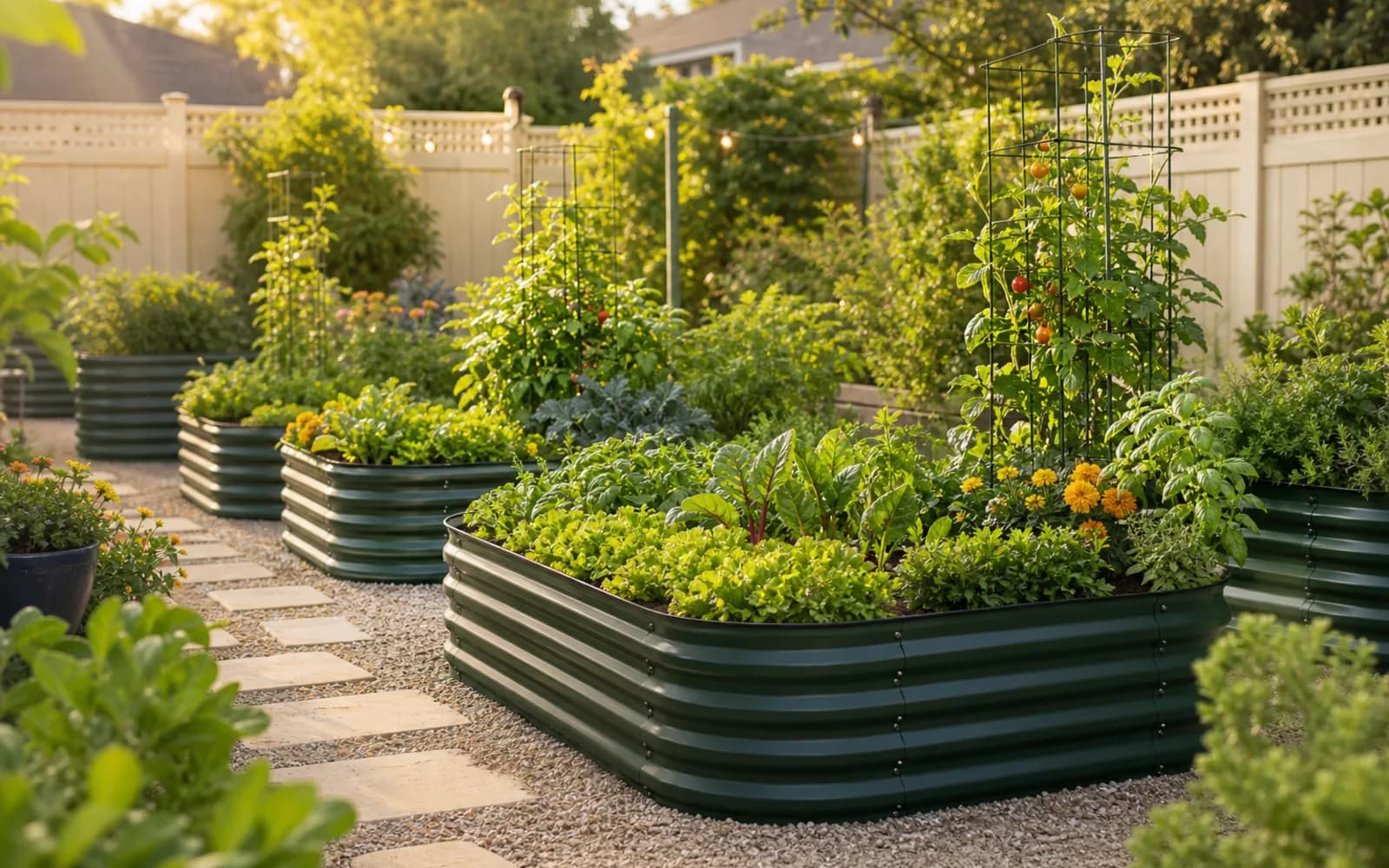
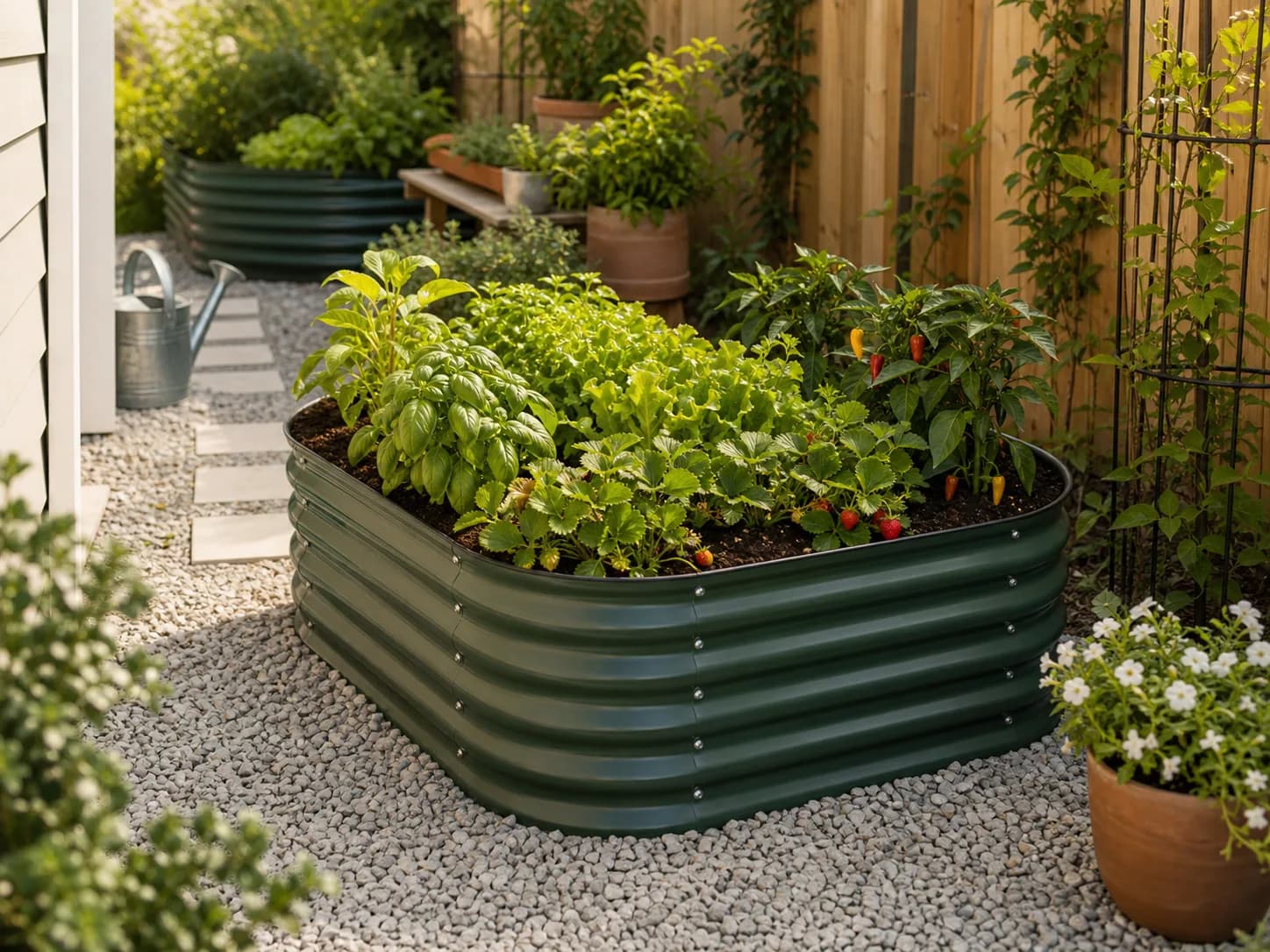
A small backyard does not need the biggest raised bed. It needs a bed you can reach, water, fill, and walk around without turning the yard into a maze. The best compact raised garden bed is usually the one that respects three limits at the same time: sunlight, path space, and soil volume.
This guide is built for side yards, townhome backyards, patio edges, narrow lawn strips, and first vegetable gardens. We analyzed product specs, buyer-feedback themes, common gardening needs, extension guidance, and the way compact beds actually fit into small outdoor spaces. We do not claim hands-on testing, and we do not hardcode live Amazon prices, ratings, review counts, or availability because those fields can change.
Vego Garden appears in this guide because several of its compact beds work well for small spaces, but this is not a Vego-only list. Sunnydaze and elevated planter options also matter when shape, height, corner placement, or patio use are more important than a premium modular ecosystem.
What Makes a Raised Bed Good for a Small Backyard?
Small-space gardening is not only about bed size. A compact bed can still fail if it is too wide to reach, too tall to fill affordably, or placed where watering becomes annoying. Start with access. If you cannot walk around both sides, keep the bed narrow enough to reach the back without stepping into the soil. University of Minnesota Extension also recommends using comfortable arm reach as a guide for bed width so maintenance does not require walking inside the bed.
Next, plan the path before choosing the bed. A small backyard often needs one real working path more than it needs a third bed. You need room to carry a watering can, hose, compost bag, kneeling pad, harvest basket, or small cart. If the only path is a narrow strip of wet grass between beds, the garden will feel cramped by midsummer.
Then check depth and fill. A 17-inch open-bottom bed is a strong default for vegetables because it gives useful root-zone depth without the extreme fill burden of 24-, 32-, or 36-inch beds. A 24-inch compact bed can be useful where you want more height in a small footprint. Elevated planters are better for patios and renters, but they behave more like containers, so watering and crop choice matter more.
Finally, think vertically. Tomatoes, cucumbers, pole beans, peas, and climbing flowers can turn a small bed into a productive garden, but supports must be planned early. A bed that fits the ground space may still become awkward if a trellis blocks the path or shades the herbs behind it.
Best Raised Beds for Small Backyards
Vego Garden
Vego Garden 17" Tall 6-in-1 Modular Metal Raised Garden Bed Kit
Best for: Small backyards, side yards, and first-time vegetable gardeners who want a premium compact metal bed.
Why this pick: Best Vego starter bed versus cheap Amazon galvanized kits
Height
17"
Size
6 possible layouts; compact patio/backyard footprint
Type
compact modular metal raised bed
Key tradeoff: Less growing area than jumbo kits
Not best for: Deep-root vegetable growers who need more soil volume than a planter box can hold.
Key features
Compact 6-in-1 modular layout
17-inch open-bottom depth
Rounded premium metal design
Useful footprint for herbs, greens, peppers, flowers, and compact vegetable plots
Pros
Strong starter choice for a small yard
Deep enough for many vegetables without becoming a huge fill project
Cleaner finish than many budget metal beds
Cons
Less growing area than larger 9-in-1 or 10-in-1 beds
This is the easiest premium pick for a compact backyard because it gives the Vego look in a smaller footprint. Choose it for a first vegetable bed, side-yard herb garden, or tidy backyard border. Skip it if you need maximum square footage, wheelchair-height access, or the cheapest one-season experiment.
Sunnydaze
Sunnydaze 47" x 23" x 24" Galvanized Raised Garden Bed
Best for: Small-space gardeners who want a taller compact bed without buying a long 8 ft kit.
Why this pick: Compact tall-bed alternative for shoppers who do not need a large modular kit
Height
24"
Size
47 in x 23 in x 24 in
Type
compact tall galvanized metal raised bed
Key tradeoff: Less growing area than long beds
Not best for: Very tight patios, narrow walkways, or buyers trying to minimize fill cost.
Key features
47 x 23 inch compact rectangle
24-inch wall height
Open-bottom galvanized metal construction
Small footprint for patio-adjacent vegetable planting
Pros
Good depth in a compact shape
Easier to place than long rectangular beds
Useful for gardeners who want more height than a 12- or 17-inch bed
Cons
Limited total growing area
Smaller public review base than some established beds
This Sunnydaze bed is the better small-yard answer when height matters more than maximum planting area. The narrow rectangle can work along a fence, near a patio, or beside a walkway. The tradeoff is capacity: it fits a compact tomato-and-basil setup better than a full multi-crop vegetable plan.
Sunnydaze
Sunnydaze Galvanized Raised Garden Bed Kit, 5 x 5 x 1 ft L-Shaped
Best for: Corners, decorative edible gardens, and awkward small yards where a straight rectangle wastes space.
Why this pick: Shape-focused alternative for corners versus rectangular Vego-style beds
Height
12"
Size
5 ft x 5 ft x 1 ft L-shaped layout
Type
l-shaped galvanized metal raised bed
Key tradeoff: Only 12 inches tall
Not best for: Gardeners who want maximum growing square footage from one kit.
Key features
L-shaped 5 x 5 ft footprint
12-inch wall height
Open-bottom galvanized metal bed
Corner-friendly shape for vegetables, herbs, and flowers
Pros
Makes better use of corners than many rectangles
Good visual fit for decorative edible gardens
Accessible alternative when straight beds feel awkward
The L-shaped Sunnydaze bed is not the highest-yield choice, but it can solve real corner problems. Choose it when a rectangle blocks movement or wastes a visible patio edge. Skip it if you need deeper root volume, a premium modular system, or standard rectangular covers and trellises.
Vego Garden
Vego Garden 17" Tall 42" Round Metal Raised Garden Bed
Best for: Herbs, flowers, compact greens, and small-space focal beds where appearance matters.
Why this pick: Round accent bed versus rectangular vegetable production bed
Height
17"
Size
42" diameter
Type
round metal raised bed
Key tradeoff: Less efficient for row planting
Not best for: Buyers who only need a basic bed without vertical crop support.
Key features
42-inch round footprint
17-inch open-bottom depth
Premium coated steel construction
Soft shape with no square corners
Pros
Attractive option for visible patio and backyard edges
Good for herbs, greens, flowers, and mixed edible beds
Softer visual footprint than a rectangle
Cons
Less efficient for row planting
Fewer standard trellis and cover options
Not ideal for maximizing vegetables per square foot
A round bed is not the most space-efficient shape for straight rows, but it works when the garden is also part of the landscape. Use it for herbs, flowers, strawberries, lettuce, or a small pepper-and-basil combination. Choose a rectangle if you need rows, long trellis support, or standard hoops.
Vego Garden
Vego Garden Elevated Raised Garden Bed V Series 2 ft x 4 ft
Best for: Patios, renters, and small-space gardeners who want easier reach without an open-bottom ground bed.
Why this pick: Elevated comfort versus open-bottom deep soil capacity
Height
about 32" total height; 12" planting depth
Size
2 ft x 4 ft
Type
elevated bed with legs and storage rack
Key tradeoff: Smaller root volume than open-bottom deep beds
Not best for: Gardeners who prefer hand watering or have no drip-compatible layout yet.
Key features
2 ft x 4 ft elevated planter
Comfortable working height
Storage rack
Compact footprint for patios and hard surfaces
Pros
Works where ground beds are impractical
Easier to reach than low beds
Uses less soil than an extra-tall open-bottom bed
Cons
Less root volume than ground beds
Needs more careful watering in heat
Not ideal for large indeterminate tomatoes or squash
For renters and patio gardeners, an elevated planter may be the best small-backyard bed even if it is not the best production bed. It keeps soil contained, raises the working surface, and avoids digging. The limitation is root volume, so pair it with careful watering and compact crops.
Vego Garden
Vego Garden EZCube Self-Watering Planter 21 in x 24 in Elevated
Best for: Tiny patios, balconies, rooftops, and beginner herb gardens where watering convenience is the main feature.
Why this pick: Low-maintenance small-space planter versus full raised garden bed
Height
elevated optional legs / rolling variant
Size
21" x 24"
Type
self-watering elevated planter cube
Key tradeoff: Very low Amazon review volume
Not best for: Gardeners who prefer hand watering or have no drip-compatible layout yet.
Key features
21 x 24 inch compact footprint
Self-watering reservoir design
Elevated planter format
Small-space indoor/outdoor positioning
Pros
Very compact
Reservoir can reduce watering guesswork
Good fit for herbs, lettuce, greens, and beginner patio gardens
Cons
Not a full raised garden bed replacement
Low public review depth compared with established beds
The EZCube is best treated as a compact self-watering planter, not a substitute for a backyard vegetable bed. Consider it for herbs and greens on a balcony, rooftop, or tiny patio. Skip it when the priority is maximum growing area per dollar or a deeper public feedback base.
Small-yard decision
Choose a compact bed by the space constraint
In a small yard, the best bed leaves enough room to work around it.
First compact vegetable bed
17-inch open-bottom modular bed
It balances useful depth, footprint, and fill cost.
Watch out: Leave a path for harvest and watering.
Narrow side yard
Compact rectangle under 2 ft wide
A narrow bed is easier to reach without blocking the walkway.
Watch out: Measure gate and hose access first.
Patio or rental
Elevated bed with legs
It avoids digging into lawn or native soil.
Watch out: Container watering is less forgiving.
Tomatoes in a small space
17- to 24-inch bed plus vertical support
Depth and trellis planning matter more than owning many beds.
Watch out: Do not let one tomato shade the whole bed.
How to Choose a Compact Raised Garden Bed
Start with sunlight. A compact bed in the sunniest 6-hour window is better than a larger bed where vegetables struggle. Then measure the working path. If you are choosing between one large bed and two compact beds, two smaller beds often maintain better because each bed has more reachable edges.
Choose height by crop plan and comfort. A 12-inch bed can work for herbs and greens over usable soil. A 17-inch bed is a safer general vegetable default. A 24-inch bed adds depth and height, while elevated beds help patios and bending limitations but need container-style watering. Finally, use the Raised Bed Soil Calculator before buying so the bed, soil, compost, and mulch budget all make sense together.
Layout Advice for Tight Spaces
The safest first layout is one compact bed with a clear working path. In a narrow yard, place the bed parallel to the longest path and keep tall crops on the north or back side where they will not shade herbs and greens. For a corner, use an L-shaped bed or two compact rectangles that leave one diagonal path open.
Vertical supports help only when they do not steal access. A trellis along the back edge is usually better than a freestanding support in the middle. If you plan tomatoes, cucumbers, peas, or pole beans, read the garden bed trellis guide before choosing the bed shape.
Common Mistakes in Small Backyard Raised Beds
Do not buy a bed that is too wide for one-sided access. A four-foot-wide bed works only when you can reach it from both sides. Against a fence, two feet is usually more practical.
Do not ignore the fill budget. Tall compact beds look manageable because the footprint is small, but height still multiplies soil volume. A 24-inch bed can be a smart choice, but it should be planned.
Do not overplant the first season. Tomatoes, squash, cucumbers, and peppers can quickly crowd a small bed. Start with fewer plants, use compact varieties, and leave air movement around crops.
Do not assume a patio planter waters like an in-ground bed. Elevated and self-watering planters still need monitoring, especially in hot weather and windy locations.
What size raised bed is best for a small backyard?
For many small backyards, a compact 2 x 4 style bed, a 17-inch modular bed, or a narrow rectangle is easier to maintain than one oversized bed. The best size depends on path space, sunlight, and whether you can reach the whole bed without stepping into it.
Is a round raised bed good for vegetables?
A round raised bed can work well for herbs, greens, flowers, strawberries, and compact vegetable combinations. It is less efficient for straight rows, long trellises, and standard covers, so choose it for appearance and mixed planting rather than maximum yield.
Are elevated raised beds good for small backyards?
Elevated beds are good for patios, renters, seniors, and gardeners who want easier reach. They are less ideal for deep-rooted or large crops because they behave more like containers and can dry faster than open-bottom beds.
How much path space do I need around a raised bed?
Leave enough room to water, prune, harvest, and carry supplies comfortably. In a small yard, one real working path is better than several cramped paths. If a bed is against a fence, make sure the width is narrow enough to reach the back.
What should I grow first in a small raised bed?
Start with herbs, lettuce, spinach, compact peppers, bush beans, strawberries, flowers, and one or two trellised crops if the bed has enough depth and support. Avoid stuffing large tomatoes, squash, cucumbers, and herbs into the same tiny bed.
Final Verdict
The best raised garden bed for a small backyard is the one that leaves the garden usable after it is installed. For most compact vegetable gardens, the Vego Garden 17" Tall 6-in-1 is the strongest premium starter pick because it balances depth, footprint, finish, and flexibility. If you want more height in a very small rectangle, the Sunnydaze 47" x 23" x 24" bed is the more compact tall-bed choice. If the yard problem is an awkward corner, the Sunnydaze L-shaped bed may fit better than a standard rectangle.
Choose an elevated Vego planter when the garden belongs on a patio or when bending is the main issue. Choose the EZCube only when you want a tiny self-watering planter for herbs, greens, or balcony growing, not a full vegetable bed.
Small backyards reward restraint. Buy one bed that fits the sun, path, water source, and crop plan, then expand after the first season teaches you what the space can actually support.