Start with the product that matches your constraint.
Use this compact matrix before reading the full guide. It keeps the choice grounded in fit, tradeoff, setup risk, and a current offer path without showing stale Amazon prices or ratings.
Start hereVego Garden
17" Tall 9-in-1 Modular Metal Raised Garden Bed Kit
Choose if
Most backyard vegetable gardens, first serious raised bed buyers, tomato and pepper growers
The best bottom layer for a raised garden bed depends on what the bed is sitting on. A bed over healthy soil usually does not need a permanent barrier. A bed over lawn may need short-term weed suppression. A bed in a vole or gopher area may need hardware cloth. A bed on concrete or a patio needs drainage and a way to hold soil in place. A deep 32-inch bed may need lower bulk material to reduce fill cost.
The mistake is treating every raised bed the same. Plastic sheeting, rocks, logs, cardboard, landscape fabric, and hardware cloth all solve different problems. Some help in the right situation; some create drainage or root problems when used blindly. This guide explains what to use, what to avoid, and how the bottom choice changes the bed you should buy.
We link to current Amazon offers where useful, but we do not hardcode live prices, ratings, or availability because those fields can change.
Quick Answer
Situation
Best bottom choice
Why
Bed over normal garden soil
Usually no permanent barrier
Roots can move downward and drainage stays natural
Bed over lawn or weeds
Plain cardboard as temporary smothering layer
Suppresses grass while breaking down over time
Burrowing pests are common
Hardware cloth under the bed
Helps block tunneling animals while letting water through
Bed over concrete or patio
Breathable liner or elevated planter design
Holds soil while still letting water drain
Very deep 24- to 36-inch bed
Clean lower organic bulk layers if needed
Reduces fill cost without sacrificing top root zone
Poor drainage site
Fix location or soil mix first
Rocks or plastic do not solve a bad site
What Most Raised Beds Need at the Bottom
Most open-bottom raised beds do not need a solid bottom. In fact, a permanent barrier can block roots, trap water, and reduce the main advantage of placing the bed over soil. If the soil underneath is safe and workable, leave the bottom open, loosen or aerate the top few inches, and build the bed above it.
Cardboard is useful when the bed is going over grass or annual weeds. It is not a magic drainage layer; it is a temporary smothering layer. Use plain cardboard, remove tape and labels, overlap the pieces, wet it down, and then fill the bed. Over time, it breaks down and roots can move through.
Hardware cloth is useful when burrowing pests are a real risk. It should be metal mesh, laid under the bed before filling, with edges secured well enough that pests cannot simply enter from the sides. It lets water drain while creating a physical barrier.
Landscape fabric is more situational. It can help hold soil in place on a hard surface if water can pass through, but it is usually not needed between soil and an open-bottom bed. Plastic sheeting is the one to avoid in most raised-bed bottoms because it blocks drainage.
Products Where Bottom Choice Matters
Vego Garden
Vego Garden 17" Tall 9-in-1 Modular Metal Raised Garden Bed Kit
Best for: Most open-bottom backyard vegetable beds where no permanent bottom barrier is needed.
Why this pick: Premium modular metal bed versus cheaper galvanized beds and Birdies
Height
17"
Size
up to 8 ft x 2 ft configuration; 9 possible layouts
Type
modular metal raised bed
Key tradeoff: More bolts than one-piece budget beds
Not best for: Buyers who only want the lowest upfront price.
Key features
17-inch open-bottom profile
9-in-1 modular layouts
Premium coated metal panels
Good depth for mixed vegetables
Pros
Best premium default for soil-based raised beds
Open bottom supports drainage and deeper rooting
Good balance of depth and fill cost
Cons
Needs site prep if placed over grass
Hardware cloth is extra if burrowing pests are present
Choose the bottom layer by what problem you are solving
A bottom layer should solve weeds, pests, hard surfaces, or fill cost without blocking drainage.
Bed over safe garden soil
No permanent barrier
Roots can move downward and drainage stays natural.
Watch out: Use hardware cloth if burrowing pests are common.
Bed over lawn or weeds
Plain cardboard
It suppresses grass while breaking down over time.
Watch out: Avoid glossy or plastic-coated material.
Voles, gophers, or mice
Hardware cloth
It blocks tunneling pests while letting water pass.
Watch out: Fold edges carefully before filling.
Concrete, patio, or deep bed
Breathable liner or clean lower bulk layer
Hard surfaces need containment; deep beds may need cost control.
Watch out: Never use a plastic sheet under vegetables.
Scenario 1: Bed Over Existing Garden Soil
If the soil underneath is safe, not badly compacted, and not full of aggressive perennial weeds, the best bottom layer is usually no bottom layer. Loosen the surface, remove large weeds, place the bed, and fill with a good root-zone mix.
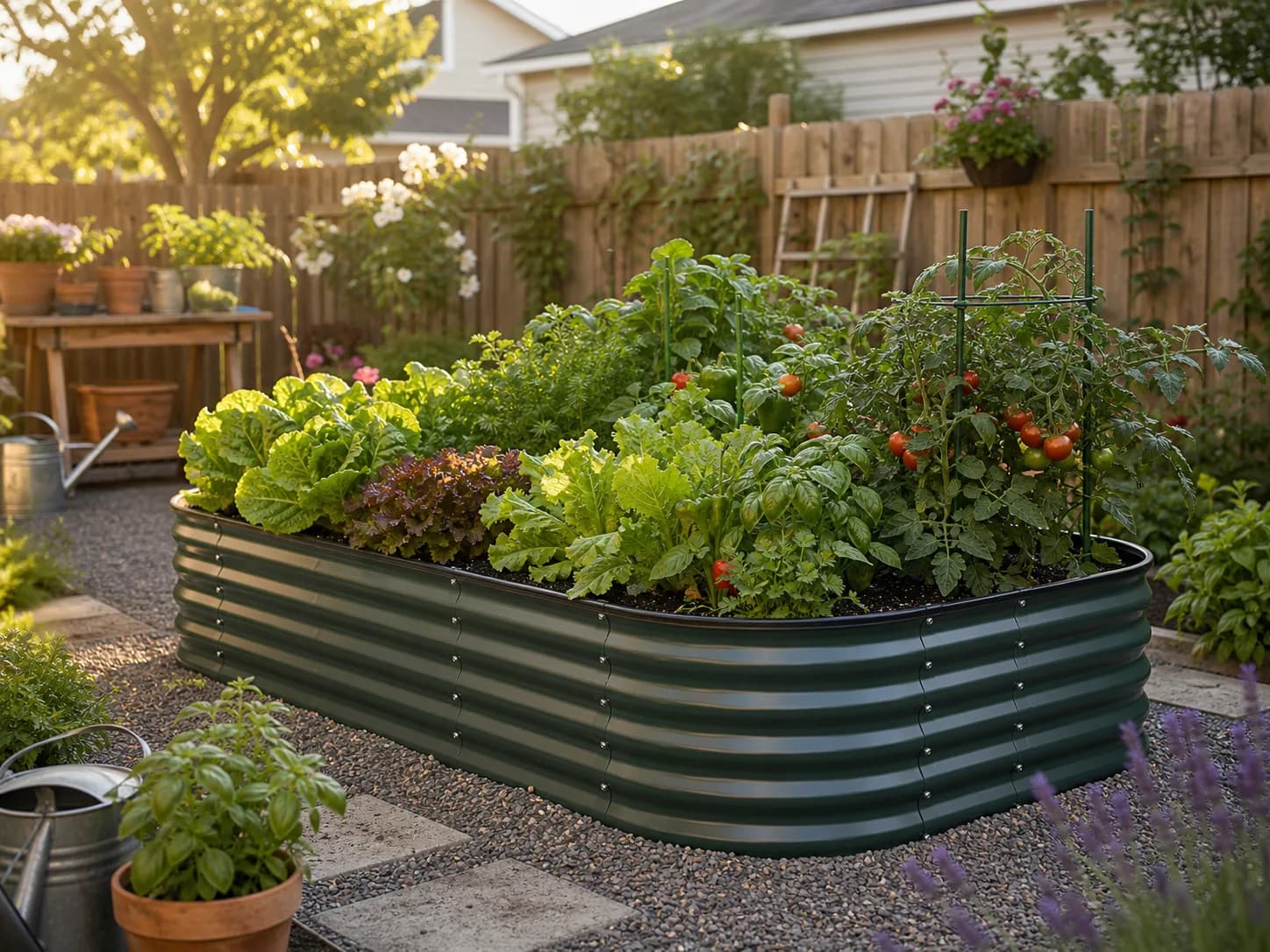
This is the ideal setup for most metal raised beds. Roots can keep growing downward, excess water can drain, and you avoid turning the bed into a sealed container. A 17-inch open-bottom bed is especially forgiving because it gives vegetables a good starting root zone while still connecting to the soil below.
Scenario 2: Bed Over Grass or Weeds
For a bed over lawn, plain cardboard is the practical answer. It suppresses grass long enough for the bed to establish, then breaks down. Overlap the cardboard well, wet it, and fill the bed promptly so it stays in contact with the ground.
Do not use glossy cardboard, plastic-coated boxes, tape, or labels. Do not assume cardboard is permanent weed control. Deep-rooted perennial weeds can still be a problem, and aggressive weeds should be removed before the bed goes in.
Scenario 3: Burrowing Pests
If voles, gophers, mice, or chipmunks are common in your area, hardware cloth is the best bottom barrier. Use mesh small enough to block the pest you are dealing with, lay it under the entire bed, and secure it so animals cannot enter from the sides.
Hardware cloth is different from plastic because it does not seal the bed. Water still drains, roots may still interact with the soil to some degree, and the bed remains more like an open-bottom system than a container.
Scenario 4: Concrete, Patio, or Deck
An open-bottom bed is usually not the right choice for concrete, patios, decks, or rooftops unless the manufacturer specifically supports that setup and you have a drainage plan. Soil, water, and wet compost are heavy. Stained concrete and trapped water can also become problems.
On hard surfaces, an elevated planter is often the cleaner choice. If you do use a liner, it should allow water to pass through. Nonpermeable plastic is a poor bottom layer because it traps water in the root zone.
Scenario 5: Deep Beds and Cost-Saving Lower Layers
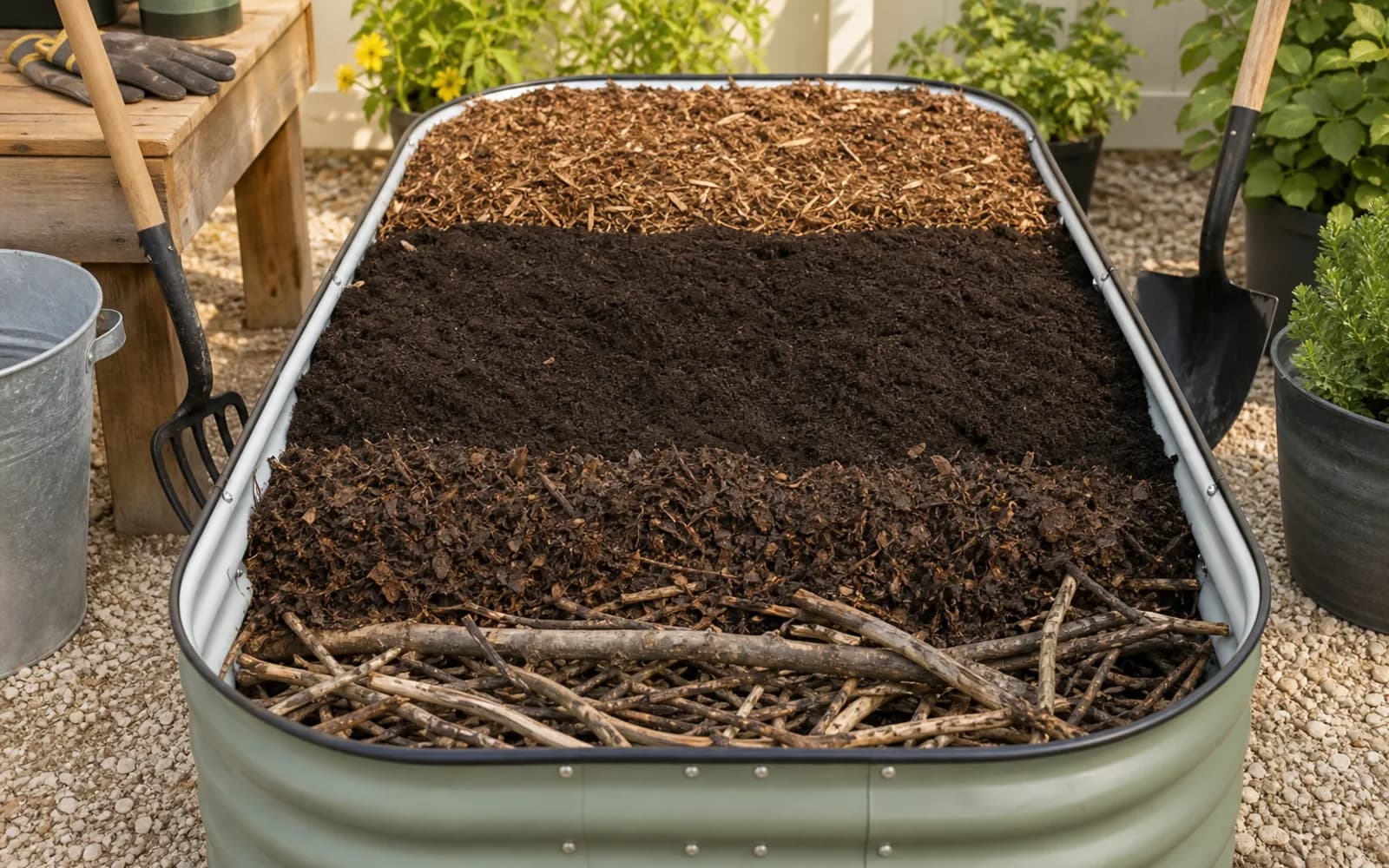
Logs, branches, leaves, wood chips, and coarse compostable material can make sense in deep beds, especially 24 inches and taller. They are not ideal in shallow beds because they steal root-zone volume. Keep the best soil in the top 10 to 12 inches, and expect lower organic layers to settle.
Use only clean, untreated material. Avoid painted wood, pressure-treated scraps, diseased plants, invasive weed roots, pet waste, meat, dairy, plastic, and anything that could contaminate the bed or block drainage.
This is where the bottom-layer question overlaps with fill strategy. Read How to Fill a Raised Garden Bed before buying a very tall bed.
What Not to Put at the Bottom
Do not put plastic sheeting under a vegetable raised bed. It blocks drainage and root movement. Do not use rocks as a universal drainage fix. A rock layer can create an awkward transition, reduce useful soil volume, and make future bed changes harder.
Do not use treated lumber scraps, railroad ties, painted wood, glossy paper, diseased plant material, invasive weeds, pet waste, or household trash. Saving a few dollars on fill is not worth contaminating the soil where food crops grow.
Do not put thick woody material into a shallow bed. A 12-inch bed should be mostly growing mix and compost. A 17-inch bed can tolerate only modest lower-layer experimentation. Save the big bulk layers for deeper beds.
FAQ
Should I put anything at the bottom of a raised garden bed?
If the bed sits on safe, workable soil, you usually do not need a permanent bottom layer. Keep it open-bottom for drainage and root growth. Add cardboard only for temporary weed suppression or hardware cloth for burrowing pests.
Should I put cardboard at the bottom of a raised bed?
Cardboard is useful when placing a bed over grass or annual weeds. Use plain cardboard, remove tape and labels, overlap it, wet it, and fill the bed. It breaks down over time and is not a permanent barrier.
Should I put rocks or gravel at the bottom of a raised bed?
Usually no. Rocks take up root space and do not fix most drainage problems. Good soil structure, an open bottom, and the right site matter more.
Should I use landscape fabric under a raised bed?
Landscape fabric can help hold soil on a hard surface if water passes through it. It is usually not needed between garden soil and an open-bottom bed because it can restrict roots.
What should I put under a raised bed to stop gophers or voles?
Use hardware cloth under the bed, secured across the full footprint. It creates a physical barrier while still allowing water to drain.
Can I put logs at the bottom of a raised bed?
Logs and branches can work in deep beds when kept below the main root zone, but they are not a good choice for shallow beds. Use untreated material and expect settling.
Final Verdict
For most outdoor raised beds on soil, the best bottom is no permanent bottom at all. Use cardboard for temporary weed suppression, hardware cloth for burrowing pests, and breathable drainage-aware solutions for hard surfaces. Avoid plastic sheets, random trash, and unnecessary rock layers.
The bottom layer should solve a real problem. If there is no weed, pest, hard-surface, or fill-cost problem, keep the bed open and spend your effort on good soil, reachable layout, and the right bed depth.