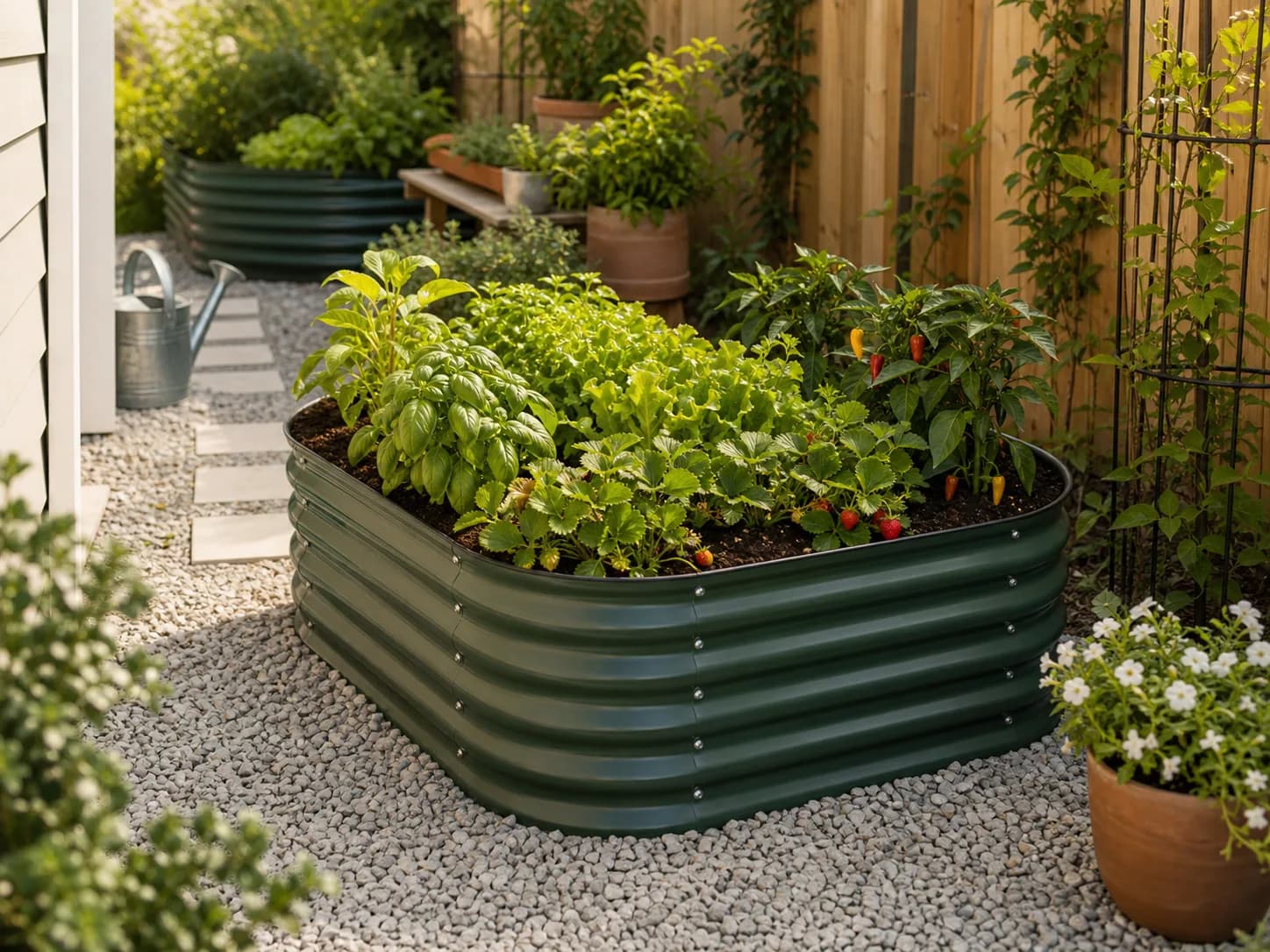
Start with the product that matches your constraint.
Use this compact matrix before reading the full guide. It keeps the choice grounded in fit, tradeoff, setup risk, and a current offer path without showing stale Amazon prices or ratings.
Start hereVego Garden
17" Tall 9-in-1 Modular Metal Raised Garden Bed Kit
Choose if
Most backyard vegetable gardens, first serious raised bed buyers, tomato and pepper growers
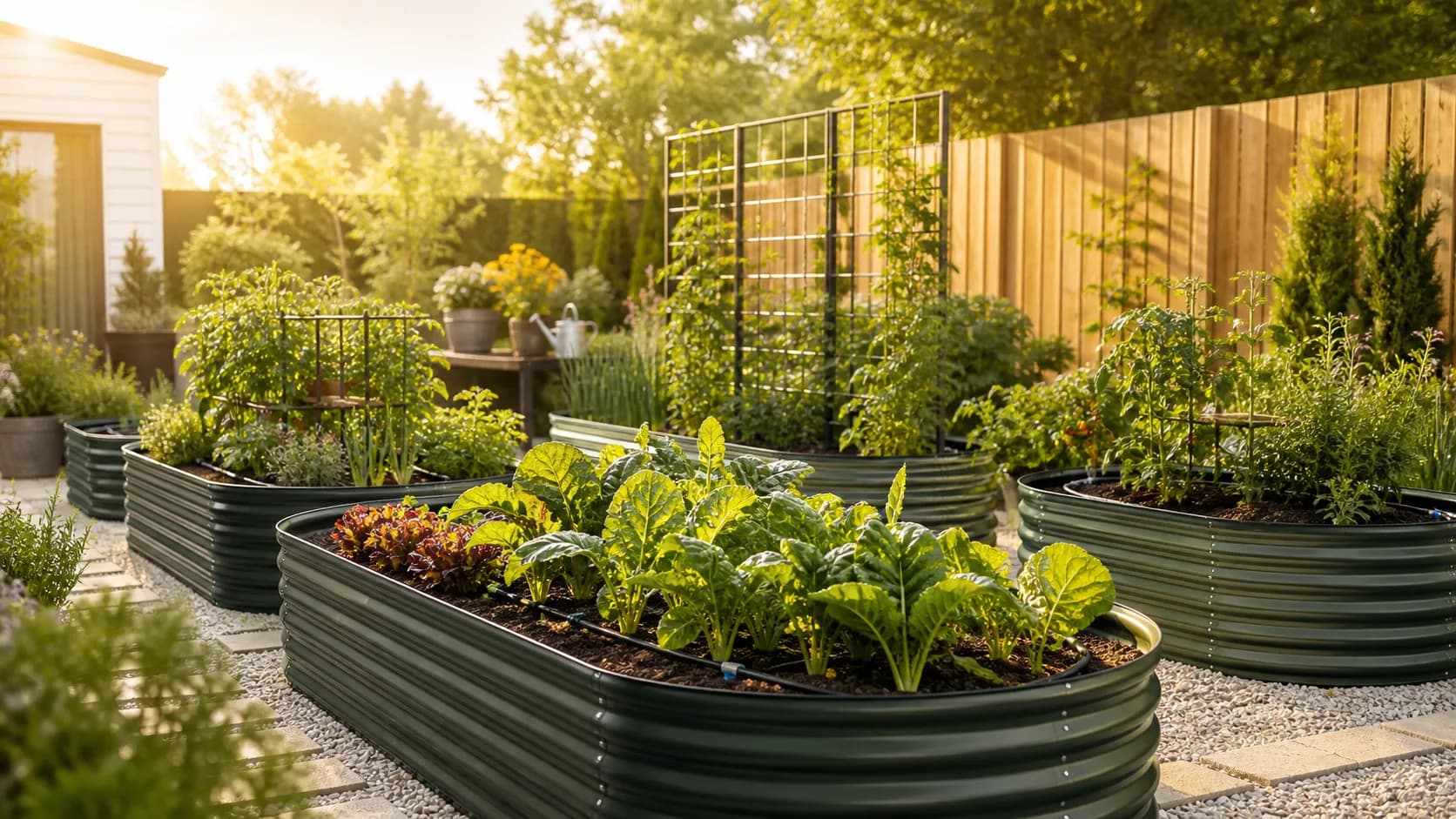
The best raised garden bed layout is not the one that fits the most boxes into the yard. It is the one you can water, weed, harvest, cover, and expand without stepping into the soil or squeezing through paths that are too narrow to use. A beautiful layout that makes every chore awkward becomes frustrating by midsummer.
For most backyard vegetable gardeners, the safest starting point is simple: keep beds narrow enough to reach from the sides, leave one practical working path, put tall crops where they will not shade everything else, and plan irrigation, trellises, and covers before the bed is full of soil. University extension guidance commonly points toward accessible bed widths, workable path space, and planting systems that reduce wasted walkway area while protecting soil structure.
This guide gives you layout ideas you can adapt to small yards, side yards, patios, tomato gardens, senior-friendly gardens, and modular metal raised beds. We analyzed product specs, extension guidance, buyer feedback themes, and common backyard gardening use cases. We do not claim hands-on testing, and we do not hardcode live Amazon prices, ratings, review counts, or availability.
Quick Layout Rules
If you only remember one rule, remember reach. A bed that can be accessed from both sides should usually stay around 4 feet wide or less. If the bed is against a fence or wall and can only be reached from one side, use a narrower bed. Iowa State University Extension notes that one-side-access beds should be about arm's reach, while paths between beds should be wide enough for garden equipment such as a wheelbarrow or cart.
The second rule is path realism. A narrow gap may look efficient on paper, but it can become useless once tomatoes lean, cucumbers climb, or irrigation fittings stick out. A 30- to 36-inch main path is more practical than a tight 18-inch corridor for many gardeners. If you use a wheelbarrow, cart, kneeling pad, stool, or walker, plan the path around that tool, not around the blank space on a diagram.
The third rule is crop height. Put trellises, tomatoes, pole beans, peas, and tall cages where they will not shade low crops. In the Northern Hemisphere, many gardens work best when the tallest support is on the north or rear side of the bed, with greens, herbs, onions, carrots, or compact peppers in easier-to-reach front zones.
Layout decision
Choose the layout by access, not just bed count
The best layout keeps every plant reachable after midsummer growth fills the beds.
Small backyard
Two compact beds with one main path
Simple access and irrigation usually beat many tiny beds.
Watch out: Do not sacrifice the walking path.
First vegetable garden
One 4 x 8 style bed
It is easy to understand, fill, water, and cover.
Watch out: Leave expansion space if possible.
Tomato-heavy garden
Long bed with north-side trellis
Tall crops stay organized without shading everything.
Watch out: Plan support before planting.
Senior-friendly setup
Tall bed plus wide path
Better access matters more than squeezing in another bed.
Watch out: Higher beds need more fill.
Idea 1: Two Beds With One Real Path
Small Backyard Two-Bed LayoutTwo compact beds with one clear working path and room to turn at the end.
2 x 6 bed
30-36 in path
2 x 6 bed
turn zone
For a small backyard, two compact beds often work better than one oversized bed. The layout gives you more reachable edges, a clear walking path, and a place to carry soil bags, a hose, a harvest basket, or a kneeling pad. This is a strong first layout if you want vegetables without turning the entire yard into a garden project.
Use this pattern when your garden area is narrow, rectangular, or placed along a fence line. Keep the beds narrow enough to reach the center. If both beds are reachable from the main path and the outside edges, a 2- to 3-foot width can feel very comfortable. If one side backs up against a fence, stay closer to the one-side reach rule.
The buying decision is bed size. A compact modular metal bed is useful here because you can place one bed first, learn the sun pattern, then add a second bed later. The danger is buying too many small beds and losing half the yard to awkward paths. Two good beds beat five cramped beds.
Vego Garden
Vego Garden 17" Tall 6-in-1 Modular Metal Raised Garden Bed Kit
Best for: Small backyards, side yards, and beginner gardens where one or two compact beds need to look tidy.
Why this pick: Best Vego starter bed versus cheap Amazon galvanized kits
Height
17"
Size
6 possible layouts; compact patio/backyard footprint
Type
compact modular metal raised bed
Key tradeoff: Less growing area than jumbo kits
Not best for: Deep-root vegetable growers who need more soil volume than a planter box can hold.
Classic 4 x 8 Vegetable BedA single open-bottom bed with trellis crops on the north side and faster crops near the front.
trellis crop
tomatoes
peppers
greens + herbs
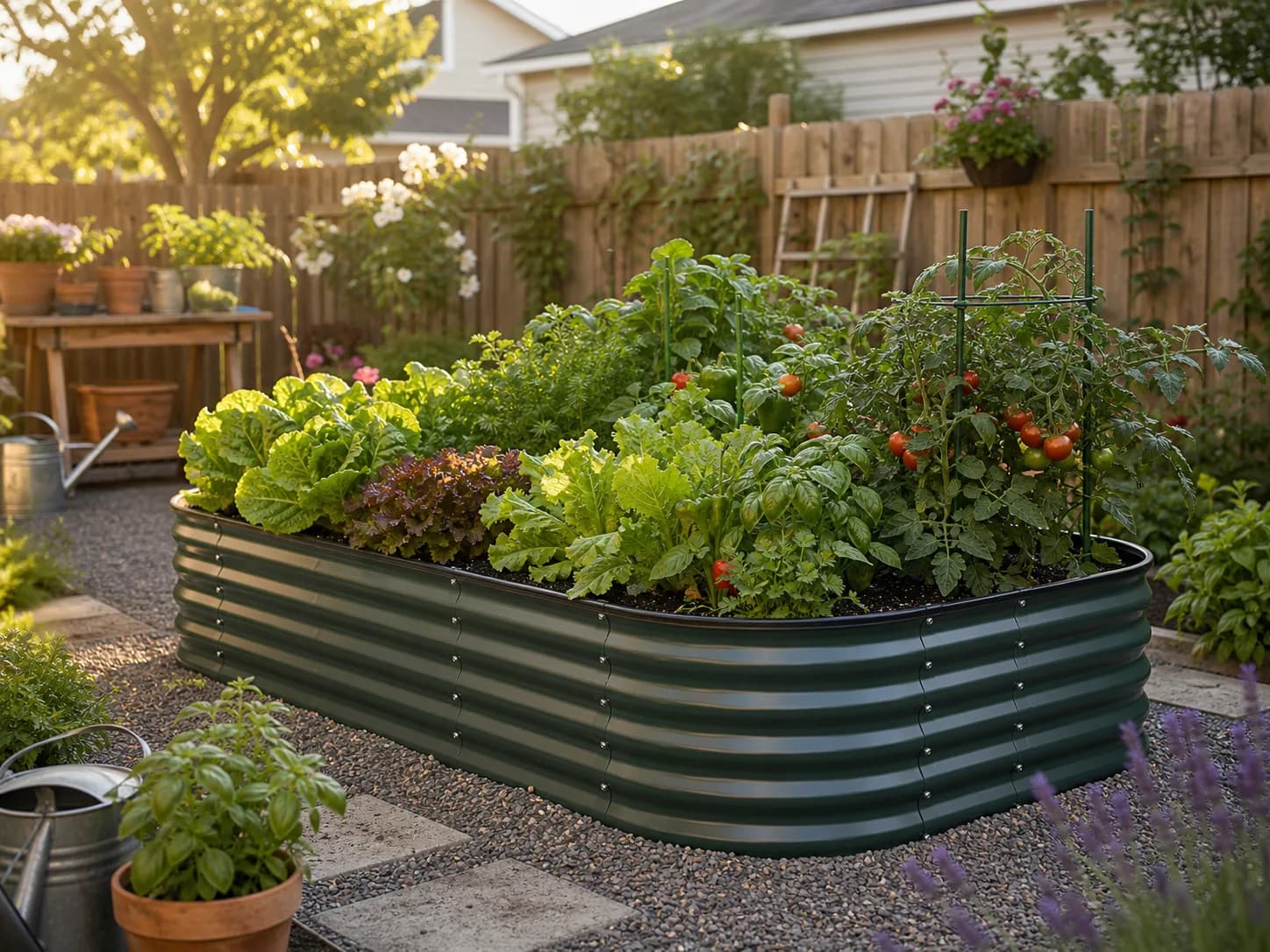
A 4 x 8 style bed is popular for a reason. It is large enough for a meaningful vegetable garden but still easy to understand. You can divide it into zones: tall crops at the rear, fruiting crops in the middle, and faster greens or herbs near the front. Colorado State University Extension's block-style raised-bed guidance emphasizes arranging crops in blocks rather than wasting space on traditional row paths inside the bed.
This layout is especially good for beginners who want a single serious bed. It supports tomatoes, peppers, lettuce, herbs, carrots, beans, and flowers without forcing you to manage a full multi-bed garden. It also works well with a single drip irrigation kit and one cover system, assuming the cover dimensions match.
The main mistake is overplanting. Raised beds make the soil space feel precious, but airflow still matters. Crowded tomatoes, squash, cucumbers, and peppers can become hard to prune, hard to inspect, and more disease-prone. Use the bed like a production zone, not a storage box for every seedling you bought in spring.
Vego Garden
Vego Garden 17" Tall 9-in-1 Modular Metal Raised Garden Bed Kit
Best for: Backyard vegetable gardeners who want one polished modular bed that can handle a classic starter layout.
Why this pick: Premium modular metal bed versus cheaper galvanized beds and Birdies
Height
17"
Size
up to 8 ft x 2 ft configuration; 9 possible layouts
Type
modular metal raised bed
Key tradeoff: More bolts than one-piece budget beds
Not best for: Buyers who only want the lowest upfront price.
U-Shaped Working LayoutA U-shaped arrangement keeps more bed edge within reach but needs a generous center path.
bed
bed
bed
work path
entry
A U-shaped layout can be excellent when you want many reachable edges without walking around several separate beds. It is useful for herbs, cut-and-come-again greens, compact peppers, flowers, and mixed kitchen gardens. It can also make a backyard garden look more intentional from the patio.
The center path is the deciding factor. If the inside of the U is too narrow, the layout becomes annoying. You should be able to turn, kneel, water, and harvest without brushing every plant. A U-shape is not a shortcut around path space; it simply concentrates the work path in the middle.
This pattern is best when the garden will be used often. If you harvest herbs every day, pick greens twice a week, or want children to help without stepping into the bed, the extra edge access is useful. If your main goal is tomatoes, corn, squash, or large vining crops, a simpler rectangular layout may be easier.
Idea 4: Tomato And Trellis Layout
Tomato And Trellis LayoutA north-side trellis keeps tall crops from shading lower vegetables in the same bed.
trellis
tomatoes
basil + flowers
drip line
harvest edge
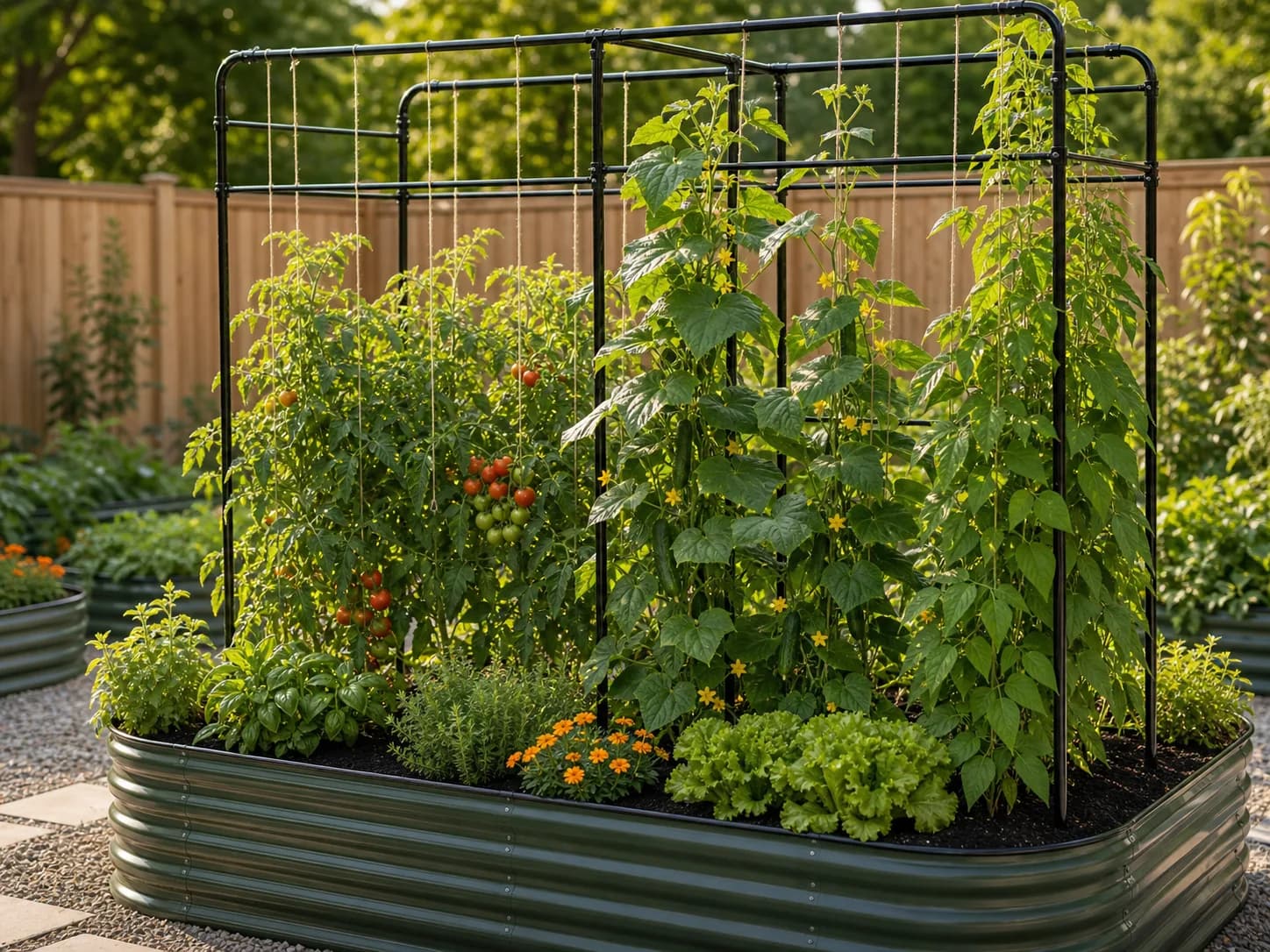
Tomatoes change the layout more than beginners expect. They need support, airflow, pruning access, consistent water, and enough room to harvest. If you install the trellis late, you will be working around roots and stems. If you place the trellis on the wrong side, it may shade lower crops or block the path.
For a tomato-focused bed, put the tallest support along the north or rear edge when possible. Plant basil, marigolds, onions, lettuce, or compact herbs in easier front zones. Keep a clear harvest edge. If you use indeterminate tomatoes, assume the bed will become taller and more crowded than it looks in May.
The strongest buying lesson is that tomato gardeners should choose the bed and support together. A raised bed that looks affordable may become frustrating if it does not accept a trellis, arch, cage, or staking system cleanly.
Vego Garden
Vego Garden 8 ft Tomato Metal Frame Trellis
Best for: Tomato growers who want a taller support path for Vego-style raised bed layouts.
Why this pick: Integrated premium trellis versus generic cages and DIY string systems
Height
bed-mounted trellis height varies by setup
Size
8 ft long
Type
metal frame string trellis
Key tradeoff: Garden bed not included
Not best for: Buyers who only need a basic bed without vertical crop support.
For seniors, gardeners with back strain, or anyone who wants easier access, the layout should start with the body, not the crop list. Put the most-used bed closest to the door, keep the working path wide, and avoid layouts that require stepping backward through tight spaces while carrying a hose or basket.
Extra-tall beds can help, but they are not automatically better. A 32-inch bed can reduce bending, yet it takes more fill strategy and may be awkward if the bed is too wide. For many gardeners, the best layout is a mix: one comfort-height bed for herbs and frequent harvests, plus one standard open-bottom bed for larger production.
How To Choose Your Layout
Start with sunlight. Most vegetables need strong sun, and a beautifully arranged bed in a shady corner will disappoint you. Walk the yard in the morning, midday, and late afternoon before deciding. If the best sun is along a fence, use narrow one-side-access beds. If the best sun is open lawn, use two-sided beds with a central path.
Next choose your working path. A layout is only as good as the space around it. If you will use a wheelbarrow or cart, plan a main path wide enough to move it. If you will kneel, leave space to set down a pad without leaning into plants. If children or pets will be near the garden, avoid fragile narrow corridors.
Then choose bed width. Four feet is the common upper limit for two-side access because many adults can reach roughly two feet from each side. Against a wall or fence, a narrower bed is safer. If you are shorter, have shoulder issues, or want children to garden comfortably, use a narrower bed even if the product page makes the wider bed look more efficient.
After that, map tall crops. Tomatoes, pole beans, peas, cucumbers, arches, and trellis panels belong in a deliberate zone. They should not block the hose path or shade the entire bed. Place vertical support before planting, not after the plants start flopping.
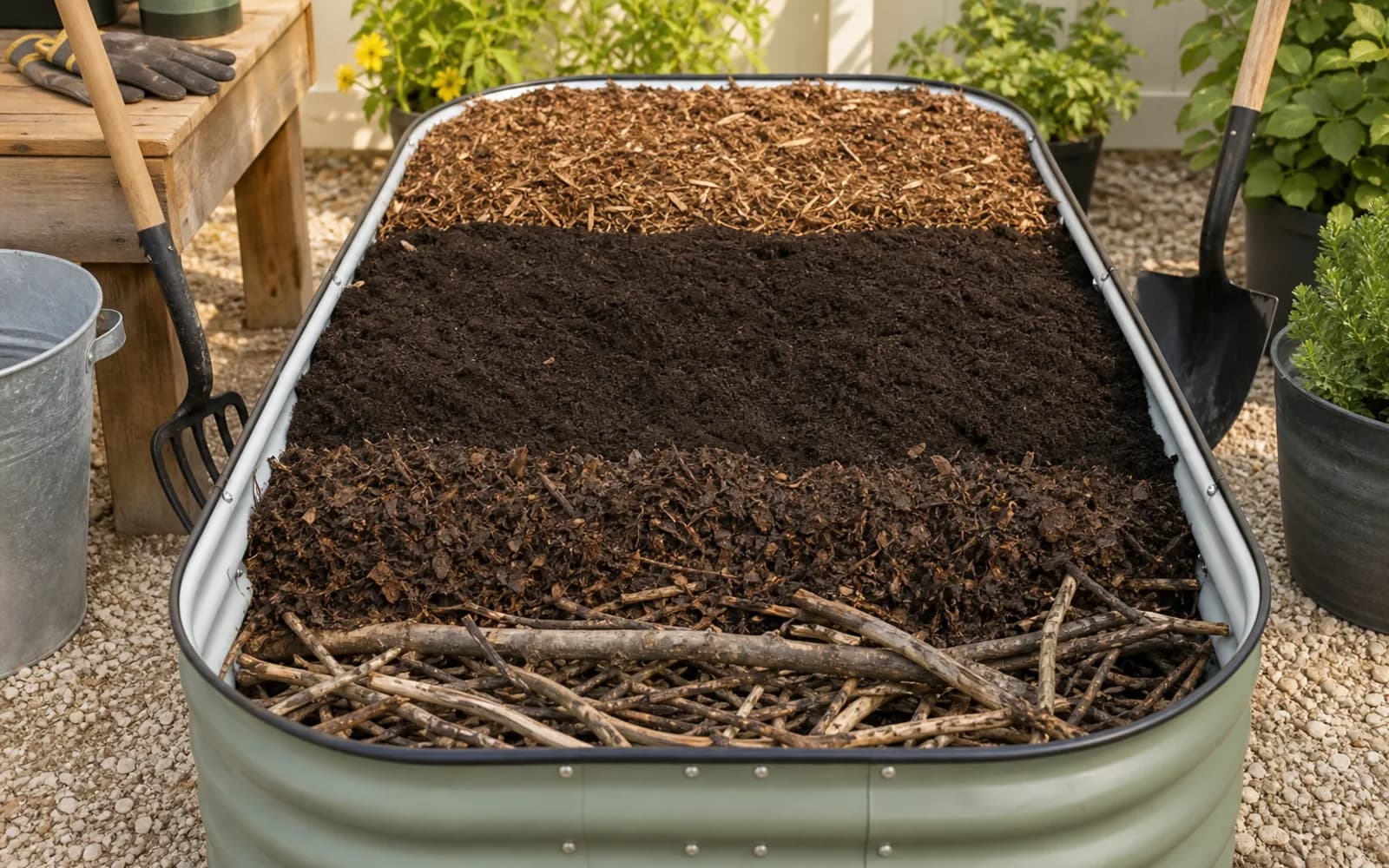
Finally, calculate fill and water. A large bed layout is not just a footprint decision. A 24-inch or 32-inch bed can require a surprising amount of fill. Use the Raised Bed Soil Calculator before buying. If the layout has multiple beds, decide whether one irrigation kit can cover them or whether each bed needs its own simple setup.
Common Layout Mistakes
Do not draw paths that are too narrow. Tight paths feel efficient until the plants grow. Leave enough room for the gardener, not just the bed.
Do not make every bed a different width unless there is a reason. Mixed bed sizes can look attractive, but matching covers, hoops, trellises, and irrigation becomes harder.
Do not put tall crops in the middle of everything. If tomatoes or trellised cucumbers block the path, you will avoid pruning and harvesting. Put vertical crops where they are easy to reach.
Do not buy covers last. Pest netting, frost covers, shade cloth, and hoops need dimensions. If cover fit matters, use repeated bed widths and leave enough path space to install the cover.
What is the best raised bed layout for a small backyard?
For many small backyards, two compact beds with one real working path are better than one oversized bed or several cramped beds. You get more reachable edges, easier watering, and a cleaner expansion path.
How wide should paths be between raised garden beds?
Use the tools and body movement you actually need. Many gardeners are happier with a 30- to 36-inch main path, especially if they use a cart, wheelbarrow, stool, or kneeling pad. Tighter side paths can work, but they become frustrating when plants lean into them.
Should raised beds run north-south or east-west?
Orientation depends on sun, slope, access, and tall crops. In many vegetable layouts, the more important rule is to place trellises and tomatoes where they will not shade lower crops or block the working path.
Should I plan irrigation before or after laying out beds?
Plan irrigation before the final layout. Bed spacing, hose access, water pressure, emitter runs, and trellis placement all affect whether a drip kit is easy or annoying to install.
Final Verdict
Start with access, not bed count. A good raised bed layout gives you reachable soil, a real working path, a clear water route, and a place for tall crops before they become a problem. For most small backyards, one 4 x 8 style bed or two compact beds with one central path is a better first move than filling every sunny corner with boxes.
If you are buying now, choose a bed that matches the layout you can actually maintain. The Vego 6-in-1 is the cleaner compact option for side yards and small backyards. The Vego 9-in-1 is the stronger first serious bed for a classic vegetable layout. Add a tall trellis only if tomatoes, cucumbers, beans, or vertical crops are truly part of the plan.